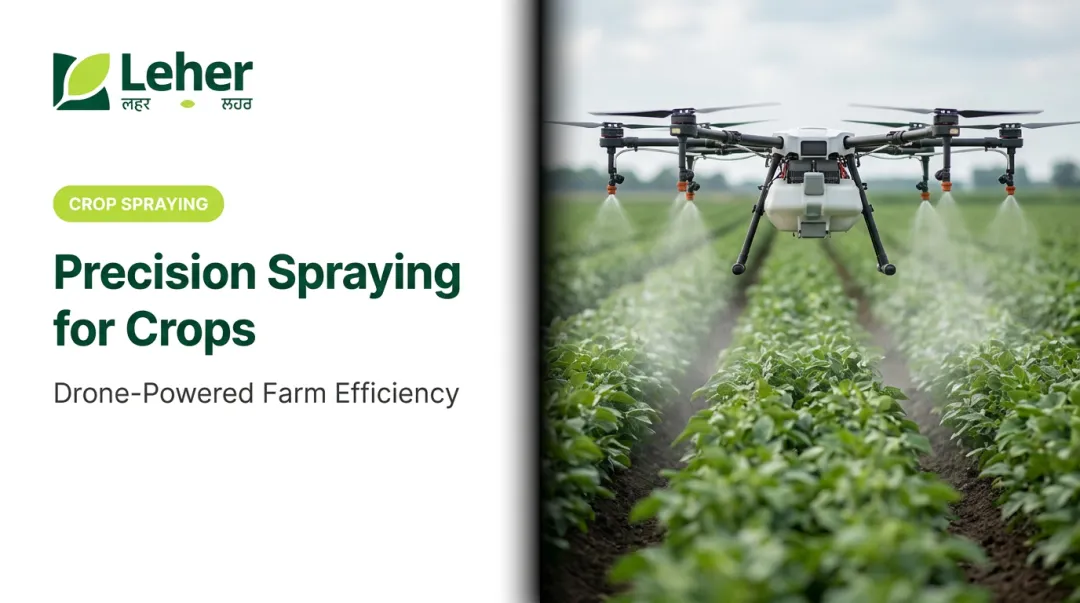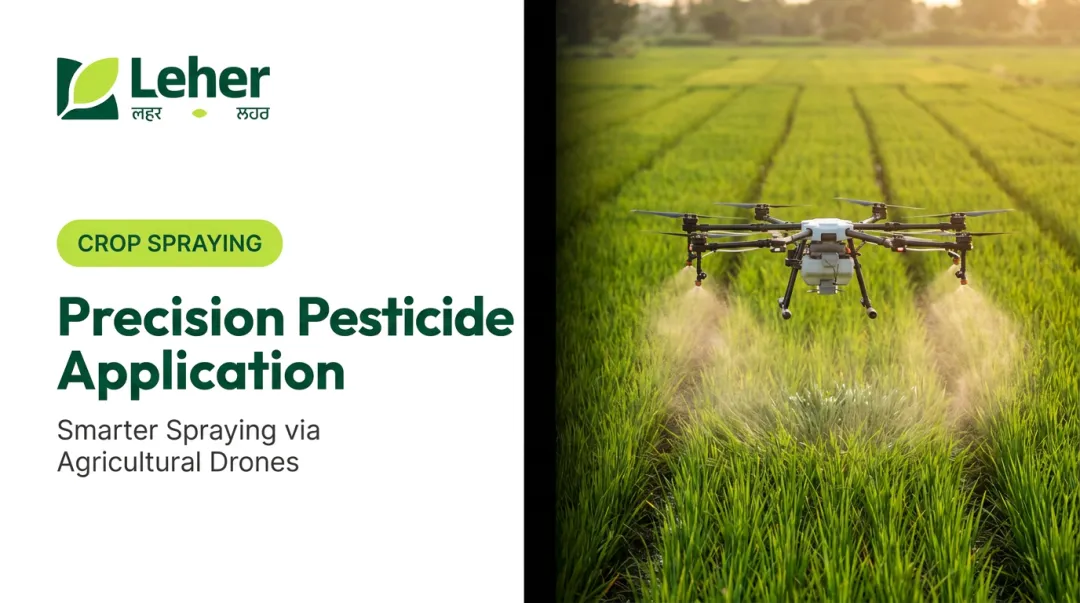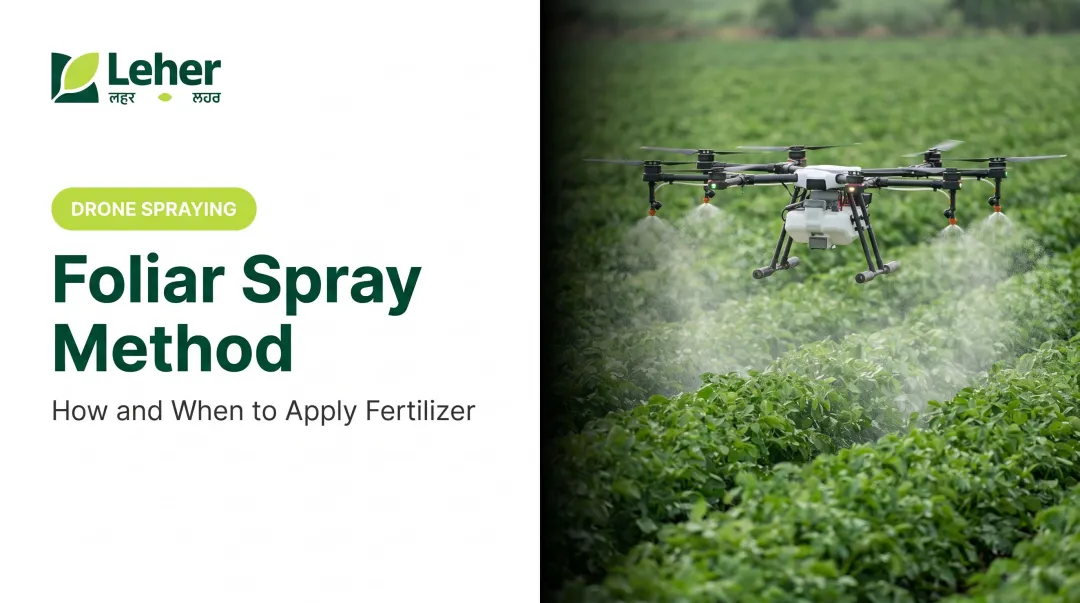
While modern agricultural drones make this level of precision possible, simply launching a drone isn’t enough. The results depend entirely on proper planning, meticulous setup, and flawless execution. A small mistake in calibration or a poor judgement call on weather can undo all the potential benefits.
This guide provides a comprehensive walkthrough for farmers and drone operators in India. We'll cover the exact steps, key variables, and common pitfalls to help you achieve perfect spray coverage, every single time.
TL;DR: Your Guide to Flawless Drone Spray Coverage
- Achieving uniform coverage boosts crop health and reduces chemical costs.
- Master key settings like flight speed, altitude, and nozzles for precision.
- Follow a four-stage process: plan, execute, verify, and analyze your results.
- Avoid critical errors like spraying in bad weather or skipping calibration.
A Step-by-Step Guide to Uniform Drone Spray Coverage
Achieving consistent coverage is a systematic process. This guide breaks down the process into four key steps, helping you move from planning to verification with confidence.
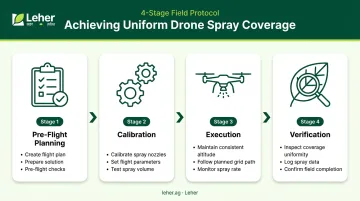
Step 1: Pre-Flight Planning and Preparation
Success begins long before the drone takes off.
- Create a Detailed Flight Plan: Use mapping software to precisely define the spray area. Set up geofences to create digital boundaries that prevent the drone from spraying outside the target field, protecting nearby crops and waterways.
- Prepare Your Spray Solution Correctly: Carefully prepare the spray solution (pesticide, fungicide, or foliar fertiliser) according to the product label's instructions. Ensuring the correct concentration is vital for both effectiveness and crop safety.
- Perform Pre-Flight Checks: Thoroughly inspect your equipment. Check drone battery levels, confirm a strong GPS signal, and ensure the spray tank is securely attached with no leaks. A few minutes of checks can prevent a costly in-field failure.
Step 2: Calibrating Your Drone and Spray System
This is the most critical step. Never assume factory settings are correct for your specific application.
First, select the right nozzle. The choice depends on your crop, canopy density, and the chemical you're applying.
- Flat-fan nozzles are best for uniform broadcast applications over flatter surfaces.
- Hollow-cone nozzles are ideal for penetrating dense canopies, making them suitable for fungicides and insecticides.
Next, perform a static spray test to calibrate your flow rate (measured in litres per minute) and check for issues. This simple test ensures all nozzles are functioning correctly, with no drips or blockages that could cause streaks in the field.
To determine your required flow rate, you can use this standard industry formula:
Flow Rate (L/min) = [Application Rate (L/ha) x Drone Speed (km/h) x Swath Width (m)] / 600
For example, if you want to apply 15 L/ha, flying at 18 km/h with a 5-metre swath width, your calculation would be (15 x 18 x 5) / 600 = 2.25 L/min. You would then adjust your drone's pump settings to achieve this flow rate. You can also use online tools like the TeeJet SpraySelect calculator to help.
Step 3: Executing the Spray Mission
During the flight, consistency is key.
Execute the automated flight plan while maintaining a consistent flight altitude and speed. This ensures droplets are distributed evenly across the entire field. Any sudden changes in speed or height will result in under- or over-application in those areas.
Actively monitor environmental conditions. Wind is the biggest factor in spray drift. If wind speeds exceed safe limits (generally 10-15 km/h), pause or abort the mission. Waiting for better conditions prevents wasted chemicals and the risk of off-target damage.
Step 4: Verifying Coverage and Making Adjustments
The only way to confirm success is to measure your results.
Before you spray, place water-sensitive paper (WSP) cards at different locations and heights within the crop canopy (top, middle, and bottom). After the mission, collect the cards. The yellow paper turns blue where droplets have landed, giving you a clear visual map of your coverage.
For a more detailed analysis, you can use apps like DepositScan to get precise data on droplet density and coverage percentage. This feedback is invaluable. If the cards show streaky coverage or low droplet density, use that data to make informed adjustments. For the next flight, you might change your flight speed, altitude, or nozzle pressure.
Key Parameters That Make or Break Drone Spray Coverage
Mastering drone spraying means controlling the variables. A slight change in one parameter can have a significant impact on your results.
Flight Altitude & Speed
The height and speed of the drone directly influence spray deposition and drift.
- Altitude: Lower altitudes (2-4 metres above the canopy) significantly reduce the risk of spray drift. The Government of India's Drone SOP recommends 1.5-2.5 metres for rice and cotton, and 3-4 metres for taller crops like sugarcane.
- Speed: Flight speed dictates the application rate. If you fly faster, you must increase the flow rate to maintain the same coverage. Flying too fast for your system's flow rate will result in sparse coverage.
Nozzle Type and Pressure
Your nozzle is the final control point for the spray.
- Nozzle Type: As mentioned, flat-fan nozzles provide a uniform pattern for broadcast spraying, while cone nozzles help penetrate dense foliage. Air-induction nozzles are another excellent option, as they create larger, air-filled droplets that are much less prone to drift.
- Pressure: Pressure controls droplet size. Higher pressure creates finer droplets, which can provide excellent coverage but are highly susceptible to drift. Lower pressure produces coarser droplets that are better for reducing drift and penetrating canopies.
Droplet Size (VMD)
Volume Median Diameter (VMD) is a standard metric that indicates the average droplet size. Finding the right VMD is a balancing act.
- Fine droplets (150-250 microns): Offer excellent surface coverage, making them ideal for contact herbicides and fungicides on dense foliage. However, droplets smaller than 150 microns are highly prone to drift.
- Medium to Coarse droplets (250-450 microns): Are heavier and less likely to drift. This makes them better for systemic products that need to be absorbed by the plant and for spraying in less-than-ideal conditions.
Environmental Conditions
Never spray without checking the weather. Even the most advanced drone can't overcome high winds or extreme heat.
- Wind: Spray only when wind speeds are below 10.8 km/h (3 m/s).
- Temperature: Avoid spraying in high heat. The ideal temperature is below 35°C to prevent rapid evaporation.
- Humidity: Higher humidity (>50%) is better, as it slows droplet evaporation, giving them more time to reach the target.
Equipment and System Readiness
The quality of your equipment is non-negotiable. Using a well-maintained, professionally calibrated drone is essential for consistent results.
To ensure this standard, Leher equips its rural drone partners with reliable, DGCA-approved drone systems. Every partner also receives rigorous, certified training to conduct each mission with the highest standards of precision and safety.
Common Mistakes in Drone Spraying (and How to Avoid Them)
To achieve uniform coverage, it's crucial to avoid common mistakes that lead to poor results and wasted resources.
Ignoring Weather Conditions
Spraying in high winds causes drift, wasting chemicals and potentially damaging neighbouring fields. Spraying in high heat and low humidity causes droplets to evaporate before they even reach the crop. To prevent this, always use a weather meter on-site and adhere strictly to operational guidelines for wind, temperature, and humidity.
Incorrect Nozzle Selection
Using the wrong nozzle can lead to poor canopy penetration (wasting fungicide) or excessive drift (wasting herbicide). To avoid this, consult the chemical product label for the required droplet size, then match your nozzle to the crop's structure and the product's requirements.
Skipping Calibration and Verification
Assuming the drone's factory settings are correct for your specific chemical mix, crop, and weather conditions is a recipe for failure. Instead, perform a flow rate calibration before the start of each season and anytime you change nozzles or products. Use water-sensitive cards regularly to validate that your intended spray pattern is what's actually happening in the field.
Troubleshooting Common Drone Spraying Issues
Even with careful planning, you may encounter problems. Here’s how to diagnose and fix the most common ones.
Streaky or Uneven Coverage
Likely Causes:
- Incorrect swath width setting (creating gaps or excessive overlap)
- Inconsistent flight speed
- A clogged nozzle or filter
What to Check:
- Verify the swath width in your flight planning software.
- Review flight logs for speed fluctuations.
- Thoroughly clean all nozzles and filters.
Excessive Spray Drift
Likely Causes:
- Flying too high
- Pump pressure is too high, creating very fine droplets
- Spraying in windy conditions
What to Check:
- Lower the flight altitude.
- Reduce the system pressure or switch to a low-drift (air-induction) nozzle.
- Postpone the mission if wind is above safe limits.
Low Droplet Density on WSP Cards
Likely Causes:
- Flight speed is too fast for the current flow rate
- The liquid mix is too viscous
- The target application rate (L/ha) is set too low
What to Check:
- Slow down the drone or recalculate your required flow rate for your target speed.
- Check the viscosity of your tank mix.
- Increase the application rate in your flight plan.
Traditional vs. Drone Spraying: Choosing the Right Method
Both ground sprayers and drones aim for uniform coverage, but they excel in different scenarios.
| Feature | Traditional Ground Sprayers (Tractors) | Agricultural Drones |
|---|---|---|
| Best For | Large, flat, easily accessible fields; applications requiring very high water volumes. | Small or irregular fields, difficult terrain (hillsides), and wet ground. Excellent for rapid spot spraying. |
| Limitations | Causes soil compaction and crop damage from wheel tracks. Inefficient for smaller or oddly-shaped areas. | Limited by battery life and tank capacity, requiring more refills on large fields. Performance depends on good weather. |
The benefits of precision are compelling. For example, Leher's drone services use up to 90% less water and 30% less pesticide than traditional methods by applying chemicals exactly where needed. This approach is backed by research, which shows that precision spraying can reduce total pesticide volume by over 56% without impacting yield.
Frequently Asked Questions
What is spray coverage?
Spray coverage is the measure of how well a spray application covers the target surface, like plant leaves. It's often assessed by the percentage of the area covered or the density of droplets per square centimetre.
How do we measure spray coverage?
The most common method is using water-sensitive paper (WSP) placed in the field. These cards turn blue where droplets land, allowing for a quick visual or digital analysis of droplet distribution and density.
How do you choose the right spray nozzle for a drone?
The choice depends on the target crop's structure, the chemical's requirements (always check the label), and the desired droplet size needed to balance effective coverage with drift control.
What is the ideal droplet size for drone spraying?
It varies. Fine droplets (100-250 microns) are good for contact products needing full coverage, while medium-to-coarse droplets (250-450 microns) are better for systemic products and minimising drift.
How does weather affect drone spray coverage?
Wind causes drift, pushing spray off-target. High temperatures and low humidity can cause droplets to evaporate before they land. The ideal conditions are always cool, humid, and calm.
Is drone spraying more effective than traditional methods for uniform coverage?
Yes, especially in difficult terrain or for targeted applications. Drones use precision flight paths that avoid crop damage and help ensure more consistent application across the entire plant canopy.