That's no longer science fiction. Agricultural drones, or 'agri-drones', are emerging as a revolutionary force in Indian farming. These unmanned aerial vehicles are more than just flying cameras; they are sophisticated tools that enable a new era of precision, efficiency, and sustainability.
This article explores how this technology is transforming the agricultural landscape. We'll cover the key applications of drones, the tangible benefits for Indian farmers, and the practical steps to start using this game-changing technology on your own farm.
TL;DR: The Future of Farming is Here
- Agri-drones are reshaping farming with uses like precision spraying, crop monitoring, and soil analysis, boosting yields and cutting costs.
- Key benefits include huge reductions in water (up to 90%) and pesticide (up to 30%) usage, leading to healthier crops and safer farmers.
- The technology is now highly accessible through service models, creating new entrepreneurship opportunities across rural India.
- Companies like Leher are making drone technology a reality for Indian farmers, offering on-demand services and building a network of rural drone operators.
The Drone Revolution: Why Drones are a Game-Changer for Indian Agriculture
The real power of agri-drones lies in a concept called "Precision Agriculture." It’s about shifting from guesswork to data-driven decision-making. Instead of treating an entire field the same, farmers can now understand and manage the specific needs of each small section, applying water, fertilisers, and pesticides only where they are needed most.
This approach is perfectly suited to solving some of India’s most persistent agricultural challenges:
- Navigate small, irregular plots typical of India's fragmented landholdings, where 89.4% of farms are under two hectares and large machinery is impractical.
- Address labour shortages during peak seasons by covering vast areas with a single operator, completing work in a fraction of the time.
- Conserve water through ultra-targeted spraying, a critical benefit when agriculture consumes about 80% of the country's fresh water with low irrigation efficiency.
The momentum is undeniable. The Indian agriculture drone market is projected to skyrocket from USD 302.3 million in 2025 to USD 2,185.5 million by 2034, showcasing the rapid adoption and immense potential of this technology.
Key Applications of Drones in Modern Farming
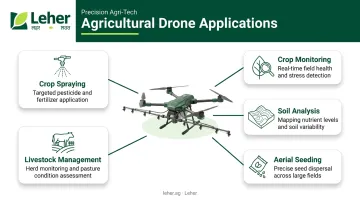
Drones are incredibly versatile tools. They offer a bird's-eye view that can be used for everything from planting seeds to monitoring livestock. Here are some of the most impactful applications.
Crop Spraying and Nutrient Application
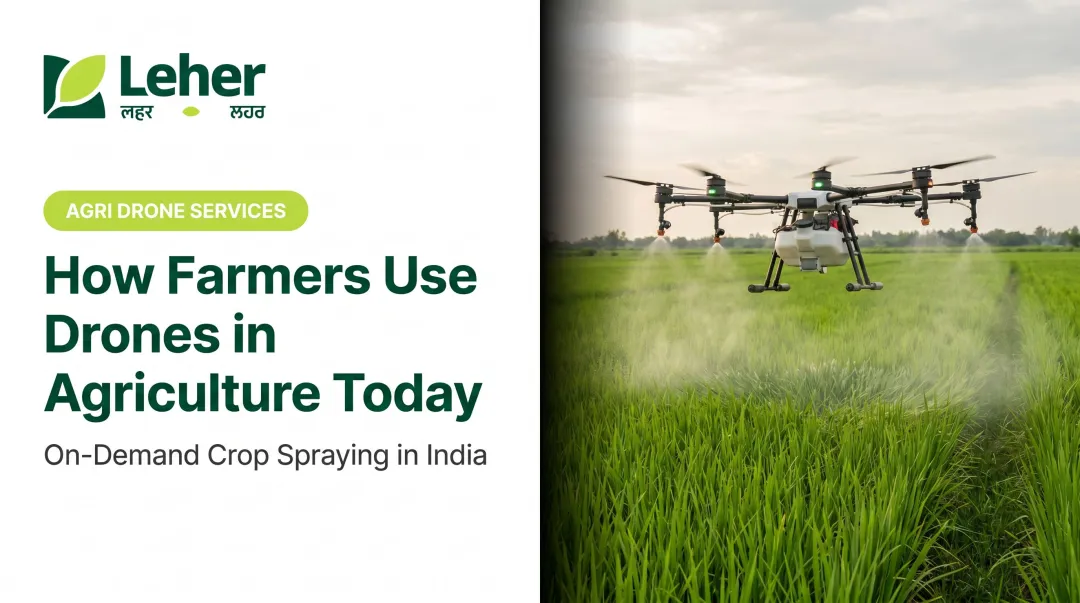
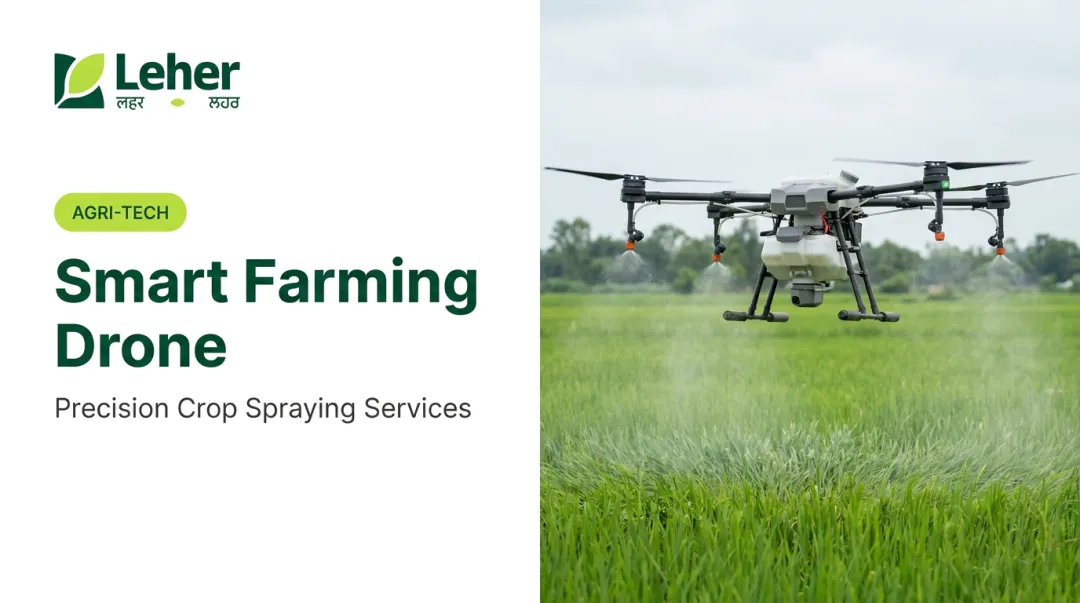
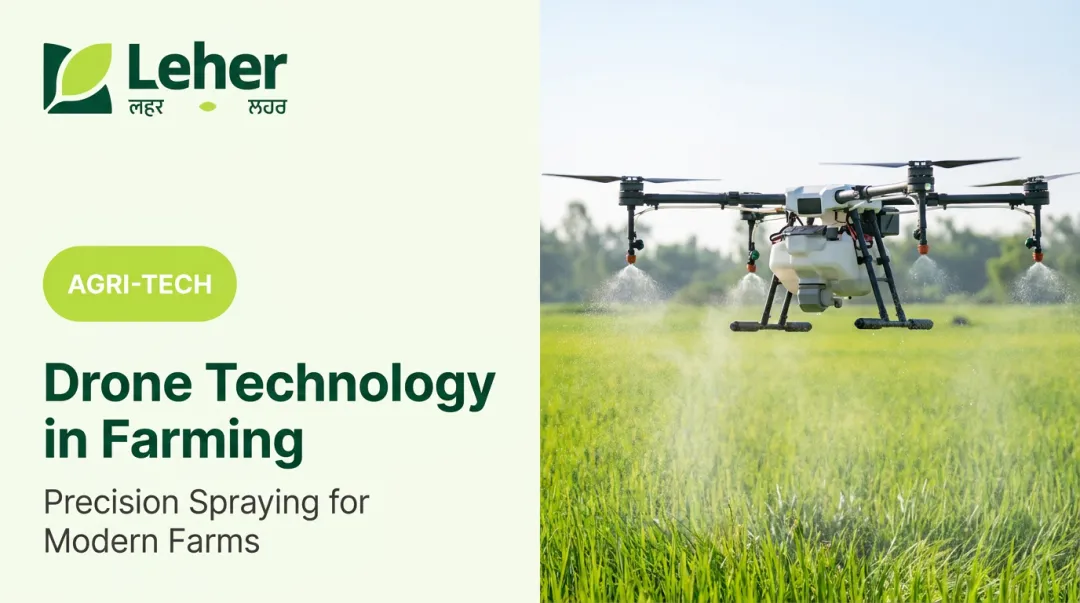
This is currently the most widespread use of agri-drones in India. Instead of manual spraying with a knapsack, which is slow and exposes farmers to harmful chemicals, drones provide a far superior solution. Instead of manual spraying with a knapsack, which is slow and exposes farmers to harmful chemicals, drones provide a far superior solution. Companies like Leher are making this technology accessible by connecting farmers with certified pilots on-demand.
They perform highly targeted spraying of pesticides, herbicides, and foliar fertilisers with unmatched uniformity. This precision reduces chemical drift and waste significantly.
Equipped with advanced technology like terrain-following sensors, drones maintain a perfect altitude over the crop canopy. Specialised nozzles create fine droplets that stick to leaves, ensuring even coverage.
Crop Monitoring and Health Analysis
Drones equipped with multispectral sensors can see what the human eye cannot. They capture data on how plants reflect different wavelengths of light, which is used to create a health map of the field using indicators like the Normalised Difference Vegetation Index (NDVI).
These maps can reveal early signs of:
- Pest infestations
- Nutrient deficiencies
- Water stress
- Fungal diseases
For example, a farmer can spot a pest outbreak in a small corner of their field and treat only that affected patch. This saves money on pesticides, protects the surrounding environment, and prevents a small problem from ruining an entire harvest.
Soil and Field Analysis
Before planting, drones can create detailed 3D maps of the farmland. This data helps analyse soil quality, identify elevation changes, and map drainage patterns. This information is crucial for planning irrigation systems, determining the best planting strategy, and optimising land use for maximum productivity.
Seeding and Planting
An emerging application is aerial seeding. Drones can be equipped with systems that shoot seed pods into the soil at high speed. This method is particularly useful for planting cover crops or reforesting areas that are difficult to access with traditional machinery.
Livestock and Asset Management
For larger farms, drones are a massive time-saver. A single operator can use a drone to:
- Monitor the location and health of livestock.
- Check for breaks in fences or irrigation pipes.
- Inspect farm buildings and equipment.
What used to take hours of walking or driving can now be done in minutes, freeing up farmers to focus on more strategic tasks.
The Tangible Benefits of Agricultural Drones
Adopting drone technology isn't just about modernising—it's about seeing real, measurable improvements in profitability, sustainability, and safety.
Economic Advantages
The financial case for using drones is clear, with benefits that include:
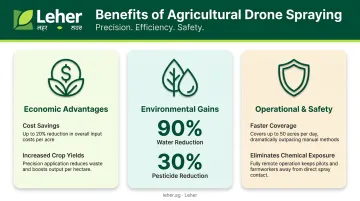
- Significant cost savings on expensive inputs like seeds, fertilisers, and pesticides through precision application.
- Increased crop yields by ensuring plants get exactly what they need, when they need it.
- Reduced labour costs, as a drone can complete a day's work for a full team in just a few hours.
Environmental and Sustainability Gains
Drones also offer major environmental advantages. Traditional spraying methods are notoriously inefficient, leading to massive water waste and chemical runoff that pollutes soil and water bodies.
Leher's on-ground services have demonstrated that drone spraying can reduce water consumption by up to 90% and pesticide use by up to 30%. This targeted approach not only conserves precious resources but also protects local biodiversity by keeping chemicals confined to the target area.
Operational Efficiency and Farmer Safety
The efficiency gains are staggering. A drone can spray an acre in minutes, covering areas up to 10 times faster than a person with a knapsack sprayer. This speed allows farmers to protect their crops at the most critical moments, like right after a rain shower or during a sudden pest attack.
A critical benefit is the improvement in farmer safety. Manual spraying involves carrying heavy loads and direct exposure to potentially toxic chemicals.
The World Health Organization (WHO) notes that agricultural workers who apply pesticides face the greatest health risks from direct exposure. Drones eliminate this risk entirely, allowing the operator to manage the entire process from a safe distance.
Getting Started with Agricultural Drones in India: A Practical Guide
Adopting drone technology is more accessible than ever, and farmers in India have two main pathways to get started.
- Purchasing a Drone: This involves a significant upfront investment in the drone, batteries, sensors, and software. It's a viable option for large agricultural corporations or Farmer Producer Organisations (FPOs) but can be too costly for individual smallholders.
- Using a Drone-as-a-Service (DaaS) Model: This is the most practical and popular option. Companies like Leher allow farmers to book a drone service on a per-acre basis through an app. A professional, licensed pilot arrives with all the necessary equipment to complete the job, which eliminates the need for capital investment, training, and maintenance.
Whichever path you choose, understanding the legal requirements is essential.
The Regulatory Landscape
Operating a drone for commercial agricultural purposes in India is regulated by the Directorate General of Civil Aviation (DGCA). Anyone flying a drone for spraying needs a Remote Pilot Certificate (RPC) from a DGCA-approved training organisation. When you hire a service provider, ensure they are fully licensed and compliant with all regulations.
Leher: Pioneering the Future of Drone Farming in India
Bringing these benefits to every farm in India is the core mission of Leher. We believe that technology should empower, not intimidate. Through our easy-to-use app, farmers can book professional drone spraying services with just a few clicks.
Our vision, however, goes beyond just providing a service. We are building a network designed to drive rural prosperity and create new opportunities.
To achieve this, Leher is empowering a network of 1,000 rural drone entrepreneurs by 2030. We provide them with training, equipment support, and a steady stream of work, which boosts farm efficiency while creating skilled local jobs.
Ready to unlock your farm's potential? Contact Leher today to learn about our drone-powered solutions and how you can join the future of Indian farming.
Frequently Asked Questions
How are drones used in farming?
Drones are used for a variety of tasks, including precision spraying of fertilisers and pesticides, monitoring crop health with advanced sensors, creating 3D maps for soil analysis, and even aerial seeding.
What is the cost of using a drone for farming in India?
Costs vary, but the Drone-as-a-Service (DaaS) model makes it cost-effective. Farmers pay per acre at a rate often competitive with manual labour, especially when factoring in savings on water and other inputs.
Do I need a license to fly a drone for agriculture in India?
Yes. To operate a drone commercially for agriculture, you must obtain a Remote Pilot Certificate (RPC) from a DGCA-approved training school and follow all government regulations.
Can drones work effectively on small farms?
Absolutely. Drones are ideal for small farms because of their high manoeuvrability. They can easily handle fragmented or irregularly shaped plots, delivering precise application that larger machinery cannot.
How can I become a rural drone entrepreneur?
Companies like Leher offer comprehensive Drone Partner Programs. These initiatives provide the necessary training, equipment, and financial support, such as AIF loan facilitation, to help you launch your own drone service business.