India's Drone Rules, 2021 made commercial drone operations without certification illegal, and as of February 2026, nearly 40,000 DGCA-certified remote pilots are already operating legally across the country. If you're planning to fly commercially — whether for agricultural spraying, mapping, or inspection — a Remote Pilot Certificate is your starting point, not an optional formality.
This guide walks through every step: who needs certification, how to apply, what it costs, and what mistakes to avoid.
Key Takeaways
- The Remote Pilot Certificate (RPC) is mandatory for all commercial drone operations involving drones heavier than 250g
- Getting licensed involves registering on the eGCA portal, obtaining a UIN, completing DGCA-approved RPTO training, and passing theoretical and practical assessments
- Eligibility requires being 18–65 years old and having passed Class 10 or equivalent
- Government fees are minimal (₹100 for UIN, ₹100 for RPC), but RPTO training costs ₹18,000–₹65,000+ depending on the institute
- The RPC is valid for 10 years; flying on an expired certificate carries the same penalty as flying without one
What Is a DGCA Drone License?
The Remote Pilot Certificate (RPC) is the official DGCA credential that legally permits a person to fly drones for commercial or professional purposes in India. The 2022 amendment to the Drone Rules updated the terminology from "Remote Pilot Licence" to "Remote Pilot Certificate," though the credential itself serves the same function: personal proof of certified competency.
The Three Key Identifiers
Commercial drone operations involve three distinct registrations that work together:
| Identifier | What It Is | Who Holds It |
|---|---|---|
| RPC | Pilot's personal certification | The individual pilot |
| UIN | Unique Identification Number for the drone | The drone owner/operator |
| Type Certificate | Manufacturer certification for the drone model | The drone manufacturer |
These are separate requirements: holding an RPC doesn't mean your drone is registered, and a registered drone doesn't make you a certified pilot.
What Changed Under the Drone Rules, 2021
The Drone Rules, 2021 replaced the older Unmanned Aircraft System Rules and simplified the licensing process. Key changes under the current framework include:
- UAOP abolished: The Operator Permit previously required for commercial flights no longer exists
- Portal migration: Drone registration services (D-1 to D-5) moved from the original Digital Sky portal to the eGCA portal — use eGCA for any new application
Who Needs a DGCA Drone License?
The short answer: anyone flying commercially with a drone above 250g.
Category-by-Category Breakdown
| Category | Weight | RPC Required for Commercial Use? |
|---|---|---|
| Nano | ≤ 250g | No (exempted) |
| Micro | > 250g – ≤ 2kg | Yes |
| Small | > 2kg – ≤ 25kg | Yes |
| Medium | > 25kg – ≤ 150kg | Yes |
| Large | > 150kg | Yes |
Nano drones are exempt from RPC requirements, but that exemption only applies to the pilot certificate — airspace rules (green/yellow/red zones) still apply separately.
The Cost of Flying Without One
Rule 50 of the Drone Rules, 2021 sets a maximum penalty of ₹1 lakh for non-compliance. Beyond the fine, any services rendered by an uncertified pilot are legally invalid — a real problem if you're building a spraying or inspection business.
Why Agricultural Operators Need This Most
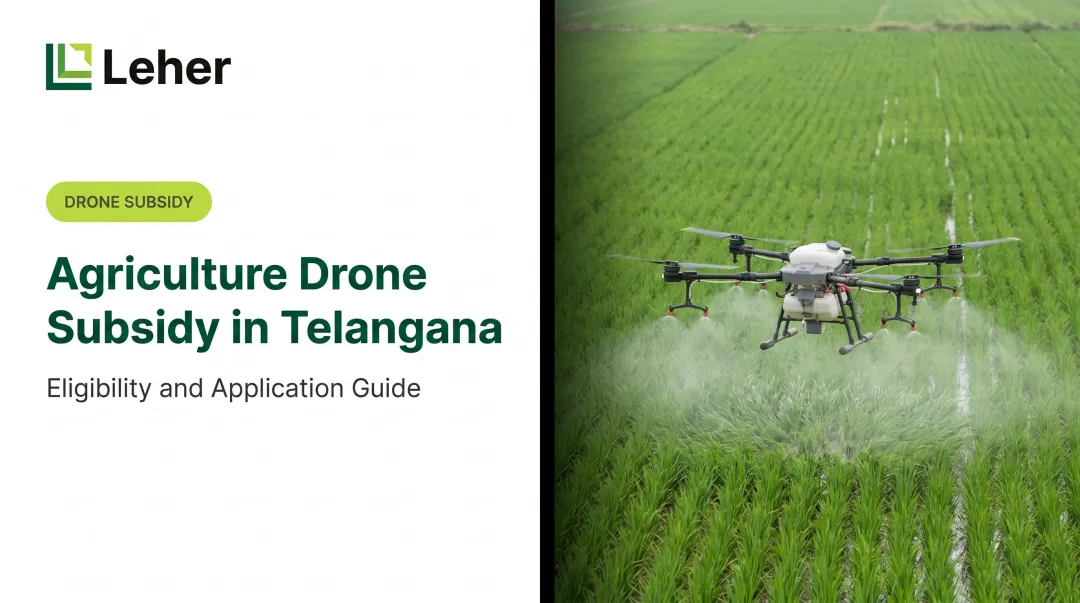
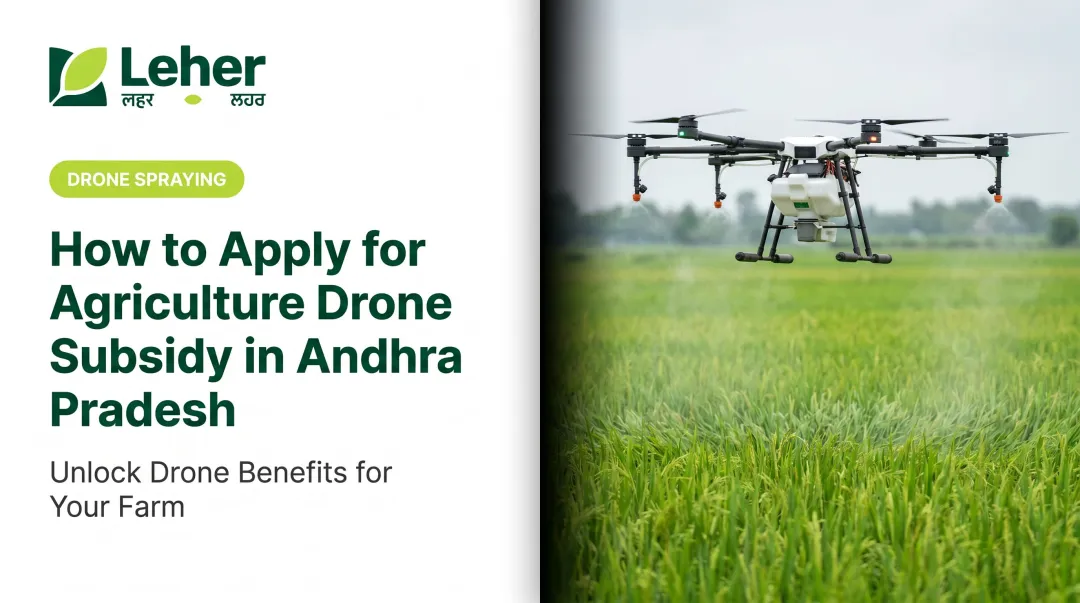
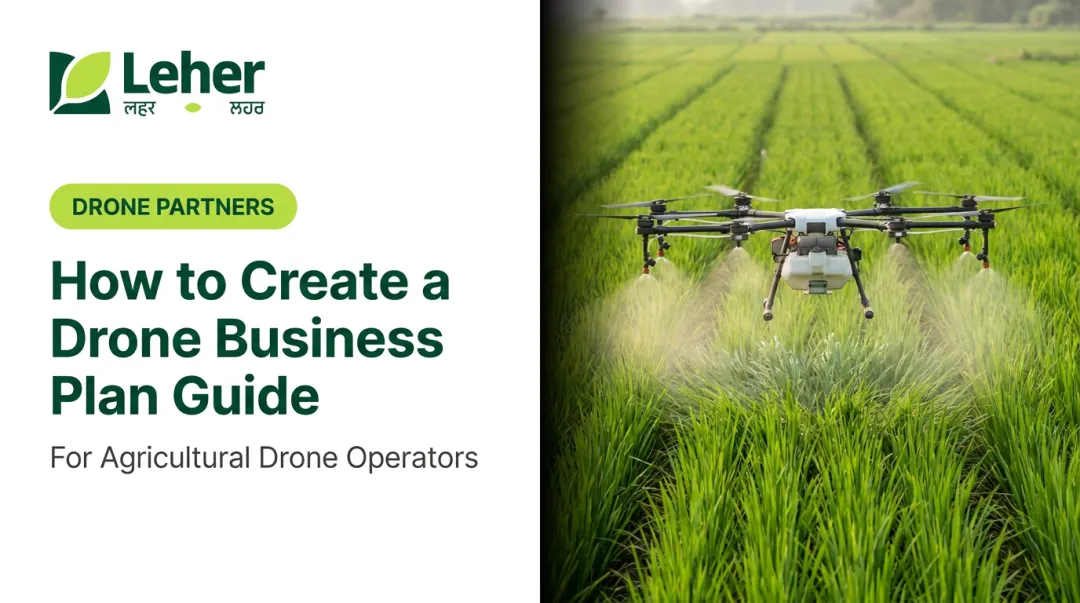
Agricultural spraying drones typically fall in the Small category (2–25 kg). This is one of the fastest-growing commercial drone segments in India, with government schemes like Namo Drone Didi providing 15,000 drones to women SHGs with up to ₹8 lakh per package in central financial assistance.
Whether you plan to work independently or join a platform, a valid RPC is a hard requirement before taking on paid work. Companies like Leher, which connects DGCA-certified drone partners with farmers across India for on-demand crop spraying, verify pilot licences before onboarding.
That certification also directly expands what you can earn — spraying contracts, FPO tie-ups, and platform-based assignments are all closed to unlicensed pilots.
Step-by-Step: How to Apply for Your DGCA Drone License
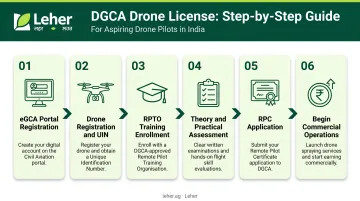
The process has six stages: portal registration → drone registration (UIN) → RPTO training → assessment → RPC application → begin commercial operations.
Step 1: Register on the eGCA Portal
The eGCA portal is now the primary platform for drone-related registrations. Select "Get eGCA ID (For Drone Users Only)" and register as a Remote Pilot. Login uses OTP verification to your registered mobile or email.
Note: The Digital Sky platform still handles airspace functions — flight-plan approvals, green/yellow/red zone maps — but D-1 to D-5 drone certification services have migrated to eGCA.
Step 2: Register Your Drone and Obtain a UIN
Under Rule 14, no drone above 250g can be operated commercially without a registered UIN. The Form D-2 application requires:
- Manufacturer serial number
- Serial numbers for the flight-control module and remote pilot station
- Drone model details
The UIN registration fee is ₹100 — a common misconception is that it's ₹1,000, but the current Drone Rules fee schedule confirms the lower figure.
One critical check before purchase: your drone model must carry a DGCA type certificate for commercial operations. Not all commercially sold agricultural drones have one. IoTechWorld Avigation's AGRIBOT A6 is a verified type-certified agri-drone example — check DGCA's approved list before buying.
Step 3: Enroll in a DGCA-Approved RPTO
Rule 37 requires training from an authorised Remote Pilot Training Organisation. Training covers:
- UAS regulations and air law
- Aerodynamics and meteorology
- Air traffic control procedures
- Emergency handling protocols
- Practical flying sessions and payload operations
Verify RPTO authorisation on the DGCA website before enrolling. Not every school advertising drone training holds current DGCA approval. Fee ranges vary significantly:
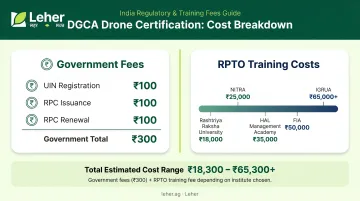
| RPTO | Duration | Approx. Fee |
|---|---|---|
| IGRUA / Drone Destination | 5 days | ₹55,000 + GST (Small); ₹65,000 + GST (Medium) |
| Garuda Aerospace | 5–8 days | ₹35,000 excl. GST |
| Rashtriya Raksha University | 7 days | ₹18,000 incl. GST |
| Leher | Flexible | Contact for current fee |
Leher's DGCA-approved training programme is specifically structured around agricultural drone operations, with hands-on field sessions and job placement support for graduates entering the agri-drone sector.
Step 4: Clear the Theoretical and Practical Assessment
Assessments are conducted by the RPTO and typically include:
- Theory test — covering regulations, meteorology, navigation, and safety
- Simulator check — where applicable
- Practical skill test — flight manoeuvres, emergency handling, payload installation
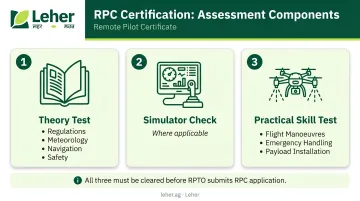
All components must be cleared before your RPTO can initiate the RPC application on your behalf.
Step 5: Apply for the Remote Pilot Certificate
The RPTO must apply for your RPC within 7 days of you passing assessments; DGCA then issues the certificate within 15 days. You'll need to submit:
- Training completion certificate from your RPTO
- Assessment results
- Medical fitness certificate (required by most RPTOs at enrollment)
- Government-issued photo ID and address proof
The RPC issuance fee is ₹100, and once issued, it remains valid for 10 years.
Step 6: Understand Airspace Permissions Before Flying
An RPC allows you to begin commercial operations, though airspace permissions must be checked before every flight. The Digital Sky platform provides real-time green/yellow/red zone maps.
No permission is required for drone operations in green zones. Yellow zones require advance approval through the portal. Red zones are restricted. Flying commercially without checking zone status is a compliance failure even with a valid RPC.
Eligibility Criteria and Documents Required
Who Can Apply
- Age: 18 to 65 years
- Education: Class 10 pass or equivalent
- Training from a DGCA-authorised RPTO
- Passing the RPTO's theoretical and practical assessments
- Medical fitness certificate (required at application stage)
Documents for RPC Application
- Government-issued photo ID and address proof (passport, Aadhaar, or driving licence — the 2023 amendment removed the mandatory Indian passport requirement)
- Class 10 certificate or equivalent
- Medical fitness certificate
- RPTO training completion certificate
- Assessment result documentation
Once your pilot credentials are in order, you'll need a separate set of documents for registering the drone itself.
Drone-Specific Documents for UIN
- Drone serial number and flight-control module details
- Type certificate for the drone model (confirm the type certificate exists before you buy the drone)
The Agricultural Drone Trap
If you plan to operate an agricultural spraying drone, confirm that your specific drone model appears on DGCA's type-certified list before purchasing. DGCA requires type certification for small-category agri-drones too — there are no exemptions. Buying an uncertified model means no UIN can be issued, leaving you with a drone you legally cannot fly commercially.
Costs, Validity, and Common Application Mistakes
Fee Summary
| Item | Current Fee |
|---|---|
| UIN registration | ₹100 |
| RPC issuance | ₹100 |
| RPC renewal | ₹100 |
| RPTO training | ₹18,000–₹65,000+ depending on institute and category |
The UAOP fees (₹25,000 new, ₹10,000 renewal) that appear in older guides are no longer applicable — the operator permit requirement was abolished under the current rules.
The RPC is valid for 10 years. Flying on an expired RPC is treated the same as flying with no certification at all.
Mistakes That Cause Delays or Rejection
- Training certificates from non-DGCA-authorised RPTOs are not accepted — verify your school's status before enrolling
- Uncertified drones cannot be registered under UIN — a common trap with imported or lesser-known agri-drone brands
- Certification services have moved to eGCA — applications submitted through the old Digital Sky portal will not be processed
- UIN and RPC are separate requirements — one does not substitute for the other
- Always check airspace zones before commercial flights — a valid RPC does not grant blanket clearance to fly anywhere
Frequently Asked Questions
How do I get a DGCA drone licence?
Register on the eGCA portal and obtain a UIN for your drone. Then enrol in a DGCA-approved RPTO, complete theoretical and practical training, and pass the assessments. The RPTO handles most of the post-assessment submission and document processing on your behalf.
How much does a DGCA drone licence course cost?
Government fees are minimal — ₹100 for UIN and ₹100 for RPC issuance. RPTO training costs range from approximately ₹18,000 (including GST) at institutions like Rashtriya Raksha University to ₹55,000–₹65,000 + GST at IGRUA, depending on drone category and course structure.
What are the DGCA rules and regulations for drones?
The Drone Rules, 2021 (amended in 2022 and 2023) govern all drone operations in India, covering weight-based drone categories, airspace zones (green/yellow/red), UIN registration for drones above 250g, RPC requirements for commercial pilots, and type certification for drone models.
How long does it take to get a DGCA drone licence?
Training takes 5–8 days at the RPTO, after which the RPTO has 7 days to submit your application and DGCA has 15 days to issue the certificate. Plan for 4–6 weeks end-to-end, accounting for batch scheduling and document processing.
Is a DGCA drone licence required for agricultural drone spraying?
Yes. Agricultural spraying drones typically fall in the Small category (2–25 kg), requiring a valid RPC for the pilot, a UIN for the drone, and a type certificate for the drone model before any commercial spraying service can be legally offered.
What is the validity period of a DGCA Remote Pilot Certificate?
The RPC is valid for 10 years from the date of issuance, as specified in the Drone Rules, 2021 and confirmed by PIB documentation. Renewal is required before expiry to continue legal commercial operations without interruption.