The core problem isn't just disease — it's late detection. By the time a farmer notices widespread symptoms across a field, the pathogen has typically already moved through a significant portion of the crop. Treatment options narrow, recovery becomes harder, and yield loss compounds.
This article covers what diseased leaves actually look like, which diseases threaten India's major crops, how traditional and AI-based detection methods compare, and how drone technology is changing what's possible for Indian farmers at scale.
Key Takeaways
- Diseased leaves show visual signs including discoloration, spots, powdery coatings, wilting, curling, and premature leaf drop — catch them early.
- Key diseases affecting Indian crops: rice blast, bacterial leaf blight, wheat rust, tomato early and late blight, potato late blight, and cotton leaf curl virus.
- Manual inspection is slow and error-prone at scale — AI models using Convolutional Neural Networks now reach 95–99% detection accuracy on benchmark datasets.
- Drones with imaging sensors can scan large fields quickly, feeding data into AI pipelines for disease zone mapping.
- Identify the pathogen correctly, apply the right treatment, and remove infected debris promptly to limit spread.
How to Identify a Diseased Leaf: Visual Warning Signs
Disease detection begins with observation. Farmers should conduct regular visual inspections of leaves — both the top surface and the underside — especially during high-humidity periods, after temperature swings, or following heavy rainfall. Catching symptoms early is the only reliable way to contain spread.
Discoloration and Spots
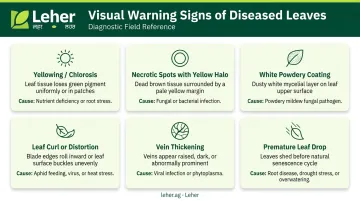
Yellowing (chlorosis) is often the first visible sign something is wrong. The pattern matters:
- Uniform yellowing across lower leaves first signals likely nitrogen deficiency
- Patchy or interveinal yellowing on upper leaves may indicate sulphur deficiency or viral infection
- Scattered yellow flecks on young leaves are consistent with mosaic viruses, including Yellow Mosaic Disease in legumes
Necrotic spots and lesions follow chlorosis in many fungal and bacterial infections. Watch for:
- Dark brown or black circular spots, sometimes with a yellow halo — a hallmark of early blight in tomatoes (Alternaria solani produces classic bull's-eye concentric rings with a yellow margin)
- Water-soaked spots that turn brown or grey — associated with bacterial infections and late blight
- Angular lesions with grayish-brown centres — seen in Cercospora leaf spot on brinjal and similar crops
The spot's edge is a key diagnostic clue. A well-defined yellow halo around a lesion points toward bacterial or fungal infection. Irregular, spreading water-soaked margins suggest something like late blight moving fast.
Structural and Textural Changes
Beyond colour, the leaf's surface and shape reveal disease:
- White or grey powdery coating on the upper surface → powdery mildew (common in wheat, grapevines). On the lower surface with irregular yellow patches on top points to downy mildew in grapes.
- Leaf curl or distortion not explained by drought may indicate viral infection or whitefly/aphid infestation, both of which spread rapidly between plants.
- Thickening of veins with upward or downward curling → a pattern associated with cotton leaf curl virus.
- Premature leaf drop outside normal seasonal patterns → late-stage disease; intervention is urgent and recovery becomes significantly harder.
Common Leaf Diseases Affecting Major Indian Crops
Different crops face different pathogens depending on their agro-climatic zone. Indian farmers growing rice, wheat, tomatoes, potatoes, and cotton encounter distinct leaf disease threats — often within the same season.
Rice Leaf Diseases
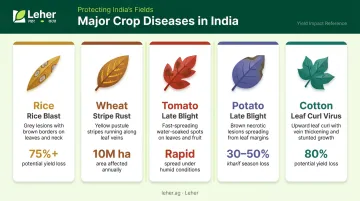
Rice blast (Magnaporthe oryzae) is among the most destructive rice diseases worldwide. According to ICAR-NRCPB, it can cause more than 75% annual yield losses during epidemic conditions. Symptoms appear as:
- Diamond or spindle-shaped lesions on leaves
- Grey or white centres with brown to reddish-brown necrotic borders
- Lesions on leaf collars in severe cases, causing entire tillers to die
Bacterial leaf blight (Xanthomonas oryzae) follows a different pattern: yellowing and water-soaked stripes start at leaf tips or edges, progressing toward the leaf base. In severe cases, milky bacterial ooze appears on young lesions, and entire leaves turn brown and dry.
Wheat and Tomato Leaf Diseases
Wheat stripe rust (yellow rust) produces yellow to orange urediniospores in long, narrow pustular stripes along the leaves. It's especially common in North India's cooler wheat-growing zones — ICAR-IIWBR estimates stripe rust affects approximately 10 million hectares under cool, wet conditions and has been a significant concern since 2006–07.
Tomato growers face two blights that are often confused. Key differences:
- Early blight (Alternaria solani): dark brown spots with concentric bull's-eye rings, appearing on older leaves first, with a yellow margin around each lesion
- Late blight (Phytophthora infestans): pale green, water-soaked spots that darken rapidly in cool, humid weather — no ring pattern, spreads faster
Potato and Cotton Leaf Diseases
Potato late blight (Phytophthora infestans) is responsible for 30–50% loss in kharif potato production in India, according to an ICAR Potato Journal study. Symptoms include dark, water-soaked patches on leaves that expand rapidly, often with white mould visible on the leaf underside in humid conditions.
Cotton leaf curl virus (CLCuD) is vectored by whiteflies, making it difficult to manage once established in a field. Symptoms include upward and downward leaf curling, vein thickening, and cup-shaped enation structures on the underside. A 2024 Elsevier study found cotton leaf curl disease can cause up to 80% yield loss, with some farmers' fields recording 53.6% losses in affected seasons. Controlling whitefly populations early — before the virus spreads — is the most effective line of defense.
Traditional vs. AI-Based Leaf Disease Detection Methods
Manual Inspection: Limitations at Scale
Human visual inspection works at small scale. It breaks down quickly when a farmer manages multiple acres, or when disease symptoms overlap with nutrient deficiencies or other conditions.
Key problems with manual detection:
- Symptom overlap: Early fungal infection, viral yellowing, and nutrient deficiency can look nearly identical to an untrained eye — even experienced agronomists misidentify under pressure
- Coverage gaps: A single farmer cannot inspect every plant regularly across large holdings; disease spreads between inspection cycles, particularly during the monsoon
- Expert availability: On-farm diagnostic expertise varies widely across India; access to qualified agronomists is uneven in rural areas
Machine Learning and Deep Learning for Detection
AI-based detection works by training models — particularly Convolutional Neural Networks (CNNs) — on large libraries of labelled leaf images. The model learns to associate specific visual patterns with specific diseases, then applies that learning to new images.
The PlantVillage dataset, the most widely used training resource for plant disease models, contains over 54,000 images covering 14 crop species and 26 diseases. A deep learning study using this dataset reported 99.35% classification accuracy under controlled conditions. More recent segmentation work using models like LinkNet-34 achieved a 95% Dice coefficient for disease identification and boundary mapping.
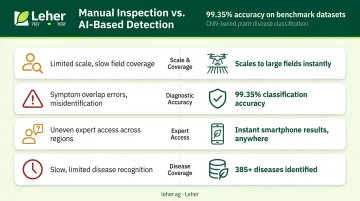
That level of accuracy, even discounted for real-field variability, exceeds what manual scouting can deliver across large acreages — which is why these models now power practical tools farmers can use directly from their phones.
Mobile Apps and On-Farm Tools
Smartphone-based apps put AI-powered diagnosis directly in farmers' hands:
- Plantix: Identifies over 385 crop diseases; farmers photograph an affected leaf and receive near-instant disease identification and treatment recommendations. Available on Android.
- Crop Doctor: Developed by NIC, covers paddy, vegetables, pulses, and oilseeds; supports both Hindi and English, and includes expert interaction features.
Image quality affects accuracy — clear photos taken in natural light produce better results than blurry or shadowed images.
How Drones Are Transforming Leaf Disease Detection in India
Ground-level inspection, even with AI apps, still requires a person to walk through a field and notice a problem. Drones change that equation entirely.
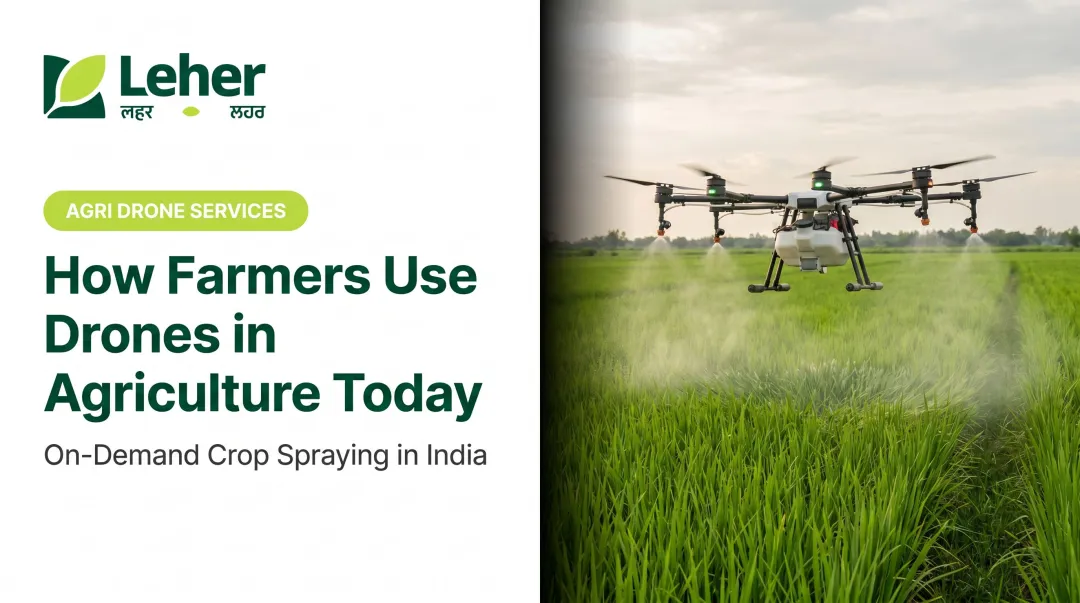
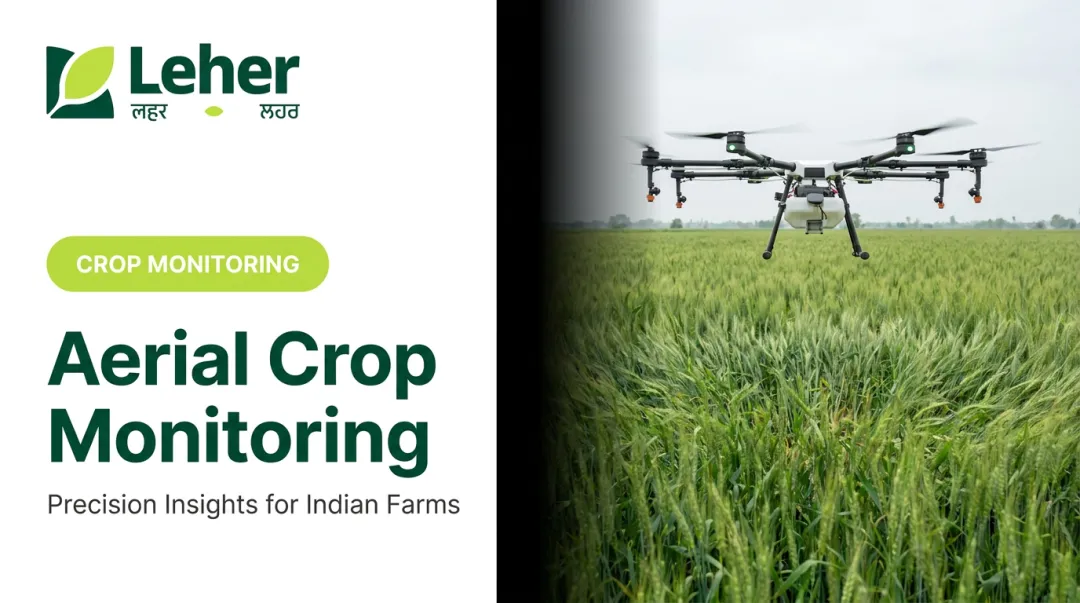
Drone-mounted cameras and multispectral sensors can capture high-resolution imagery of entire fields within a single flight — covering what would take a person days to inspect manually. The imagery is then processed through AI models, the same deep learning systems described above, to generate disease maps that pinpoint affected zones within a field.
This approach enables:
- Early detection across large areas before disease becomes visible to ground-level inspection
- Precise zone identification rather than whole-field treatment decisions
- Repeated monitoring across the crop cycle, tracking disease progression over time
Once affected zones are identified, the next step is treatment. Leher's on-demand drone spraying service — bookable through the Leher App — operates across rice (paddy), wheat, cotton, sugarcane, and vegetable crops. A farmer who identifies disease, whether through an AI app, agronomist advice, or visual inspection, can book a spray session and have a DGCA-certified pilot arrive at the farm.
Leher's drones cover up to 50 acres per day, applying pesticides or fungicides with precision that blanket manual spraying cannot replicate.
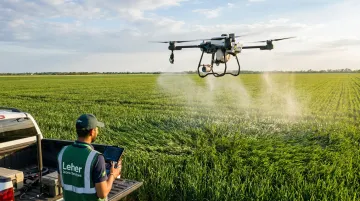
For FPOs and contractors managing large or contiguous holdings, Leher supports consolidated scheduling — coordinating multi-farm spray sessions under a single booking to reduce downtime between fields.
What Farmers Should Do After Detecting Leaf Disease
Acting fast is important — but acting correctly matters just as much. Applying the wrong treatment wastes money and time, and some treatments add stress to already-weakened plants.
Identify before you spray — Use visual signs, an AI app (Plantix, Crop Doctor), or consult an agronomist. Confirm whether the pathogen is fungal, bacterial, or viral, since fungicides, bactericides, and insecticides address different problems.
Contain the spread — Isolate or avoid disturbing heavily infected sections. Do not move infected plant material across the field.
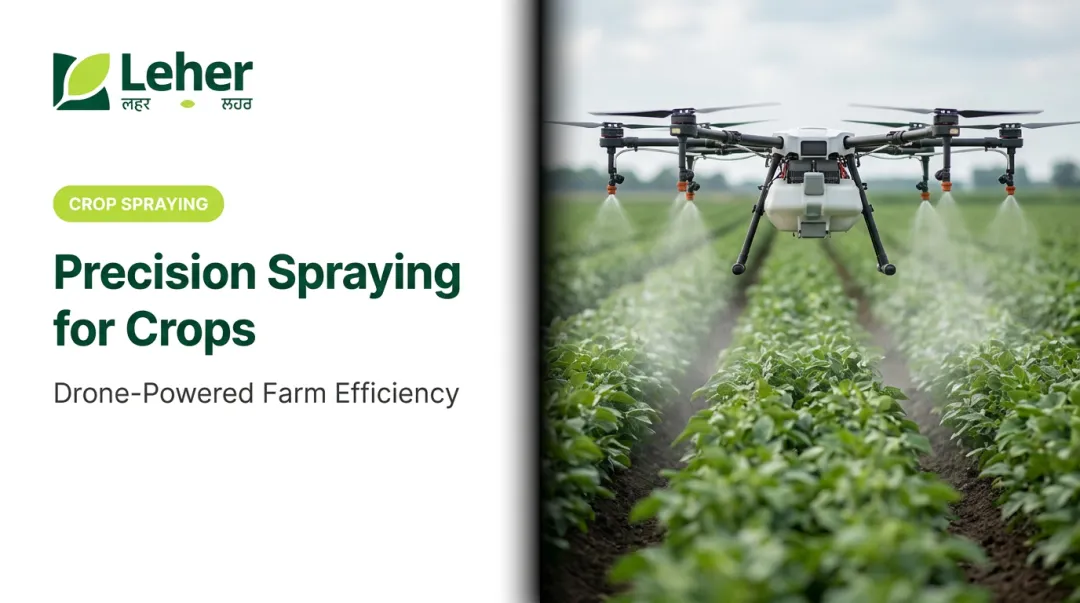
Apply the right treatment — Use the correct product at the recommended concentration. Under-dosing creates resistance; over-dosing adds unnecessary cost and chemical load. For large areas, drone-based precision spraying targets only affected zones, cutting unnecessary chemical application.
Clear and dispose of infected debris — Pathogens like Alternaria solani persist in plant debris and spread through wind-borne spores and rain splash. Remove infected material promptly to reduce the pathogen reservoir in the field.
Planning for the Next Season
- Choose disease-resistant seed varieties where available — ICAR recommends resistant varieties as the most effective strategy for managing rice blast
- Practise crop rotation to break disease cycles
- Set a regular monitoring schedule: manual inspection during early crop stages, drone-assisted scanning for large or high-value holdings
Frequently Asked Questions
What does a diseased leaf look like?
Common signs include yellowing or browning (starting in patterns that vary by disease), dark spots or lesions — sometimes with concentric rings or yellow halos — powdery white coatings, wilting, curling, and premature leaf drop. Symptoms differ by crop and pathogen type, so pattern recognition is key to correct identification.
What AI app can detect plant diseases?
Plantix and Crop Doctor are the most widely used in India. Both let farmers photograph a diseased leaf and get instant disease identification with treatment recommendations — Plantix covers 385+ diseases, while Crop Doctor supports Hindi and English for major field crops. Clear photos in natural light improve accuracy.
What are the most common leaf diseases in Indian crops?
Rice blast, bacterial leaf blight, wheat stripe rust, tomato early and late blight, potato late blight, and cotton leaf curl virus are among the most economically damaging. Each is linked to specific agro-climatic conditions, with monsoon humidity and cool wet weather being common triggers.
Can drones detect leaf diseases?
Yes. Drones equipped with high-resolution or multispectral cameras can scan large fields quickly, and the imagery can be processed through AI models to map disease zones across hundreds of acres — far faster than ground-level inspection.
How early can AI detect crop diseases?
AI models can identify disease-associated patterns before widespread symptoms are visible to the naked eye. Hyperspectral imaging combined with machine learning has demonstrated pre-symptomatic detection in research settings, enabling faster intervention and better yield protection.