That's where government subsidies change the equation. Under central schemes like SMAM and the NAMO Drone Didi Yojana, Tamil Nadu farmers can receive 40% to 80% off the purchase price of an agriculture drone. This guide walks through who qualifies, which schemes apply, and exactly how to apply — step by step.
Key Takeaways
- Tamil Nadu farmers can claim 40%–80% subsidies on agriculture drone purchases through SMAM and NAMO Drone Didi
- Women SHGs get the highest assistance — 80% up to ₹8 lakh — under NAMO Drone Didi
- SC/ST, small and marginal, and women farmers qualify for 50% up to ₹5 lakh under SMAM
- Apply at agrimachinery.nic.in — only DGCA-empaneled drones are eligible
- Prefer a service over ownership? Hire drone spraying at ₹800/acre through TNAU, or book on-demand through services like Leher
Why Tamil Nadu Farmers Are Turning to Drone Technology
The labour crisis in Tamil Nadu's farms is real and measurable. A decade-long survey by the Tamil Nadu State Planning Commission found that people engaged in agricultural work fell from 43% to 22% between 2012 and 2024, with labour costs accounting for 39% of cultivation expenses. In sugarcane belts, labour charges for harvesting have surged from ₹850 to ₹1,350 per tonne in a single year.
Beyond cost, there's a health dimension that rarely gets discussed. A Southern India study found that chronic abdominal pain and nausea were reported by 20% of pesticide sprayers versus 7.6% of non-sprayers. Manual knapsack spraying exposes operators to chemicals for hours at a stretch — a risk that drone application eliminates entirely.
What the Numbers Look Like on the Ground
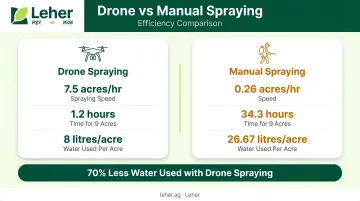
A paddy field trial conducted in Tamil Nadu produced a striking comparison. According to research published in Horizon E-Publishing:
- Drone spraying: 9 acres completed in 1.2 hours (7.5 acres/hour)
- Manual knapsack spraying: same 9 acres took 34.3 hours (0.26 acres/hour)
- Water used by drone: 8 litres/acre vs. 26.67 litres/acre manually — a 70% reduction
On-demand drone spraying services — including the Leher App, which connects Tamil Nadu farmers with DGCA-certified pilots for same-day spraying — report up to 30% reduction in pesticide use and 90% reduction in water consumption. For paddy and sugarcane farmers dealing with shrinking labour pools and rising input costs, the economics are clear. Tamil Nadu's subsidy programmes exist precisely to make this shift affordable — and the application process is more straightforward than most farmers expect.
Who Is Eligible for the Agriculture Drone Subsidy in Tamil Nadu?
Eligibility is defined at the central level under SMAM, but Tamil Nadu's Agriculture Department handles local disbursement. Any Tamil Nadu farmer with valid land records and an Aadhaar-linked bank account can apply.
Farmer Category Breakdown
| Beneficiary Category | Subsidy | Maximum Cap |
|---|---|---|
| SC/ST farmers | 50% | ₹5 lakh |
| Small and marginal farmers | 50% | ₹5 lakh |
| Women farmers | 50% | ₹5 lakh |
| Other individual farmers | 40% | ₹4 lakh |
| Agricultural graduates (CHC setup) | 50% | ₹5 lakh |
| FPOs (demonstrations) | 75% | — |
| CHCs (cooperative/FPO/rural entrepreneur) | 40% | ₹4 lakh |
| Women SHGs (NAMO Drone Didi) | 80% | ₹8 lakh |
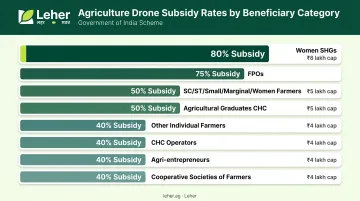
Agricultural graduates establishing Custom Hiring Centres qualify for a 50% subsidy up to ₹5 lakh — an option that lets rural drone entrepreneurs in Tamil Nadu build a service business without needing to farm personally.
Key Eligibility Conditions
Three conditions are non-negotiable:
- DGCA-empaneled drone — the model must be on the government-approved manufacturer list; check via the DigitalSky platform or the agrimachinery portal before placing any order
- Remote Pilot Certificate (RPC) — the operator must hold or be actively pursuing an RPC from a DGCA-approved Remote Pilot Training Organisation (RPTO)
- Digital Sky registration — the drone must be registered on the Digital Sky Platform with a Unique Identification Number (UIN)
Tamil Nadu has active RPTOs where farmers and entrepreneurs can get certified. Two verified options are CASR RPTO at MIT Campus, Anna University (Chromepet, Chennai) (recognised as India's first DGCA-approved drone pilot training organisation) and Yali Air Rescue RPTO in Thanjavur.
Training fees are not standardised — contact these institutions directly for current rates before budgeting.
Key Subsidy Schemes for Agriculture Drones in Tamil Nadu
Tamil Nadu farmers can access two active central schemes and one financing route. They serve different applicant profiles and should not be treated as interchangeable.
Sub-Mission on Agricultural Mechanization (SMAM)
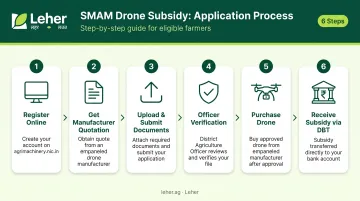
SMAM is the primary route for individual farmers, FPOs, and CHC operators. The process works through Direct Benefit Transfer (DBT):
- Farmer applies on agrimachinery.nic.in and selects from the empaneled drone list
- District Agriculture Officer verifies the application and land records
- Farmer purchases the drone from the quoted vendor after approval
- Physical inspection confirms model and DGCA registration match
- Subsidy credited directly to the Aadhaar-linked bank account
PIB confirms the subsidy caps listed in the table above. As of 2023, ₹141.39 crore had been released under SMAM for Kisan Drone promotion nationally, covering 461 drones and 1,585 CHCs.
NAMO Drone Didi Yojana
This scheme targets Women SHGs exclusively. Key details:
- 80% central financial assistance up to ₹8 lakh per SHG
- Includes a 15-day training programme covering drone piloting, nutrient and pesticide application
- The remaining balance is eligible for AIF credit support
- As of January 2026, 44 SHGs in Tamil Nadu had received drones and 44 members had been trained as certified pilots
The scheme is administered nationally through Lead Fertilizer Companies as implementing bodies. SHGs interested in applying should contact their district agriculture office or the Tamil Nadu Corporation for Development of Women for current enrolment status and upcoming allocation rounds.
Agriculture Infrastructure Fund (AIF)
AIF provides financing support — not a direct subsidy. It's most relevant for:
- Agri-tech entrepreneurs setting up drone service businesses
- CHC operators who don't qualify for SMAM grants
- FPOs wanting to build a revenue-generating drone fleet
What AIF offers:
- Loan support up to ₹2 crore
- 3% interest subvention (per annum, capped at ₹2 crore per project)
- Credit guarantee cover
- Drone purchase for smart/precision agriculture is an explicitly eligible project category
Apply through the AgriInfra portal. Leher's Drone Partner Programme also facilitates AIF loan access for entrepreneurs who join as Leher drone partners.
CHC Rental: The No-Subsidy Alternative
For farmers who can't afford even the subsidised purchase price, Tamil Nadu's Agricultural Engineering Department lists TNAU spraying drones for hire at ₹800/acre for rice, maize, cotton, groundnut, pulses, sugarcane, and tapioca — an official state benchmark.
Private agri-drone services like Leher operate on a similar model: book through the app, a DGCA-certified pilot arrives and sprays, pay only after the job is done. There's no subsidy application to file, no equipment to purchase upfront, and access is immediate. For farmers waiting on a SMAM approval or simply not ready to own equipment, this is the practical entry point.
How to Apply for the Agriculture Drone Subsidy in Tamil Nadu: Step by Step
Applications are processed through agrimachinery.nic.in, the central government portal for farm mechanization subsidies. Tamil Nadu farmers can also approach their district Agriculture Officer directly; the Uzhavan app helps with scheme discovery and CHC services if you prefer offline guidance first.
Step 1: Register on the Portal
Go to agrimachinery.nic.in and create a farmer account. Select your correct beneficiary category — Individual, FPO, SHG, or CHC — before entering land and personal details. The category you select determines your subsidy percentage, so getting this right matters.
Step 2: Get a Quotation from an Empaneled Manufacturer
A formal quotation from a DGCA-approved, government-empaneled drone manufacturer is mandatory. Buying from an unlisted vendor results in automatic rejection. Verify the model on the DigitalSky platform before requesting any quotation or making any payment.
Step 3: Upload Documents and Submit
Documents required:
- Aadhaar card
- PAN card
- Land ownership or lease records
- DBT-enabled bank account passbook
- Drone manufacturer quotation (from empaneled vendor)
- Caste or gender certificate (where applicable)
Critical: All documents must match exactly on name and address. A discrepancy between your Aadhaar name and bank passbook is one of the most common rejection reasons.
Step 4: Await District Agriculture Officer Verification
A District Agriculture Officer will review your documents, verify land ownership, and may conduct a field visit. No official processing timeline is published — follow up directly with your local agriculture office if you haven't heard back within 30 days of submission.
Step 5: Purchase the Drone and Get It Inspected
Only purchase the drone after receiving approval. Buying before approval disqualifies your application. An agriculture officer will then inspect the drone to confirm the make, model, and DGCA registration match the approved details.
Step 6: Receive Subsidy via DBT
After successful inspection, the approved subsidy amount is credited directly to your Aadhaar-linked bank account. Pilot training costs are not covered by the subsidy and must be budgeted separately. Contact a DGCA-registered Remote Pilot Training Organisation (RPTO) in Tamil Nadu for current fee structures.
Common Mistakes and Key Tips When Applying
Top reasons for rejection or delay:
- Name or address mismatches across Aadhaar, land records, and bank passbook
- Purchasing the drone before receiving approval
- Selecting a non-empaneled manufacturer
- Applying under the wrong beneficiary category (e.g., claiming SC/ST status without the required certificate)
Two tips that improve your approval chances:
Visit your local KVK or district agriculture office before submitting. Staff there know the portal well and can catch document issues before they become rejection reasons.
Verify your specific drone model on the DigitalSky empaneled list before placing any order. The model name on your quotation must match exactly what's on the approved list; a variant or older model number can cause rejection even if the manufacturer is approved.
The subsidy does not cover the full drone cost. Out-of-pocket expenses include pilot training/RPC certification, accessories and batteries, applicable GST, and the unsubsidised portion of the purchase price. Factor these costs into your budget before applying.
Frequently Asked Questions
What is the subsidy for agriculture drones in Tamil Nadu?
Under SMAM, SC/ST, small and marginal, and women farmers receive 50% up to ₹5 lakh; other individual farmers get 40% up to ₹4 lakh. Under NAMO Drone Didi, eligible Women SHGs receive 80% central assistance up to ₹8 lakh. Both schemes are active in Tamil Nadu.
How do I get a subsidy for agriculture drones in Tamil Nadu?
Register on agrimachinery.nic.in, select your beneficiary category, and upload your documents along with a quotation from a DGCA-empaneled drone manufacturer. A District Agriculture Officer will verify your application before approval and subsidy disbursement via DBT.
Who is eligible for finance for agriculture drones in Tamil Nadu?
SC/ST farmers, small and marginal farmers, women farmers, FPOs, SHGs, CHC operators, and agricultural graduates are eligible for SMAM subsidies. Entrepreneurs and agri-tech startups can access AIF loans up to ₹2 crore with 3% interest subvention for drone service businesses.
What is the price of a 12-litre agriculture drone in Tamil Nadu?
Prices for medium-payload (10–12 litre) agriculture drones from DGCA-empaneled manufacturers are not standardised publicly. Request a formal quotation from an empaneled vendor — the subsidy cap then sets your out-of-pocket cost based on your farmer category.
What documents are needed to apply for the agriculture drone subsidy in Tamil Nadu?
You'll need the following documents:
- Aadhaar card and PAN card
- Land ownership or lease records
- DBT-enabled bank account passbook
- Quotation from an empaneled drone manufacturer
- Caste or gender certificate (where your category requires it)
Can Tamil Nadu farmers access drone services without buying a drone?
Yes. TNAU drones are available for hire at ₹800/acre through Tamil Nadu's Agricultural Engineering Department for major crops. Private services like Leher offer on-demand drone spraying through the Leher App — book, spray, and pay after the job is done — with no purchase or registration required.