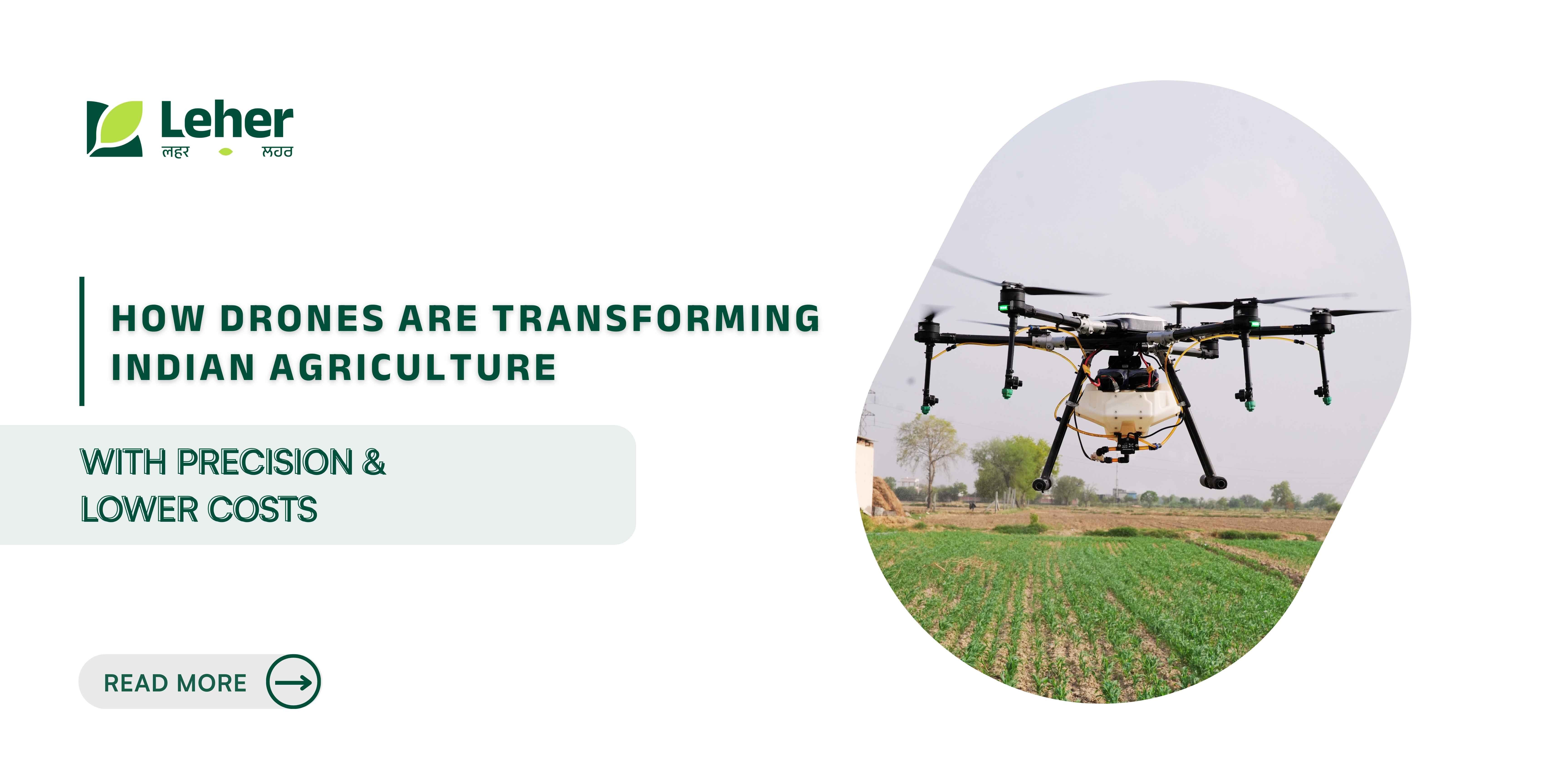
How Drones Are Transforming Indian Agriculture With Precision & Lower Costs
Traditional farming methods are breaking down. Labour shortages hit harder every season. Water scarcity threatens yields. Pesticide costs keep climbing. And despite all your efforts, coverage remains uneven, some patches get overdosed while others barely get touched.
Indian farmers are losing time, money, and peace of mind to outdated spraying methods that simply can't keep up with modern agricultural demands.
But there’s a solution already enabling thousands of farmers to use far less water, cut input costs by 20-30%, and finish spraying around 50 acres in a single day. It's called precision agriculture drones, and it's more accessible than you think.
This guide explains everything you need to know about drone-powered farming, how it works, what it costs, who benefits most, and how you can get started today through a simple mobile app.
Key Insights
Water Crisis Solution: Agricultural drones save up to 90% water compared to traditional spraying methods, addressing India's growing water scarcity challenge.
Economic Impact: Farmers achieve 40% savings on input costs and 20% overall cost reduction with pay-per-acre drone spraying at ₹300–₹700 per acre.
Speed & Scale: One agricultural drone can spray up to 50 acres per day, completing in 5 minutes what takes hours manually.
Income Opportunity: Rural youth and entrepreneurs can earn ₹50,000–₹1.5 lakh monthly as certified drone operators through platforms like Leher.
Market Growth: India's drone-based precision agriculture market is expanding rapidly with government support, creating thousands of opportunities for farmers and drone entrepreneurs.
The Crisis in Indian Fields: Why Traditional Spraying Falls Short
Indian farmers face an acute crisis during the spraying season. Labour shortage has reached critical levels, finding skilled workers is nearly impossible when you need them most. Those who show up demand wages that eat into already thin margins.
Water scarcity grows worse each year. Yet traditional spraying wastes 400–600 litres per acre. Groundwater tables drop. Borewells run dry. The cost of pumping water keeps climbing.
Manual spraying wastes almost half of expensive pesticides and fertilisers through drift and uneven application. Workers face health risks from chemical exposure. Coverage is patchy, some areas get over-sprayed while others are missed entirely.
For farmers managing 10–50 acres, these inefficiencies directly impact profitability. The old methods simply don't work anymore. Indian agriculture needs a fundamental shift in how we protect our crops. That shift is happening now through drone technology for agriculture in India.
What Are Agricultural Drones and How Do They Work?
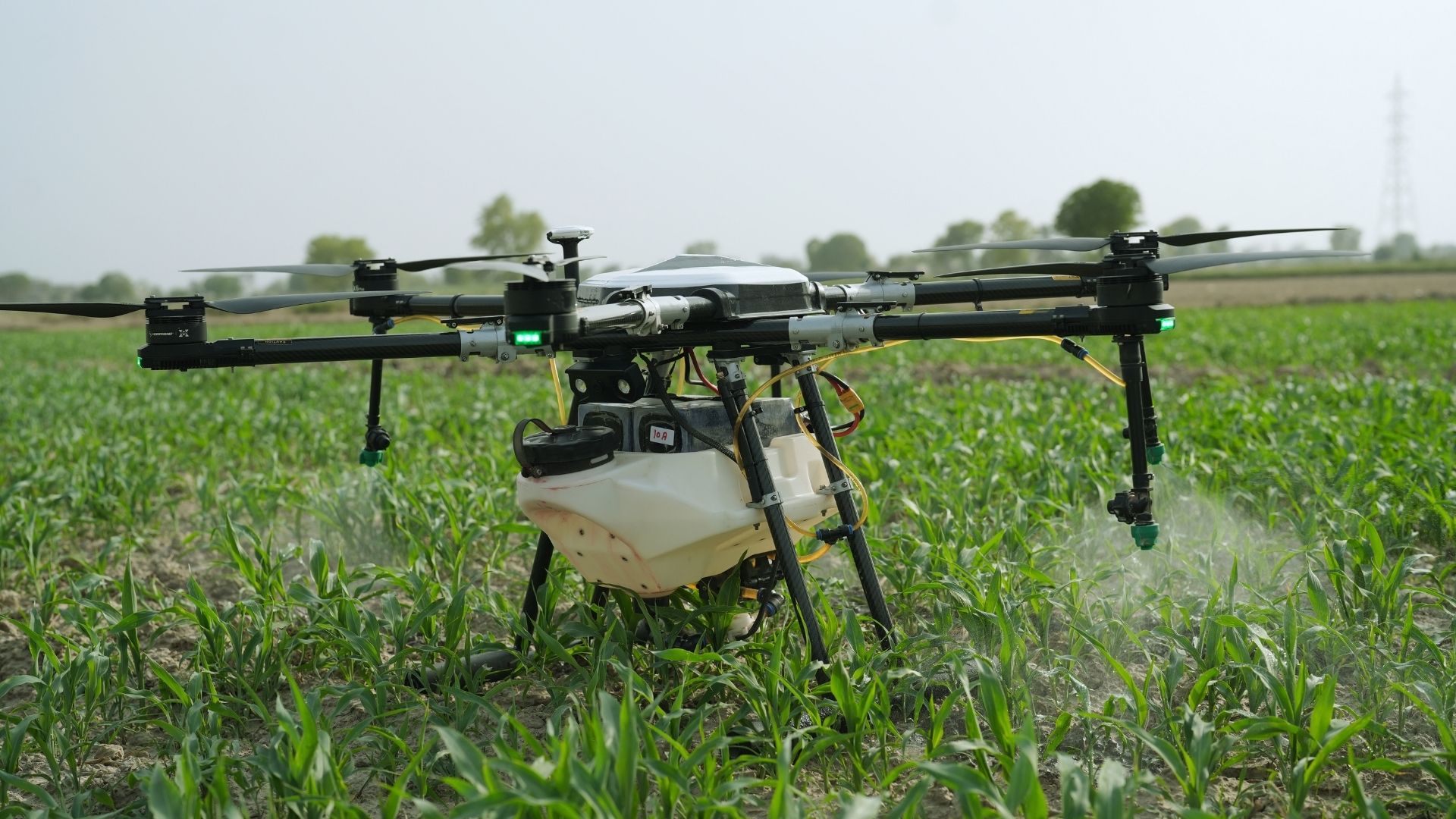
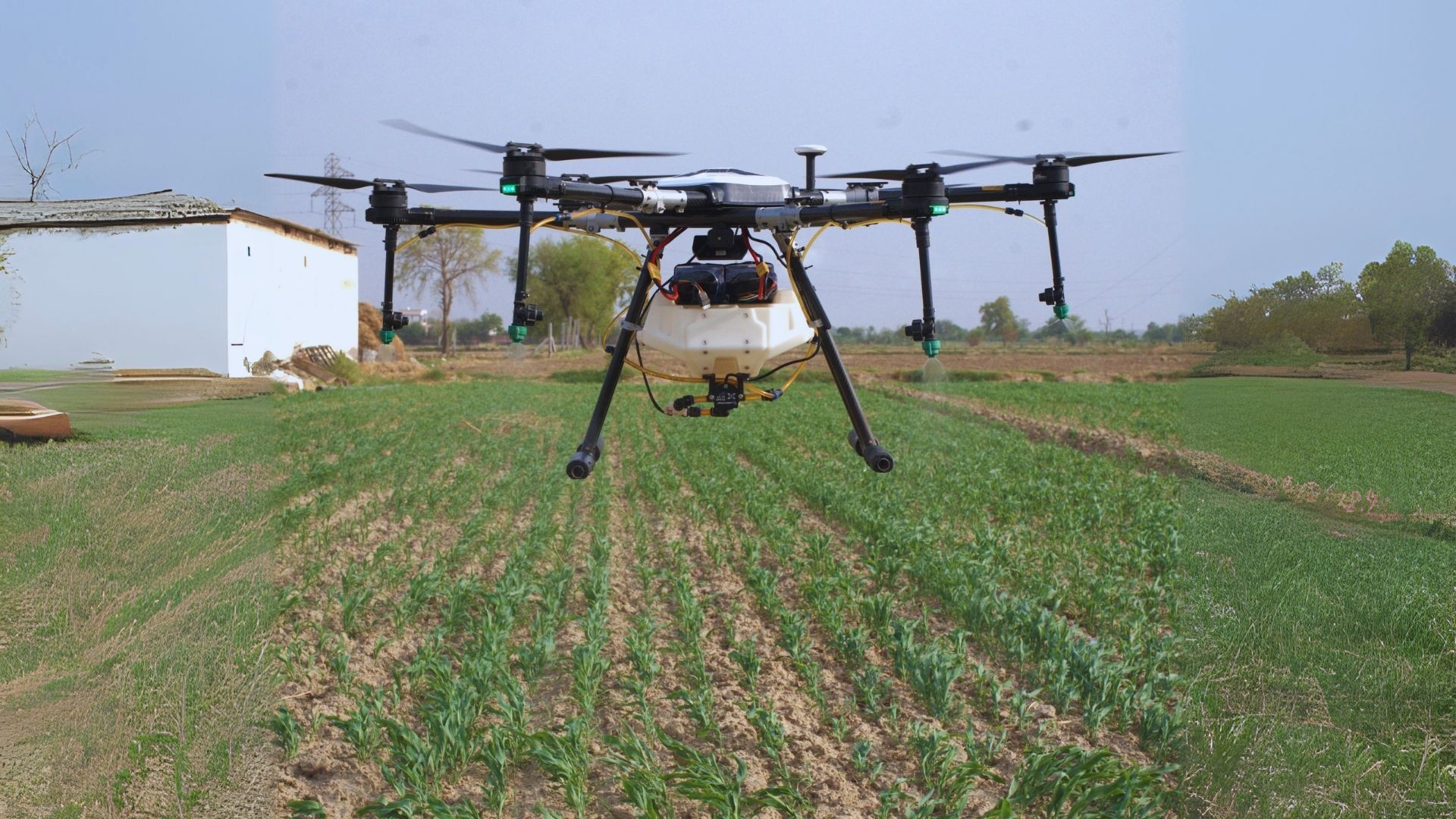
Agricultural drones are unmanned aerial vehicles designed specifically for farming operations. These flying helpers spray your fields with precision, speed, and efficiency that manual methods can't match.
Core Technology Behind Agriculture Drones
GPS Navigation Systems
Every drone uses GPS (Global Positioning System) to map exact locations and follow planned routes. The technology works like Google Maps for your field, ensuring no spot gets missed or sprayed twice. The system records every square metre covered.
Height and Positioning Sensors
Advanced sensors maintain the optimal height of 2–3 metres above crops. They adjust automatically for terrain variations and crop height differences. Wind sensors detect unsafe conditions and alert operators to pause operations.
Precision Spray Mechanism
Unlike manual sprayers releasing large droplets, drones create ultra-fine mist which improves penetration into dense foliage and reduces chemical wastage. This atomised spray ensures even coverage with minimal waste. The tiny droplets reach leaf undersides and dense canopy areas that manual spraying misses entirely.
Smart Payload System
Drones carry 10–16 litres of solution in specialised tanks. The system calculates and adjusts spray volume based on flight speed, height, and area covered. This automatic adjustment ensures consistent application rates throughout the field.
Types of Drone Applications in Indian Farming
Crop Spraying remains the most popular application. Drones handle pesticides, insecticides, fungicides, herbicides, and liquid fertilisers with equal efficiency. The pay-per-acre model makes professional spraying affordable at ₹300–₹700 per acre.
Field Mapping creates detailed digital maps of your farm. These maps identify problem areas, track crop growth patterns, and help plan better resource allocation.
Crop Health Monitoring uses special cameras to detect diseases or nutrient deficiencies before they become visible. Early detection means timely intervention and reduced losses.
Seeding Operations work for specific crops and difficult terrain where traditional methods struggle. Some drones scatter seeds in precise patterns, ensuring optimal plant spacing.
Also read: Top Drone Services You Need to Know.
The Drone Farming India Revolution: Key Benefits Across the Board
The use of drones in Indian agriculture delivers measurable improvements across every farming parameter. Let's examine the concrete benefits for different stakeholders.
For Farmers: Direct Economic and Operational Gains
90% Less Water Consumption
Traditional spraying consumes 400–600 litres per acre. Drone spraying needs just 40–60 litres for identical coverage. In regions facing groundwater depletion, this reduction matters enormously. Lower water use means reduced pumping costs and sustainable farming practices.
40% Reduction in Input Costs
Precision targeting eliminates waste. Pesticides reach exactly where needed, not on soil, not drifting away, not over-applied. A farmer spending ₹15,000 on pesticides per season saves ₹6,000 immediately. Across multiple seasons and larger acreages, savings compound significantly.
20% Overall Cost Savings
Factoring in reduced labour expenses, eliminated wastage, lower water costs, and faster turnaround, farmers achieve roughly 20% reduction in total spraying costs versus traditional methods.
8x Productivity Increase
Manual spraying covers 1–1.5 acres daily with a full team. One agricultural drone sprays 50 acres in the same timeframe. During critical windows, pest outbreaks or weather constraints, this speed saves crops.
Improved Crop Health and Yield
Uniform coverage means every plant receives adequate protection. Farmers using agricultural drones in India report healthier crops and reduced pest damage. Many see 10–15% yield improvements, translating to significant additional income.
Zero Human Chemical Exposure
No worker enters fields during spraying. No one inhales toxic fumes or risks chemical burns. This safety benefit protects your labour force and eliminates health liabilities.
Operational Flexibility
Drones work in conditions where tractors can't enter, muddy fields after rain, tall crops, uneven terrain. Early morning operations when wind is minimal ensure maximum spray effectiveness.
Ready to experience these benefits on your farm? Visit Leher's website to book professional drone spraying services. Simple booking through the mobile app gets certified pilots to your field within days.
For Rural Youth and Entrepreneurs: Building Profitable Businesses
The agricultural drone market in India creates substantial opportunities for rural entrepreneurs seeking modern, profitable careers.
Becoming a Certified Drone Operator
Entry requirements remain accessible: basic 10+2 education and DGCA remote pilot licence training lasting 15–30 days. Investment in equipment starts from ₹3–5 lakh, with government subsidies covering 40–50% in many states.
Monthly Income Potential
Active drone operators earn ₹50,000–₹1.5 lakh monthly during peak season. Off-season work still generates ₹30,000–₹50,000. This income significantly exceeds most rural employment options while providing dignity and modern skills.
Scalable Business Model
Start with one drone. Build reputation and client base. Add more equipment and hire additional pilots. Successful entrepreneurs operate fleets of 3–5 drones, generating substantial revenues across multiple districts.
Government Support and Subsidies
PM-Kisan Drone Yojana and various state schemes actively promote agricultural drone adoption. Subsidies, training programmes, and simplified regulations reduce barriers to entry. Women entrepreneurs receive additional support in several states.
For Corporate Farms and Agribusinesses: Scale and Efficiency

Large farms (100+ acres) and corporate agricultural operations benefit from systematic efficiency improvements.
Rapid Area Coverage
A 500-acre farm requiring weeks of traditional spraying gets completed in 2–3 days with a small drone fleet. This speed enables timely interventions across the entire operation.
Data-Driven Precision
Advanced drones use multispectral and thermal cameras to capture detailed crop health data, which is analysed to identify stressed areas requiring targeted interventions. Apply inputs only where needed, not uniformly everywhere. This targeted approach reduces waste and improves outcomes.
Labour Independence
Eliminate dependence on seasonal labour availability and wage fluctuations. Maintain consistent spraying schedules regardless of labour market conditions.
Quality Assurance
Every square metre receives identical treatment. No human errors, no missed spots, no over-application. Consistent quality across the entire farm improves overall productivity.
Regulatory Compliance
Professional drone services ensure all operations meet DGCA norms and agricultural regulations. This compliance reduces legal risks and potential penalties.
Also read: Drones Used in Crop Spraying: Key Benefits and Technology Explained
Real Results: Farmers Experiencing the Difference
Jasveer Singh manages 12 acres of cotton in Haryana. His traditional approach required 3 days and ₹8,000 per spraying cycle with manual labour. Four spray cycles per season totalled ₹32,000 in costs plus enormous time investment.
After switching to Leher's drone spraying service, each cycle finishes in under one hour. His cost dropped to ₹4,800 per cycle (₹400/acre × 12 acres). Season total: ₹19,200, saving ₹12,800.
Beyond financial savings, Jasveer noticed significantly better pest control from uniform coverage. Crop health improved visibly. His yield increased by 12%, adding ₹35,000 in income that season.
"The drone covers every inch perfectly," Jasveer says. "I can see the difference in my crop. And I don't worry about finding workers anymore."
Similar transformations occur across India, Maharashtra's vineyards, Punjab's rice paddies, Telangana's cotton fields, Gujarat's groundnut farms.
Which Crops and Farms Benefit Most?
While drones work for virtually all crops, certain conditions deliver maximum advantage. Understanding these helps you plan adoption effectively.
Ideal Crop Types for Drone Spraying
Large-Scale Field Crops: Cotton, rice, wheat, maize, sugarcane, soybean benefit enormously from rapid, uniform coverage across extensive areas.
High-Value Crops: Grapes, pomegranate, mango orchards, vegetables justify precision spraying because input costs are significant and quality matters.
Tall Crops: Sugarcane and similar crops where tractor entry damages plants make drones the logical choice.
Pest-Prone Crops: Crops requiring frequent spraying cycles see maximum cost and time savings with drone deployment.
Optimal Farm Characteristics
7+ Acres: Farms above 7 acre see strong cost benefits. The per-acre pricing remains affordable while time savings become substantial.
Open Fields: Drones perform best in open terrain. Heavily tree-covered farms may need a specialised approach.
Multiple Scattered Plots: Managing several smaller plots across different locations becomes efficient when drones eliminate equipment transport hassles.
Best Timing Across Indian Agricultural Calendar
Kharif Season (June–October): High demand during monsoon crops, rice, cotton, soybean, maize all need protection in this period.
Rabi Season (November–March): Wheat, mustard, vegetables and winter crops require multiple spray applications.
Summer Crops (March–May): Vegetables, fodder crops and summer pulses benefit especially from water-efficient drone spraying.
Pre-Monsoon and Post-Harvest: Field preparation, weed control, and growth regulator application extend drone utility year-round.
Safety Standards and Regulatory Compliance
Understanding regulations and safety protocols addresses common concerns about legality and risk. The framework ensures responsible drone operations across India.
DGCA Regulations for Agricultural Drones
Drone Registration Requirements
All agricultural drones need registration with DGCA through the Digital Sky platform. This registration links the drone to its operator and ensures accountability.
Pilot Certification Standards
Operators must hold valid Remote Pilot Certificates from DGCA-approved training centres. Certification involves both theoretical knowledge and practical flying skills assessment.
Flight Permission Framework
Agricultural operations in designated green zones (rural areas) below 120 metres face minimal restrictions. Simplified permission processes enable quick deployment during critical farming windows.
Insurance Mandates
Agricultural drones carry third-party liability insurance protecting against potential damage or accidents. This coverage provides peace of mind for both operators and farmers.
Operational Safety Protocols
Approved Chemical Usage
Only authorised pesticides and fertilisers get used in drone spraying. Dilution ratios follow manufacturer guidelines and agricultural department recommendations precisely.
Restricted Zone Avoidance
Drones automatically avoid airports, military installations, and sensitive locations. Digital Sky platform integration flags these zones during flight planning.
Weather Condition Monitoring
Operations occur during optimal conditions, typically early morning or late evening when wind stays minimal. Flights stop immediately if wind speed exceeds safe thresholds.
Human Safety Perimeters
Clear safety zones prevent anyone from entering fields during active spraying. Post-spray re-entry follows standard agricultural safety timelines based on chemical use.
Emergency Response Systems
Pilots train in emergency procedures. Drones feature automatic return-to-home functionality if signal drops or battery runs low. These fail-safes prevent accidents.
Concerned about regulations and safety compliance? Leher handles all certification requirements with its network of 100+ DGCA-certified pilots. Book with confidence knowing every operation meets official standards.
The Leher Advantage: Making Drone Use in Agriculture India Simple
Most farmers wonder: do I need to buy a drone? Learn operation? Handle regulations?
The answer is no. Leher created a simple model bringing drone precision agriculture directly to your farm without complexity.
How Leher Works: 3 Simple Steps
Step 1: Book Through the Mobile App
Download the Leher app (Android and iOS available). Enter your farm location, field size, and crop type. Choose your preferred date. Booking takes under 5 minutes.
The app connects you with nearby certified drone operators from Leher's network of 100+ partners. Real-time availability shows you exactly when service is possible.
Step 2: Certified Pilot Arrives at Your Farm
A DGCA-certified drone operator reaches your location with professional equipment. The pilot assesses your field, plans the spray route, and prepares the drone with your chosen solution.
All safety protocols get followed automatically. No workers need to enter the field during operations, eliminating chemical exposure completely.
Step 3: Pay After Completion
Once spraying finishes and you're satisfied with coverage, pay through the app. The pay-per-acre model costs ₹300–₹700 per acre depending on location and crop.
No upfront investment. No equipment maintenance. No pilot training required. Just results.
Why This Model Works for Indian Farmers
Buying a quality agricultural drone costs ₹3–8 lakh. Add pilot training, DGCA certification (₹50,000–₹1 lakh), maintenance, insurance, and regulatory compliance, the barriers become substantial.
Leher removes all these obstacles. You get professional drone spraying at affordable rates without complexity. Think of it like using Ola or Uber for transportation, you don't need to own a vehicle or know driving.
The platform has served 2,100+ satisfied farmers and completed spraying on over 30,000 acres across India. This track record proves the model works at scale.
Also read: Top Questions About Drones in Agriculture Answered
Why invest in equipment when you can access expert services on demand? Visit Leher today to see how easy drone spraying really is. Download the app and book your first session, most farmers never return to old methods after experiencing the difference.
Conclusion: Smart Farming Starts Now
Indian agriculture faces intensifying challenges. Climate unpredictability grows. Resources become scarcer. Labour costs rise. Yet food demand increases with population.
Technology, specifically, the use of drones in agriculture in India, provides practical answers. Not theoretical concepts, but proven methods delivering results on farms right now.
From small farmers worried about water availability, to young entrepreneurs seeking modern employment, to corporate farms optimising operations, everyone benefits from this shift.
Over 30,000 acres across India already experience drone-powered precision agriculture through Leher. Thousands more farmers adopt the technology each month. Your farm could be next.
Download the Leher app today. Experience how affordable and effective drone spraying services truly are. Join the growing community of forward-thinking Indian farmers embracing technology for better yields, lower costs, and sustainable farming.
Smart farming isn't about working harder. It's about working smarter. And that starts with booking your first drone spraying service.
Frequently Asked Questions (FAQs)
Q1: How much does drone spraying cost compared to traditional methods?
Drone spraying through Leher costs approximately ₹300–₹700 per acre depending on your location and crop type. This pricing is competitive with or cheaper than manual labour when you factor in speed, precision, and input savings. You save up to 40% on pesticide costs through reduced wastage and achieve 20% overall cost savings.
Q2: Is drone spraying safe for my crops and the environment?
Yes, drone spraying is safer than traditional methods. The fine mist ensures uniform coverage without damaging plants. Drones use up to 90% less water and 40% fewer chemicals due to precision targeting, reducing environmental impact significantly. No human exposure to toxic chemicals during application protects worker health.
Q3: Can I use drones on small farms, or are they only for large holdings?
While drones show maximum economic benefits on farms of 7+ acres, they work for any size. Small farms benefit from precision spraying, especially for high-value crops where input costs are significant. The pay-per-acre model makes it affordable regardless of farm size.
Q4: What training and certification do I need to become a drone operator?
You need basic 10+2 education and a DGCA Remote Pilot Certificate, which requires 15–30 days of training from a DGCA-approved centre. Leher provides guidance on training programmes and connects you with approved training partners. Once certified, you join Leher's network of 100+ drone entrepreneurs.
Q5: How quickly can drone spraying cover my field, and when should I book?
A single drone sprays approximately one acre in just 5 minutes and can cover up to 50 acres per day. For a typical 10-acre farm, the entire job finishes in under one hour versus 2–3 days with manual labour. Book drone services for early morning or late evening when wind conditions are optimal.
Q6: What happens if there's a technical problem during my spraying?
All Leher drone operators use professional-grade, well-maintained equipment with backup systems. Drones have automatic safety features like return-to-home if signal is lost or battery runs low. In the rare event of technical issues, the operator either continues with backup equipment or reschedules your service without additional charges.
Let’s Grow Together!
Interested in drone spraying solutions? Connect with us today.