Drones Used in Crop Spraying: Key Benefits and Technology Explained
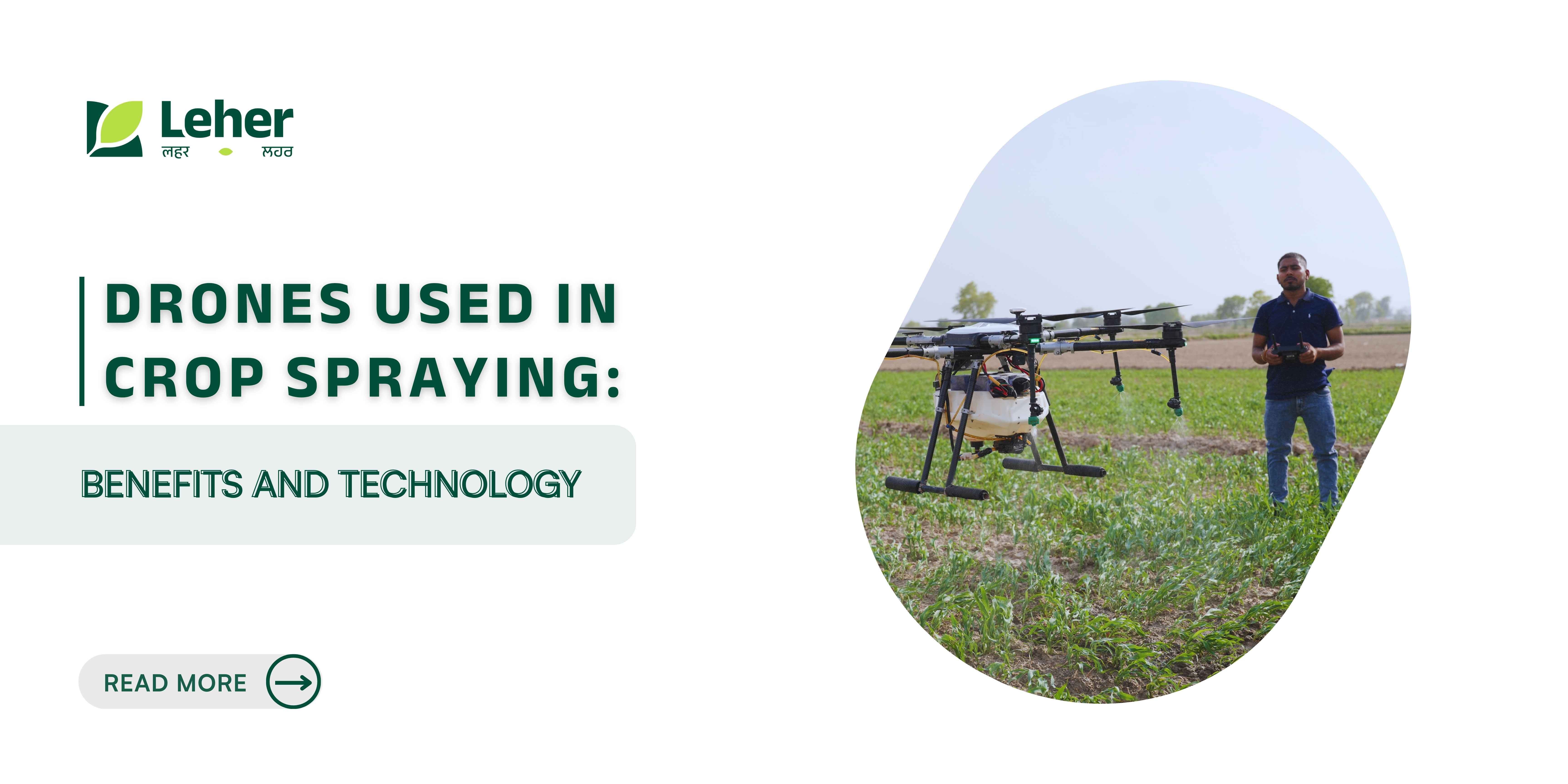
The use of drones in agriculture is rapidly growing, with over 400,000 agricultural drones now in use globally, covering more than 500 million hectares across 100+ countries. In India, drones are proving to be a game-changer for farmers, improving efficiency and sustainability by reducing water usage by up to 90% and increasing crop yields by 10%. As this technology gains momentum, drones are reshaping how crops are sprayed, offering precise, cost-effective solutions.
In this blog, we’ll explore the key benefits of UAV crop spraying, the latest technological advancements, the various types of drones available, and how farmers can integrate them into their operations to enhance productivity.
Key Takeaways
Precision and Efficiency: Drones offer precise, cost-effective crop spraying solutions, improving productivity while minimising chemical waste and environmental impact.
Enhanced Crop Health: Timely and targeted application of fertilisers and pesticides leads to healthier crops, boosting yields and reducing over-application.
Water Conservation: Drones optimise water use, reducing runoff by applying the right amount of water exactly where needed, contributing to sustainable farming practices.
Technological Advancements: AI, GPS, and advanced sensors are driving the future of drone technology, enabling real-time data analysis and more effective crop management.
Versatility in Applications: Drones are used for various agricultural tasks, including spraying, monitoring crop health, seeding, and irrigation, making them a versatile tool for modern farming.
What are Drone Sprayers Used in Farming and How Do They Work?
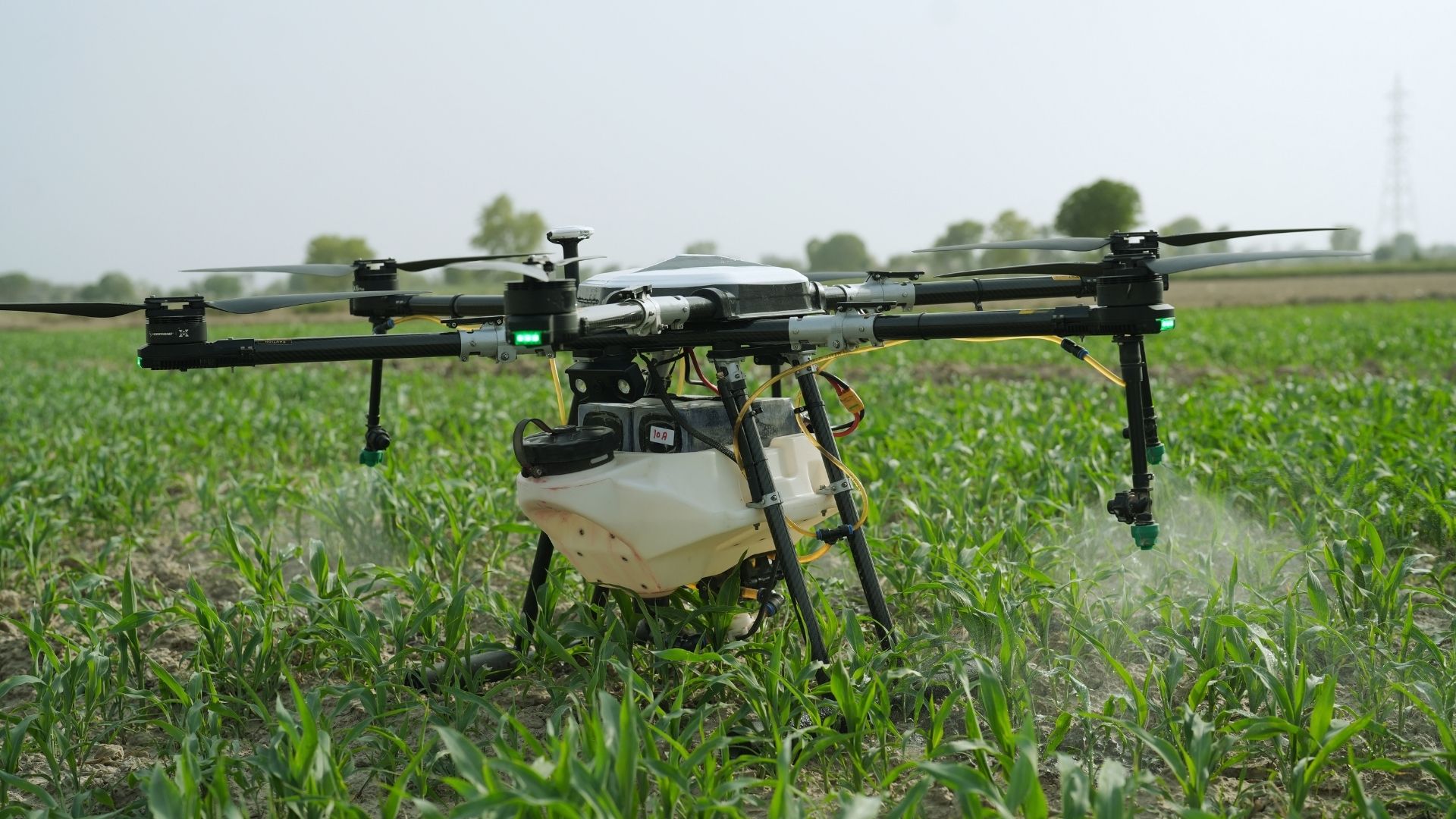
Agriculture drone sprayers are unmanned aerial vehicles (UAVs) designed to apply liquids such as pesticides, fertilisers, and herbicides on crops. These drones are equipped with specialised spray tanks, nozzles, and GPS systems and mapping technology that enable precise, controlled spraying over large fields.
Unlike traditional methods, such as manual backpack sprayers or tractor-mounted sprayers, agriculture drone sprayers for farmers are the best in terms of efficiency, accuracy, and environmental sustainability.
How Drone Spraying Works
Drones fly at low altitudes and apply chemicals through nozzles attached to their arms. Equipped with sensors and cameras, they can monitor crop conditions in real time, adjusting spray rates as needed. With an integrated spray management system, all operations are tracked, providing detailed analytics, chemical traceability, and spray logs for future decision-making.
The precision and efficiency of drone operations deliver measurable benefits across multiple aspects of farming.
What are the Key Benefits of Drones in Crop Spraying?
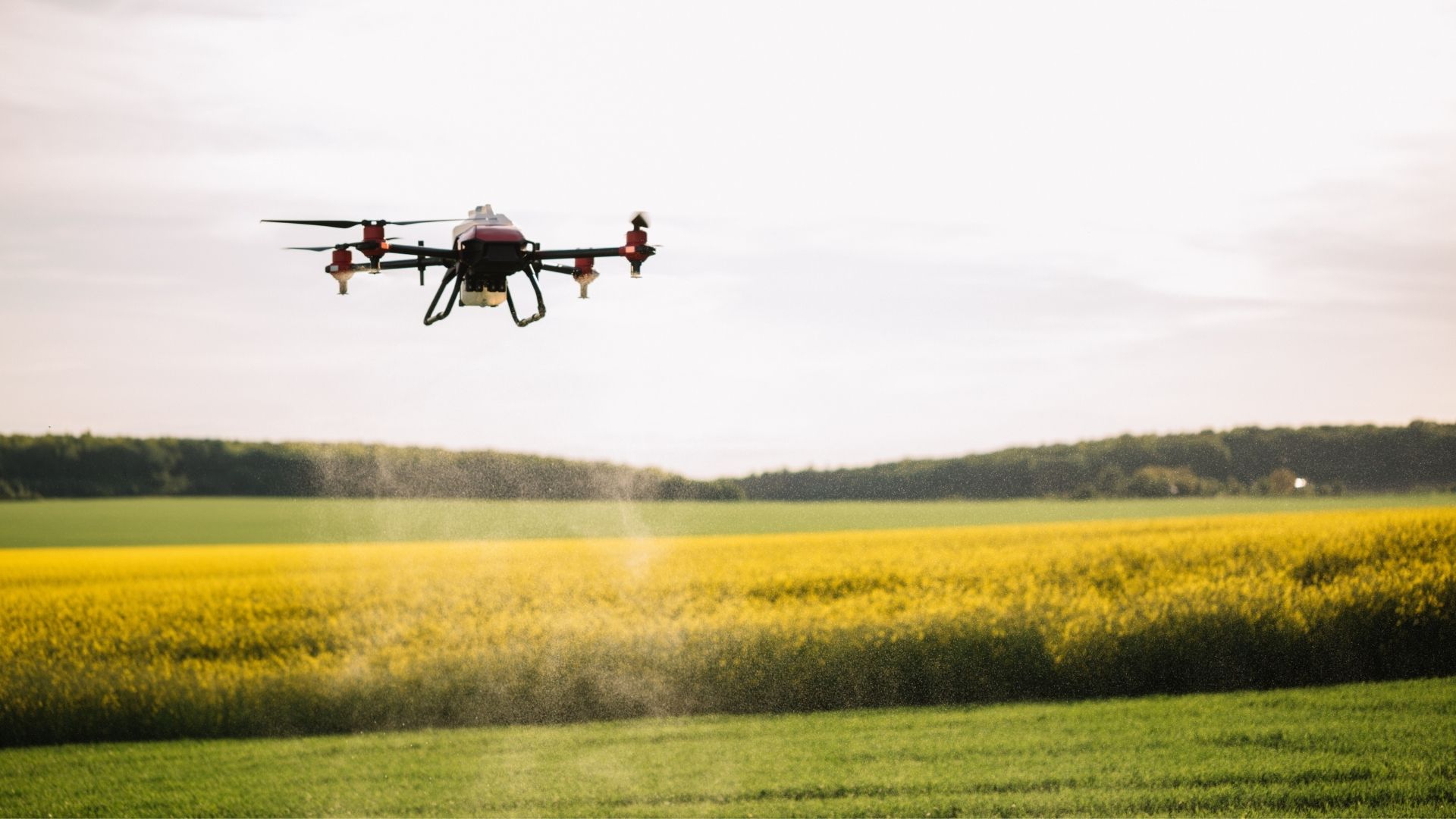
Drones are transforming modern agriculture by offering a more efficient, precise, and sustainable way to manage crops. Here are the key benefits:
Precision in Chemical Application
Drones equipped with advanced GPS and sensor technologies enable the precise application of pesticides, fertilisers, and herbicides. The targeted approach to the crops minimises chemical waste and reduces environmental impact. For instance, DJI's 4th annual report revealed that agricultural drones have reduced chemical product usage by 47,000 metric tons globally.
Operational Efficiency
Drones cover large areas in a fraction of the time it would take using traditional methods. Their ability to operate autonomously allows for continuous spraying, minimising downtime and timely application across vast fields. The fast and precise approach reduces the need for extensive labour (75-90% less) and machinery, helping farmers to complete tasks in less time.
Improved Crop Yield
Timely and precise application of fertilisers and pesticides is critical for optimal crop health. By targeting specific areas of the field with precision, drones prevent over-application or under-application, both of which can negatively affect crop development. Consistent, accurate spraying encourages healthier plant growth and maximises the use of nutrients, leading to more productive harvests.
Water Conservation
Drones optimise water usage by applying just the right amount of water, thus reducing excess water runoff. This targeted spraying makes irrigation and spraying more sustainable, maintaining local water resources and minimising the environmental impact of farming practices.
Environmental Sustainability
With precise spraying, drones use fewer chemicals, which lowers environmental contamination. They also help reduce carbon emissions and the need for large machinery, resulting in lower fuel consumption and a smaller environmental footprint.
Accessibility to Challenging Terrain
Drones excel in reaching difficult or remote areas where traditional equipment cannot operate effectively. They can easily navigate steep slopes, narrow plots, or areas with uneven terrain, spraying across 3 to 12 acres per hour. This capability means farmers can apply to hard-to-reach areas that would otherwise be missed.
Want better yields and faster results? Get in touch with our drone expert and explore Leher's precision spraying services today!
The effectiveness of drone spraying depends on selecting the right aircraft for specific agricultural needs. Different drone configurations offer distinct advantages depending on farm size, terrain, and operational requirements.
What are the Types of Drones Used in Crop Spraying?

In India, some of the best agriculture drones for farmers are multi-rotor drones that are widely used for crop spraying. Other drone, like fixed-wing and hybrid, is used in covering large-scale farms. Let’s explore their key features.
Multi-Rotor Drones
Multi-rotor drones are equipped with hexacopter rotors that provide stability and precise control during flight. They are highly versatile and can hover in place, making them ideal for tasks that require accurate and targeted application.
Key Features:
Precision: Multi-rotor drones are excellent for targeted spraying.
Manoeuvrability: Their ability to hover and navigate easily around obstacles makes them perfect for uneven terrain.
Ease of Use: These drones are user-friendly, and
farmers can use them without extensive technical training.
Versatility: In addition to spraying, multi-rotor drones are used for crop health monitoring, field mapping, and aerial surveillance.
Fixed-Wing Drones
Fixed-wing drones operate similarly to traditional aeroplanes, relying on aerodynamic lift from their wings for sustained flight. They are designed for efficiency and long-duration flights, making them ideal for large-scale agricultural operations.
Key Features:
Longer Flight Time: Fixed-wing drones can stay airborne longer than multi-rotors, and do not require frequent recharging.
Greater Coverage: These drones are suited for large-scale farms, as they can cover wide areas quickly.
Speed: Fixed-wing drones are faster, covering expansive fields in less time.
Hybrid (VTOL) Drones
Hybrid drones, also known as Vertical Takeoff and Landing (VTOL) drones, combine the benefits of both multi-rotor and fixed-wing designs. These drones can take off and land vertically like a multi-rotor drone but transition to fixed-wing flight for longer, more efficient coverage.
Key Features:
Versatility: Hybrid drones perform a range of tasks, from precise spraying to large-area coverage, making them suitable for both small and large farms.
Longer Flight Time: Like fixed-wing drones, they can cover more ground in less time.
Efficiency: Hybrid drones optimise both vertical takeoff and sustained horizontal flight.
Also Read: Drone Spraying Requirements and Regulations Guide - Leher
With various drone platforms available, farmers can deploy these versatile machines across numerous agricultural tasks. The applications extend far beyond basic spraying, covering farm management solutions.
Applications of Agriculture Drone Sprayers
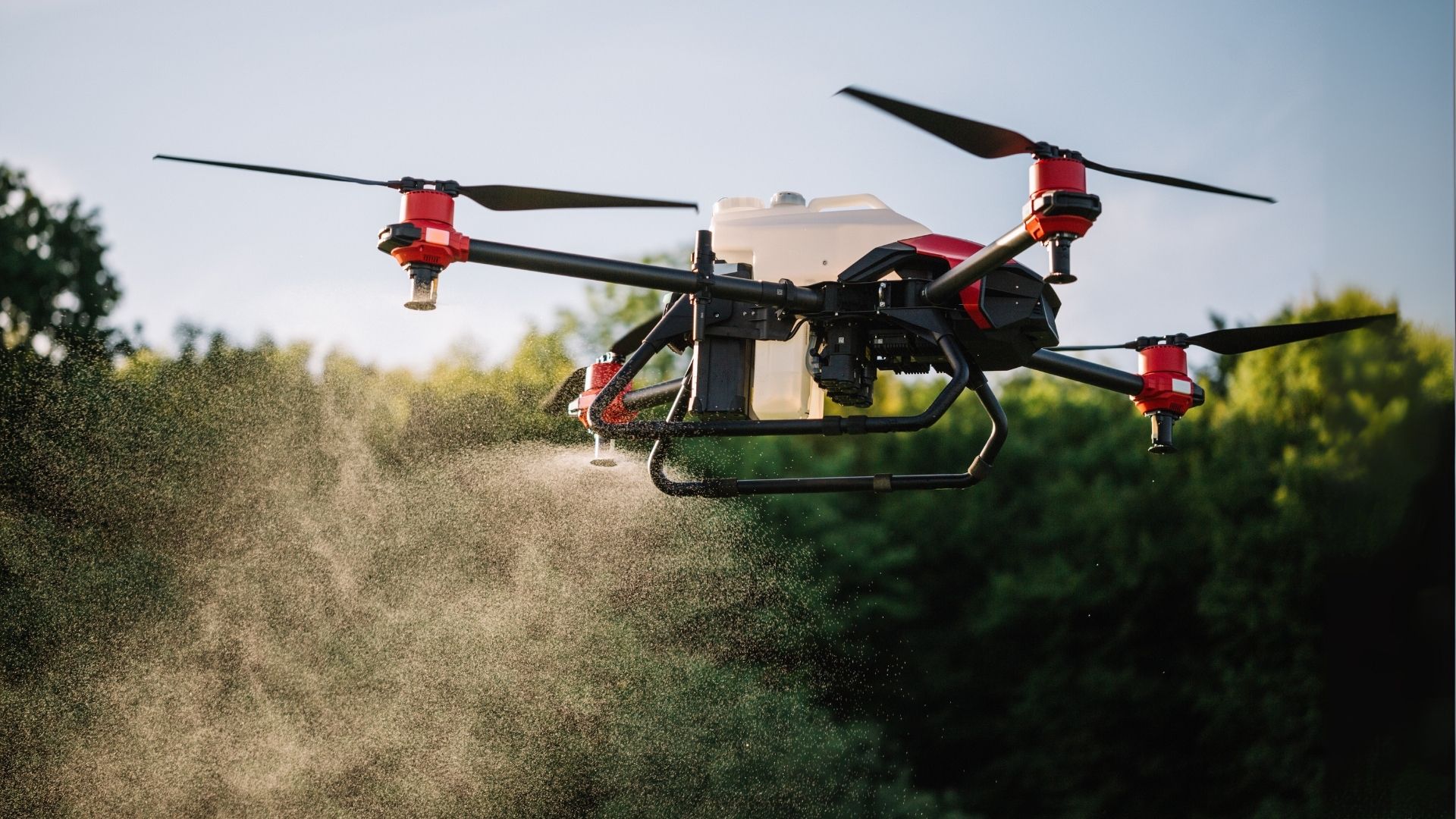
Agriculture drone sprayers are modernising farming by providing efficient solutions. For example, drones are used to spray pesticides on large fields quickly, giving wide coverage in no time. Let’s look at some key applications where these drones are making an impact.
Pesticide and Herbicide Application: Drones are used to apply pesticides and herbicides with precision, reducing chemical use and preventing over-application.
Fertiliser Spraying: Drones can distribute liquid or granular fertilisers evenly across large fields, improving crop health and ensuring efficient nutrient application.
Crop Health Monitoring: Equipped with sensors, drones monitor crop health, detecting early signs of disease, pests, or nutrient deficiencies.
Seeding and Planting: Some drones are designed for seed planting, allowing for quick and efficient sowing in areas that are difficult to access.
Watering and Irrigation: Drones can be used for precise watering of crops, reducing water wastage by targeting areas that need it most.
Field Mapping and Surveying: Drones capture high-resolution aerial imagery, creating maps for better planning and management of the farm.
Surveying Soil Health: Drones equipped with multispectral cameras provide data on soil moisture levels, helping farmers optimise irrigation and nutrient use.
Aerial Crop Scouting: Drones help farmers inspect large fields quickly, identifying problem areas such as pest infestations or irrigation issues that require attention.
Dusting: Drones release a controlled amount of powder over crops. Their precision ensures that the right amount is applied to targeted areas.
As current applications demonstrate drone versatility, here are some emerging technologies that promise to expand these capabilities even further.
Future Trends in UAV Drone Technology for Agriculture
The future of UAV drone technology in agriculture is marked by significant advancements aimed at enhancing efficiency, precision, and sustainability. Leher, a leading platform in India, exemplifies these trends by offering real-time drone spraying services.
AI-Powered Precision Spraying: Drones are using AI to autonomously detect crop health and apply treatments precisely, reducing chemical usage by up to 70% and minimising environmental impact.
Autonomous Flight and Edge Computing: UAVs are becoming fully autonomous, utilising edge computing for real-time data processing, enhancing efficiency and adaptability in dynamic field conditions.
Integration with IoT and Farm Management Systems: Drones are now part of the IoT ecosystem, integrating with farm management systems for real-time monitoring and data-driven decisions.
Automated Variable Rate Spraying (VRS): Allows drones to adjust spray volumes in real-time based on crop conditions, optimising the use of pesticides and fertilisers.
Swarming and Multi-Drone Coordination: Swarming and multi-drone coordination enable multiple drones to communicate with each other to optimise task execution, making operations faster and more scalable.
These technological advancements are already being implemented by forward-thinking companies in the field. Real-world applications show how these innovations translate into concrete results for farmers
Leher Agricultural Drone Solutions: Case Study Analysis

Leher offers the most efficient spraying solution with drones for Indian Farmers, corporates, and farmer organisations through an advanced drone-based agricultural spraying ecosystem. The company has achieved remarkable scale with over 35,000 acres sprayed, 130+ drone partners, and 2,200+ satisfied farmers.
Leher's case study involves tea plantation operations, where they successfully sprayed over 700+ hectares with remarkable results:
Operational Efficiency:
Speed: 30 minutes per hectare coverage
Daily Capacity: One drone covers 15+ hectares per day
Labour Replacement: One drone performs the work equivalent to 10-12 workers
Quality Improvements:
75% reduction in residue on each kilogram of tea produced
Uniform distribution achieved through drone spraying that flips tea leaves, ensuring superior fertiliser and pesticide coverage
Enhanced efficacy of agricultural inputs due to better coverage patterns
Disease Prevention:
Prevention of Blister blight
Control of Tea Mosquito Bug
Management of Red Dust issues
Technology Integration:
Detailed spray dashboard with auto-generated operation reports
Higher accuracy in area recording through real-time updates
Integration with the Leher Portal for comprehensive data management
Conclusion
Drones are revolutionising agriculture, offering a more efficient, precise, and sustainable way to manage crops. With key benefits like reduced chemical use, improved operational efficiency, and better crop yields, UAV drone technology is making farming smarter and more cost-effective. As innovations like AI-powered precision spraying, swarming, and multi-drone coordination emerge, the future of farming looks promising.
Leher is leading this transformation with cutting-edge drone technology, offering up to 90% water savings, advanced sensors and GPS technology, and 10-litre hexacopters that cover 50 acres per day. Leher's real-time drone spraying services are helping Indian farmers to achieve higher productivity with minimal resources.
Contact us today to discover how Leher’s precision spraying services can take your farm to the next level!
FAQ’s
What are the rules for drone spraying?
Drone spraying in agriculture must comply with regulations set by the Directorate General of Civil Aviation (DGCA) in India. Farmers and drone operators need to obtain a Remote Pilot Certificate (RPC) and adhere to no-fly zone restrictions, altitude limits, and safety protocols during operations.
Can a farmer use a drone for watering the crops?
Yes, drones can be used for watering crops by applying precise amounts of water to targeted areas. This reduces water wastage and optimises irrigation, particularly in areas with uneven terrain or water scarcity.
Which crops are not suitable for sprinkler irrigation?
Sprinkler irrigation may not be ideal for crops like rice or crops with very fine seeds that require precise water management. Crops sensitive to water distribution, such as certain vegetables, may also not thrive with sprinklers due to uneven water coverage.
How long can a drone stay in the air?
The flight time of a drone typically ranges from 20 to 45 minutes, depending on the model, payload, and environmental factors. Larger drones or those with extended battery options can stay airborne for longer periods.
How far can a drone see at night?
Drones equipped with infrared or thermal cameras can detect heat signatures up to several hundred meters at night, depending on the camera's capabilities. This allows drones to monitor crop health and detect issues even in low-light conditions.
Let’s Grow Together!
Interested in drone spraying solutions? Connect with us today.