13 Common Diseases in Wheat Crop: A Complete 2026 Guide
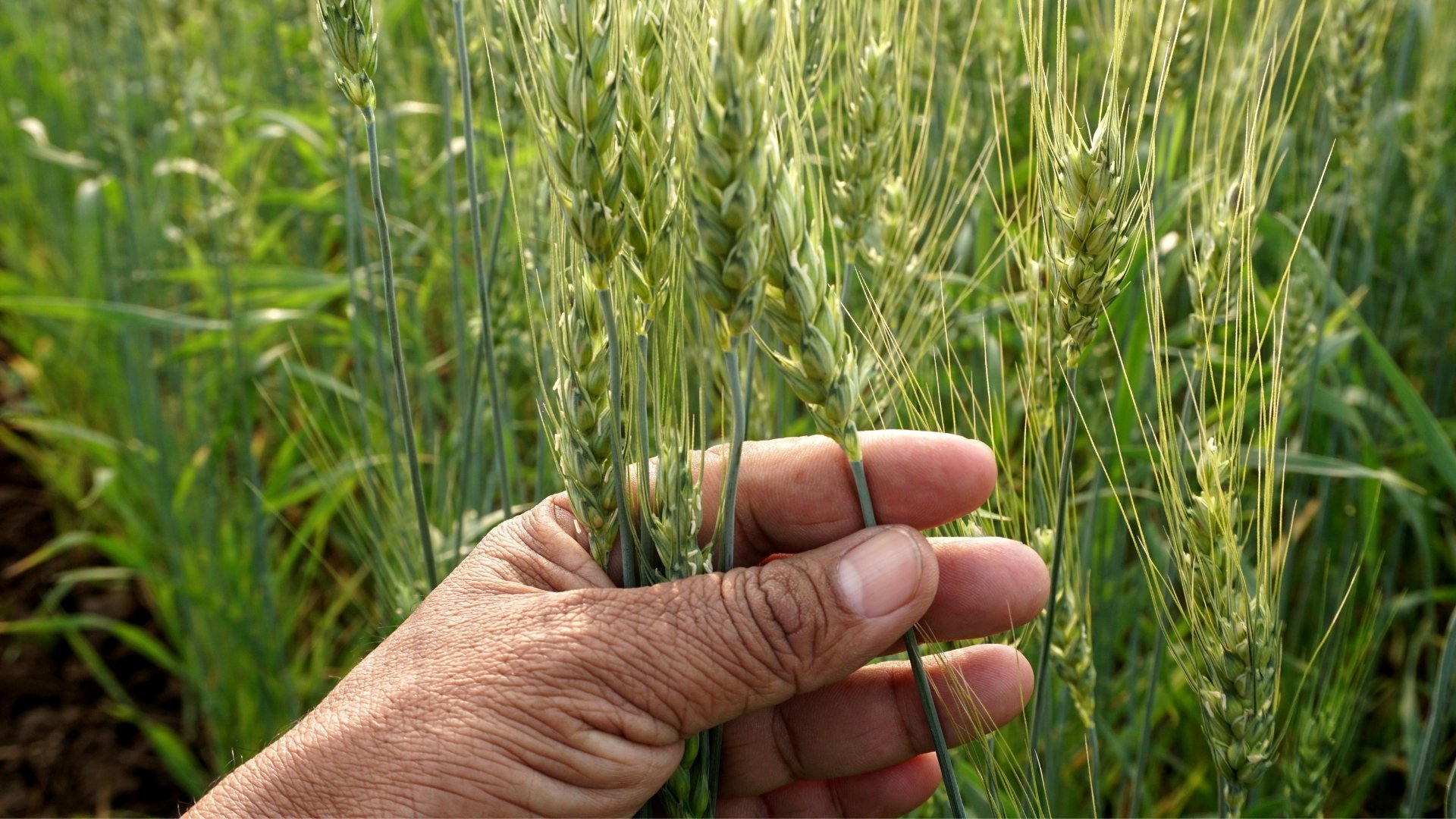
Disease in the wheat crop is one of the biggest yield-limiting factors in Indian agriculture. Under favourable conditions, fungal diseases can cause annual yield losses of around 15-20%. Most wheat diseases are fungal in nature and survive through seeds, soil, crop residue, or airborne spores. Many infections remain hidden until damage is already done.
This guide explains all major wheat diseases observed in India, their visible symptoms, how they survive and spread, and the exact field conditions that trigger outbreaks.
Key Takeaways
Early Detection Saves Yield: Timely scouting and symptom identification prevent hidden infections from causing large-scale damage.
Seed Quality is Crucial: Using certified, disease-free seeds reduces the risk of seed-borne diseases such as loose smut and hill bunt.
Environmental Management Reduces Risk: Optimal spacing, airflow, and sunlight limit humidity pockets that favour fungal growth and rapid spread.
Integrated Disease Management Works Best: Combining crop rotation, resistant varieties, fungicide application, and drone monitoring ensures sustainable disease control.
Technology Enhances Precision: Drones and data-backed spraying improve fungicide efficiency, reduce chemical use, and target infections before they escalate.
1. Powdery Mildew
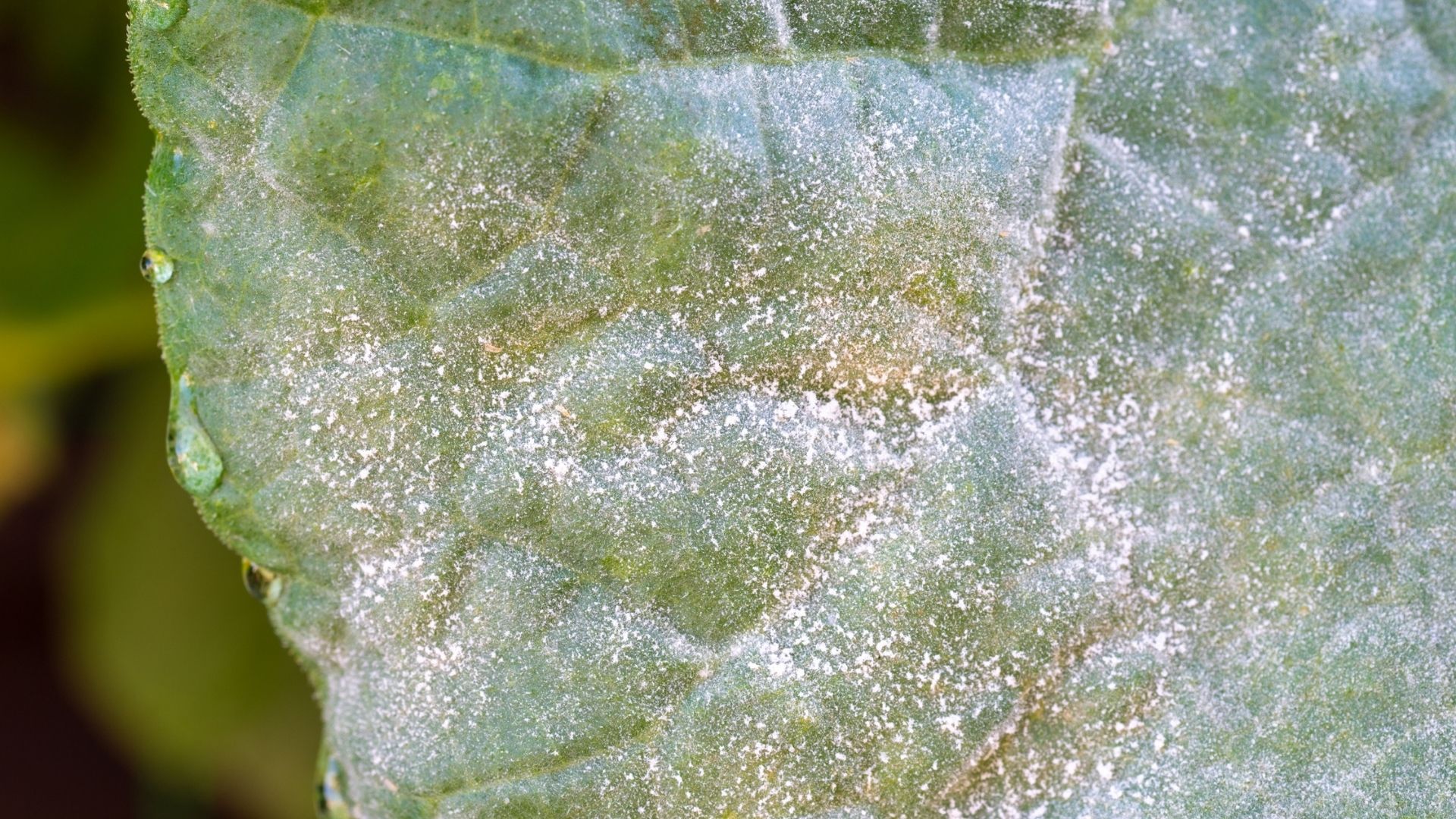
Powdery mildew appears as white, powdery patches on the upper surfaces of leaves and stems. You may also notice greyish-white fungal growth on leaves, sheaths, stems, and floral parts. As the disease progresses, the powdery growth turns black and dries out affected plant parts, reducing crop health and yield.
Survival and Spread:
Dormancy: Survives summer in high hills as mycelium and asci.
Primary Spread: Infection spreads through ascospores from infected debris.
Secondary Spread: Airborne conidia carry the disease to healthy plants.
Favourable Conditions
Humidity: High humidity, even without rainfall, encourages growth.
Temperature: Cool to moderate temperatures between 20–21°C favour infection.
2. Loose Smut
Loose smut is a seed-borne disease that infects wheat during flowering via wind-borne spores. Infected seeds appear healthy, but plants grown from them produce diseased heads that emerge early. The inflorescence transforms into a mass of olive-black spores, initially covered by a thin grey membrane that later ruptures, giving a powdery appearance.
Survival and Spread
Internal Infection: The pathogen survives inside the seed by infecting the embryo.
Primary Spread: Disease occurs when infected seeds are sown.
Secondary Spread: Spores can be carried by wind to nearby fields, increasing the risk of new infections.
Favourable Conditions
Weather: Cool and humid conditions during the flowering stage favour infection.
Seed Moisture: Seeds with higher moisture content are more likely to harbour the pathogen.
3. Brown Rust (Leaf Rust)
Brown rust primarily affects the upper leaf blades, though leaf sheaths, glumes, and awns can also show infection. Small, circular to slightly oval pustules develop on affected areas, ranging in colour from orange to orange-brown. These pustules generally remain separate and do not merge, but severe infections can weaken the plant and significantly reduce yield.
Survival and Spread
Overwintering: The pathogen survives summer in low and mid-altitude Himalayan regions and the Nilgiris.
Primary Spread: Wind-borne urediospores initiate infections in the eastern Indo-Gangetic plains.
Secondary Spread: The disease gradually moves westward as the season progresses.
Alternate Host: Thalictrum species can harbour the pathogen and contribute to infection cycles.
Favourable Conditions
Temperature: Disease thrives between 20 and 25°C.
Moisture: Free moisture from dew or rain promotes infection.
Yield Impact: Severe outbreaks can reduce yields by up to 30%.
Crop Density: Dense planting increases leaf humidity, encouraging pustule development.
4. Stripe Rust (Yellow Rust)
Stripe rust primarily infects leaves, though leaf sheaths and stems can also show symptoms. Bright yellow pustules form early along leaf veins as narrow linear stripes. Teliospores appear as dull black stripes. Pustules may also develop on necks and glumes, reducing photosynthesis and yield.
Survival and Spread
Overwintering: The pathogen survives as urediospores and teliospores in the northern hills.
Volunteer Hosts: Self-sown crops and volunteer wheat plants act as reservoirs of infection.
Primary Spread: Wind-borne urediospores from the hills initiate infections in nearby fields.
Secondary Spread: Local wind currents carry spores across regions, increasing disease incidence.
Favourable Conditions
Temperature: Disease develops best at 10-20°C.
Humidity: High atmospheric humidity promotes pustule formation.
Crop Stage: Young, actively growing plants are more susceptible to infection.
5. Black Rust (Stem Rust)
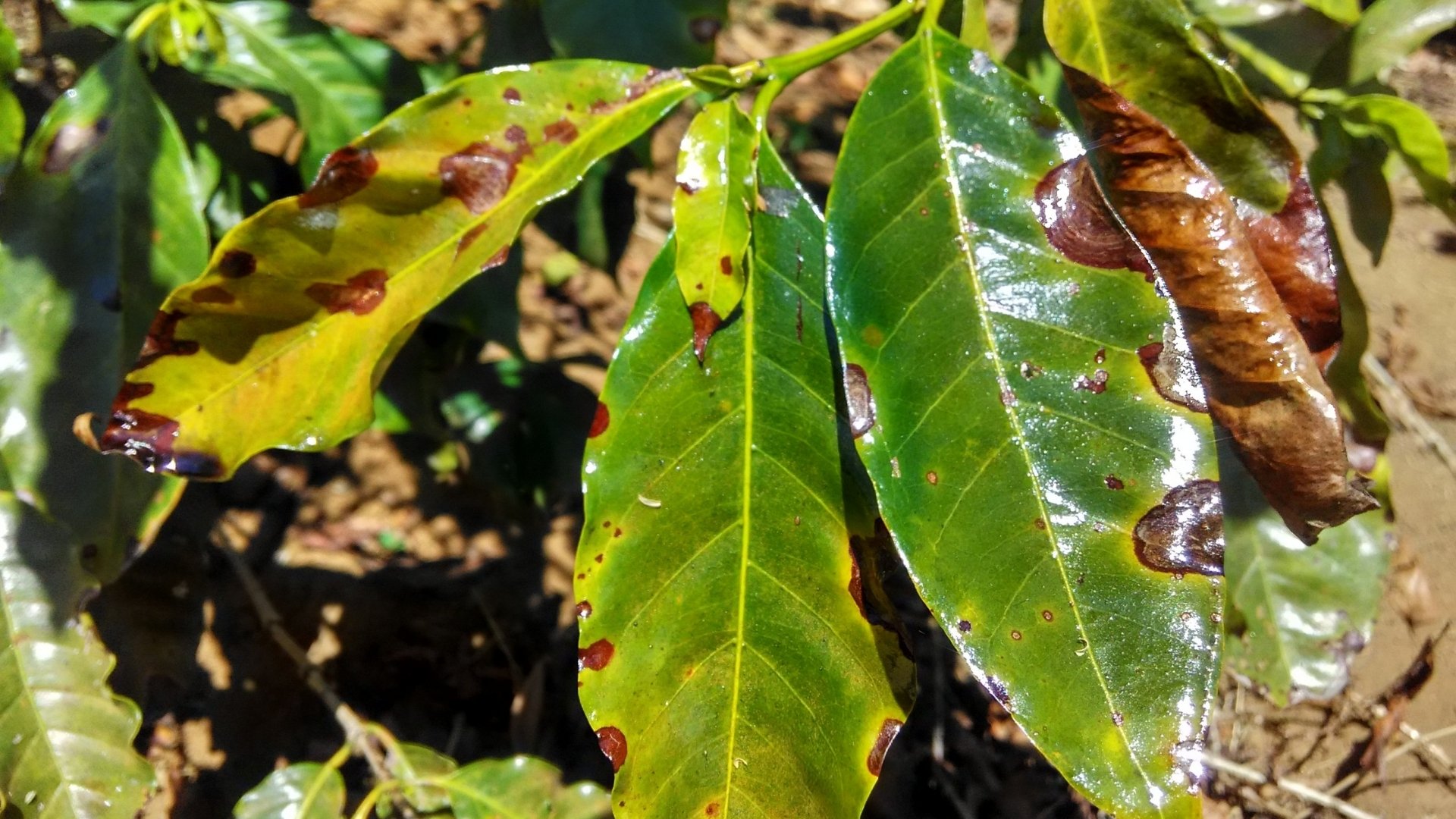
Black rust infects almost all above-ground parts of wheat, mainly stems, leaf sheaths, and leaf surfaces. Dark reddish-brown pustules appear on stems, leaves, and spikes, sometimes merging into one another under heavy infection. Rough flecks form before pustules break through, and surrounding tissue becomes torn, weakening the plant and reducing yield.
Survival and Spread
Overwintering: The pathogen survives on crop stubble and volunteer wheat plants.
Alternate Host: Berberis species act as secondary hosts supporting disease persistence.
Primary Spread: Urediospores carried from the southern hills initiate infections in new areas.
Secondary Spread: Local wind and rain can disperse spores to neighbouring fields, expanding outbreaks.
Favourable Conditions
Moisture: High humidity accelerates disease development.
Temperature: Warm conditions above 20°C promote rapid pustule formation.
Plant Density: Dense crops increase leaf-to-leaf contact, facilitating spread.
6. Flag Smut
Flag smut symptoms appear from the late seedling stage and can persist until crop maturity. Seedling infection causes leaves to twist and droop, eventually leading to withering and drying. Grey to greyish-black sori develop on leaf blades and sheaths, containing a black, powdery mass of spores that can spread the disease further.
Survival and Spread
Seed-Borne: Infection occurs when contaminated seeds are sown.
Soil-Borne: Smut spores remain viable in soil for more than 10 years.
Primary Spread: Sow infected seeds or use contaminated soil to introduce the pathogen.
Secondary Spread: Spores can disperse locally through wind or water movement in the field.
Favourable Conditions
Temperature: Disease develops optimally between 18 and 24°C.
Humidity: Relative humidity above 65% promotes spore germination.
Soil Moisture: Wet or poorly drained soils increase the risk of infection.
7. Hill Bunt (Stinking Smut)
Hill bunt affects wheat seedlings 8 to 10 days after emergence, with the fungus spreading systemically to the shoot tip. During flowering, the ovary transforms into a dark green smut sorus, affecting all spikelets. Infected plants mature earlier than healthy ones, reducing overall yield and grain quality.
Survival and Spread
Seed-Borne: The pathogen survives in infected seeds.
Primary Spread: Sowing contaminated seeds introduces the disease to new fields.
Secondary Spread: Local movement of spores is limited but can occur via soil or equipment.
Persistence: The fungus remains dormant in seeds until conditions favour germination.
Favourable Conditions
Temperature: Optimal development occurs between 18 and 20°C.
Soil Moisture: High soil moisture promotes infection.
Seedling Stage: Young seedlings are most susceptible to initial infection.
8. Karnal Bunt
Karnal bunt is a seed-borne disease that is often hard to detect in the field, as only a few kernels per ear may be infected. Slight glume spreading may occur, but visible symptoms are most apparent after harvest. Infected grains show partial blackening, reducing grain quality and market value.
Survival and Spread
Seed-Borne: The pathogen survives within infected seeds.
Primary Spread: Sowing contaminated seeds introduces the disease to new fields.
Secondary Spread: Local infection can occur through contact with soil or water contaminated with infected grains.
Persistence: The fungus remains dormant in seeds until conditions favour germination.
Favourable Conditions
Temperature: Disease develops optimally between 18 and 20°C.
Soil Moisture: High soil moisture supports infection.
Seed Stage: Infection primarily occurs when seeds are sown under favourable conditions.
9. Leaf Blight
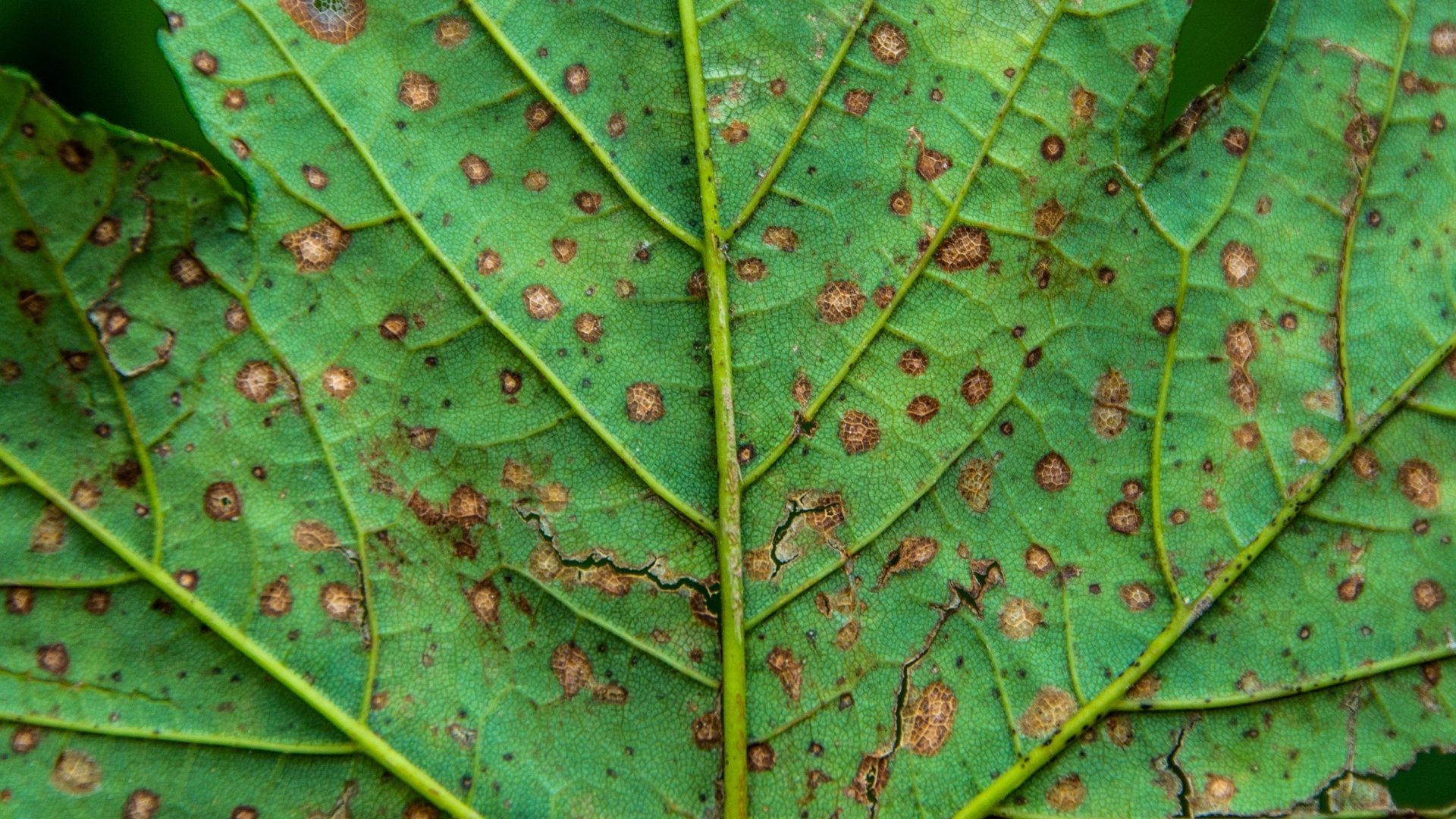
Leaf blight appears as reddish-brown oval spots on young seedlings, each outlined with a bright yellow margin. As the disease progresses, multiple spots merge, leading to premature leaf drying. This disease is complex, involving multiple pathogens, including Alternaria triticina, Bipolaris sorokiniana, and Alternaria alternata, which together reduce plant vigour and yield.
Survival and Spread
Seed-Borne: The pathogen can survive in infected seeds.
Soil-Borne: Disease persists in contaminated soil.
Airborne Spread: Conidia carried by wind spread the infection to healthy plants.
Primary Infection: Initiated through infected seeds or soil at sowing.
Favourable Conditions
Temperature: Disease develops optimally around 25°C.
Humidity: High relative humidity promotes infection and spread.
Dense Planting: Closely spaced crops facilitate rapid disease progression.
10. Foot Rot
Foot rot primarily affects seedlings, turning roots and rootlets brown. Infected plants exhibit pale-green leaves and stunted growth. The fungus produces sporangia, zoospores, and oospores, which contribute to its persistence and spread in the field.
Survival and Spread
Soil-Borne: The pathogen survives in contaminated soil.
Water Transmission: Irrigation water can carry the fungus to healthy plants.
Primary Infection: Occurs when seedlings come into contact with infected soil.
Persistence: The fungus can remain viable in wet soil for extended periods.
Favourable Conditions
Weather: Wet conditions accelerate disease development.
Rainfall: High rainfall increases soil moisture, promoting infection.
Soil Saturation: Waterlogged soils worsen the disease impact.
Seedling Vulnerability: Young seedlings are most susceptible to infection.
11. Head Scab and Fusarium Leaf Blotch (Snow Mold)
Leaf blotch appears during the late jointing to early boot stage, forming oval to elliptical greyish-green lesions. These lesions expand into large, eyespot-like blotches, causing leaf tissue to split and shred from the lesion centers.
Head scab affects spikelets, producing tan to light brown lesions, dark brown discoloration at the spikelet base, and orange fungal growth on glumes. Grains from infected plants may become shriveled, chalky white, or pink, while infected florets appear darkened and oily.
Survival and Spread
Soil-Borne: Fungus persists in contaminated soil.
Crop Residue: Survives on leftover plant debris.
Wind and Rain: Spores spread via wind or splashing rain to healthy plants.
Primary Infection: Initiated through contact with infected debris or soil.
Favourable Conditions
Temperature: Cool weather supports disease development.
Moisture: High humidity or wet conditions promote infection.
Dense Canopy: Crowded crop stands increase leaf wetness and spread.
Late Season: Disease severity is higher during later growth stages.
12. Helminthosporium Leaf Blotch (Spot Blotch)
This disease first appears on the lower leaves, forming elongated or oval dark brown lesions. As lesions mature, the centres turn light brown or tan, surrounded by irregular dark margins. Severe infection can cause leaves to die prematurely, reducing photosynthetic area and overall crop health. Early identification is crucial to prevent rapid spread across the field.
Survival and Spread
Seed-Borne: Pathogen persists in infected seeds.
Soil-Borne: Survives in contaminated soil.
Primary Infection: Initiated by sowing infected seeds or contact with infected soil.
Secondary Spread: Spores may spread via wind or rain splash to healthy plants.
Favourable Conditions
Humidity: High atmospheric moisture promotes infection.
Rainfall: Prevalent in regions with higher rainfall.
Dense Foliage: A thick canopy favours lesion development and disease spread.
Warm Temperatures: Moderate warmth accelerates pathogen growth.
Also Read: Biological Control of Plant Disease: Improve Yields and Crop Health
13. Seedling Blight
Seedling blight typically begins during early flowering, with Fusarium lesions forming at the stem base. Infections may spread to the grain without obvious ear bleaching. Long dark brown streaks develop along the leaf sheath, and the ear blight phase can cause significant yield loss. The fungus also produces mycotoxins in infected grains, affecting quality and safety.
Survival and Spread
Seed-Borne: Infected seeds are the main source of the disease.
Soil-Borne: Pathogen survives on crop debris in the soil.
Primary Infection: Occurs when infected seeds are sown.
Secondary Spread: Disease can extend through contact with infected soil and plant residue.
Favourable Conditions
Soil Moisture: High soil moisture promotes infection.
Temperature: Warm soil temperatures favour fungal growth.
Dense Planting: Crowded seedlings increase susceptibility.
Protect your wheat crop with precision drone spraying and data‑driven guidance from Leher. With certified pilots and efficient service across large fields, Leher makes booking, spraying, and payment simple. Schedule your first drone spray service today!
Also Read: Drones in Agriculture: Effective Plant Disease Detection and Targeted Spraying
With these diseases mapped out, let’s look at practical strategies that ensure your wheat fields remain vigorous and fruitful.
Practical Strategies to Protect Your Wheat Crop

Maintaining a healthy wheat crop requires timely actions that reduce infections and protect yields. By combining cultural, biological, and technological approaches, farmers can effectively strengthen crop health.
Below are the key strategies you can implement in your fields:
Seed Selection and Treatment: Use certified disease-free seeds and treat them with appropriate fungicides to prevent seed-borne infections.
Crop Rotation: Rotate wheat with non-host crops to interrupt the lifecycle of soil- and seed-borne pathogens.
Field Sanitation: Remove and destroy crop residues, volunteer plants, and weeds that can harbour fungal spores.
Timely Irrigation: Avoid overwatering and maintain optimal soil moisture to reduce conditions favourable for fungal growth.
Fungicide Applications: Apply fungicides based on disease scouting and weather conditions, following recommended doses.
Resistant Varieties: Plant wheat varieties with built-in resistance to common diseases like rusts and smuts.
Precision Monitoring: Use drones, sensors, or manual scouting to detect early signs of disease for timely intervention.
Environmental Management: Ensure proper spacing, ventilation, and sunlight exposure to minimise pockets of high humidity that favour fungal infections.
Also Read: How to Spray Pesticides Safely on Crops
With these strategies in place, modern technology can improve your disease management. Let’s see how Leher’s drones make it faster and more precise.
How Leher’s Drones Help You Manage Wheat Crop Diseases
Wheat diseases can escalate rapidly under favourable temperature and moisture, threatening yield and grain quality. Leher’s drone spraying services let you respond quickly with precise application of approved crop protection inputs across your fields. By accurately targeting affected areas, these drones save time, reduce chemical use, and help maintain healthier, more productive crops.
Here’s how Leher creates real impact:
Proven Scale and Reach: Leher has already sprayed over 35,000 acres across India, partnering with 2,200+ drone operators to serve smallholder farmers, cooperatives, and estates.
Fast and Efficient Spraying: Each drone can spray up to 50 acres a day, with a 10-litre tank, 22-minute flight time, and 45-minute recharge. Spraying takes minutes, not hours.
Lower Chemical Use, Better Results: Farmers using Leher’s drones report up to 75% less chemical residue and 30–50% yield improvements, especially in crops like tea, rubber, and horticulture.
Easy Access Through Mobile Booking: Farmers can book services through the Leher app, WhatsApp, or a centralised call system. Trained, DGCA-certified pilots handle the spraying, and payment is collected only after the job is complete.
Support for Drone Entrepreneurs: Leher empowers rural youth to become drone service providers. Its partner program includes training, financial assistance, and an app to manage daily operations, orders, and payments.
Data-Backed Decision-Making: Every spray is logged through Leher’s Spray Management System. Farmers receive GPS flight paths, chemical usage logs, and auto-generated reports to support subsidy applications and planning.
Book a drone spray with Leher today! Cover up to 50 acres with precise, automated spraying. Download the Leher app today on Google Play or the App Store, or join our Drone Partner Program to get started.
FAQs
1. Can wheat disease spores survive extreme heat or drought conditions?
Certain fungal spores, like rusts, remain viable even under heat or drought by entering a dormant state. However, prolonged extreme conditions reduce spore germination, limiting the potential for infection until favourable moisture and temperature return.
2. How does plant density influence the severity of wheat diseases?
Dense planting increases canopy humidity and reduces airflow. This creates ideal conditions for fungal pathogens, accelerating disease spread and severity compared to well-spaced crops, which benefit from better ventilation and sunlight exposure.
3. Are there specific wheat growth stages more vulnerable to infections?
Yes, the seedling, tillering, and flowering stages are most susceptible. Pathogens exploit young, actively growing tissues, while infections at the grain-filling stage primarily affect yield and quality rather than initial plant establishment.
4. Can drone spraying completely replace manual fungicide application in wheat fields?
Drone spraying improves precision and speed but does not entirely replace manual oversight. Scouting, targeted application, and corrective sprays remain essential for hidden infections, edge fields, or under-dense canopy conditions.
5. How do mixed infections (more than one pathogen) impact wheat yield?
Mixed infections intensify stress on plants, reduce photosynthesis, and increase tissue necrosis. Yield loss is often greater than that from single-disease infections due to compounded physiological damage and accelerated disease progression.
Let’s Grow Together!
Interested in drone spraying solutions? Connect with us today.