A Complete Guide To Autonomous Drones
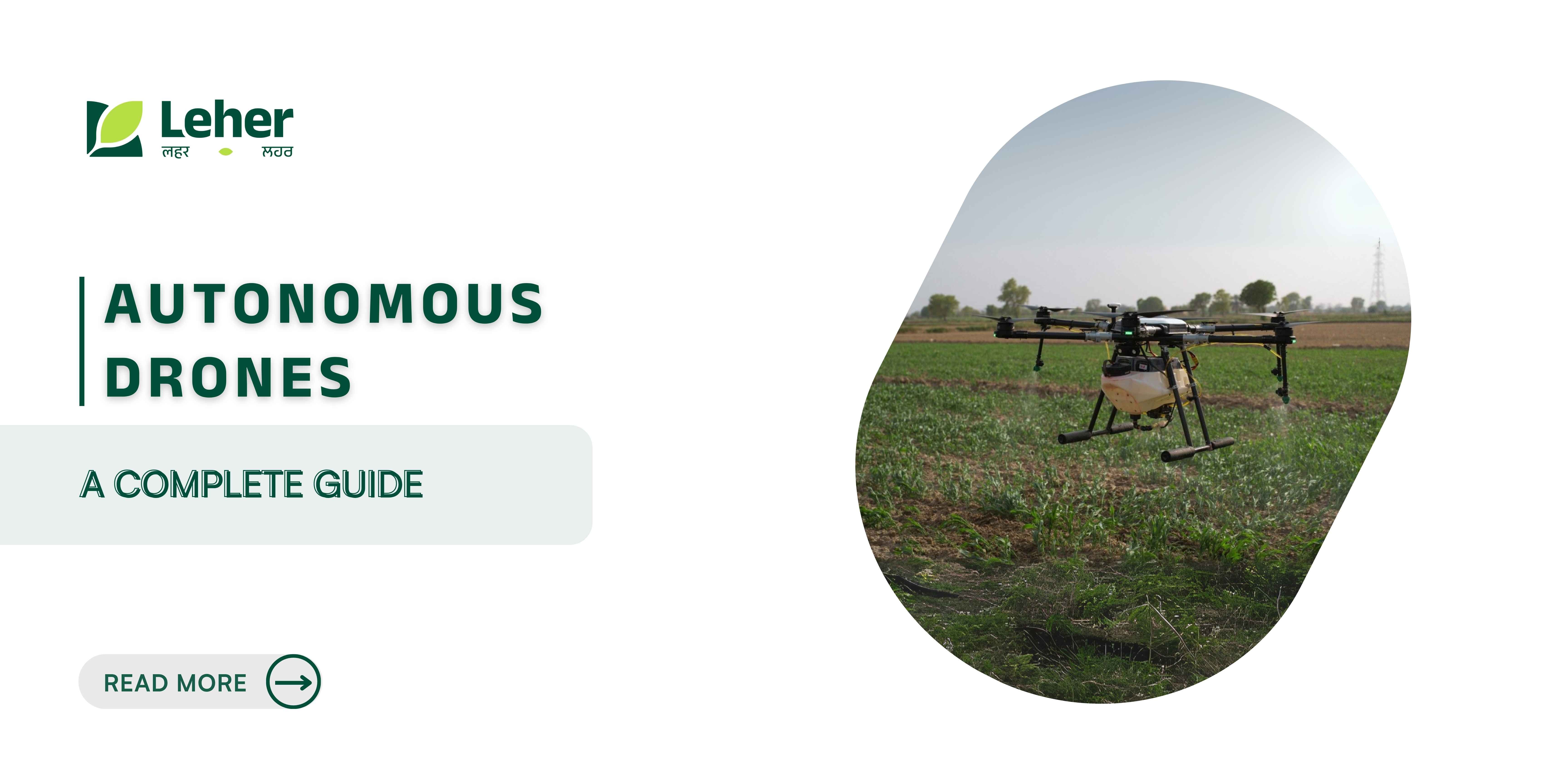
Spending long hours in the field manually spraying crops is both tiring and inefficient. You face labour shortages, rising chemical costs, and the constant worry of uneven coverage affecting your yield. These challenges eat into your profits and make farming harder than it needs to be.
Autonomous drones provide a smart way forward. They handle tasks like spraying and mapping from the sky with minimal human input. This shift is accelerating rapidly; drone use in Indian agriculture is expected to surge from approximately 10,800 units to over 61,000 by 2029. This technology saves your time, reduces your costs, and brings new precision to your daily work.
This guide explores autonomous drone technology in depth, explaining how it works and the immense value it offers to Indian agriculture. You will find out how this technology is helping farmers, entrepreneurs, and agribusinesses grow their success.
Key Takeaways:
Time and Labor Savings: Autonomous drones reduce spraying time from hours to minutes, covering one acre very quickly and solving major labor shortages for large farms.
Drastic Resource Efficiency: Precision spraying saves up to 90% of water and cuts pesticide use by targeting application only where it is needed.
Core Technology: Independent operation relies on the Flight Controller for processing, GPS for path navigation, and LiDAR/Vision Sensors for real-time obstacle avoidance.
Guaranteed Yield Boost: Uniform and targeted treatment leads to healthier crops, resulting in a reported increase in crop yield.
Skip High Investment: Farmers can use service providers like Leher to access this advanced technology immediately without the high upfront cost or need for pilot training and licensing.
What Are Autonomous Drones?
Autonomous drones are Unmanned Aerial Vehicles, or UAVs, that operate independently using pre-programmed instructions and advanced sensor data. They can complete complex tasks like precision spraying, field mapping, and crop monitoring with minimal human oversight.
These drones follow a defined flight path using GPS, adjusting for changes in terrain or obstacles completely on their own. This advanced capability sets them apart from simple remote-controlled drones.
Their core purpose is to remove human error and time-consuming manual effort from critical farming operations. The drone market in India is on a strong growth trajectory. The table below summarizes key market data points:
Aspect | Details |
Overall Indian Drone Market | |
Projected Market Size |
Categories of Autonomous Drones
Autonomous drones can be classified in several ways, which helps in understanding their applications and capabilities.
By Level of Autonomy
Drones range from simple remote control to full independence. The levels of autonomy help clarify their operational capability:
Level 1 & 2 (Assist & Partial Automation): Basic assistive features like auto-hover or the ability to follow pre-set GPS waypoints.
Level 3 (Conditional Autonomy): The drone can adapt to environmental changes (like wind or obstacles), but a human monitors and can intervene.
Level 4 (High Autonomy): Can launch, execute missions, and land with minimal human input. Human oversight is often for regulatory reasons.
Level 5 (Full Autonomy): Can handle all aspects of a mission independently without any human role (the future vision).
By Design and Operation
This is a common classification in market reports:
Multi-Rotor: The most common type, ideal for hovering and used in agriculture, surveillance, and photography.
Fixed-Wing: Better for long-range and endurance, used in large-area mapping, surveying, and defense.
Hybrid VTOL: Combine the vertical take-off of multi-rotors with the efficient forward flight of fixed-wing drones.
Other Classification Methods
Other criteria include weight, operational altitude, range, and endurance, often used for regulatory and military purposes
Also read: Smart Farming in India: Precision Techniques and Benefits
Now that you know what autonomous drones are, let us look inside to understand the complex parts that enable their precise and independent functioning.
What are the Components of Autonomous Drones?
The intelligence and capability of these advanced aerial systems come from several integrated parts working together. Understanding these components helps you see why autonomous operation is so precise and reliable for agricultural tasks:
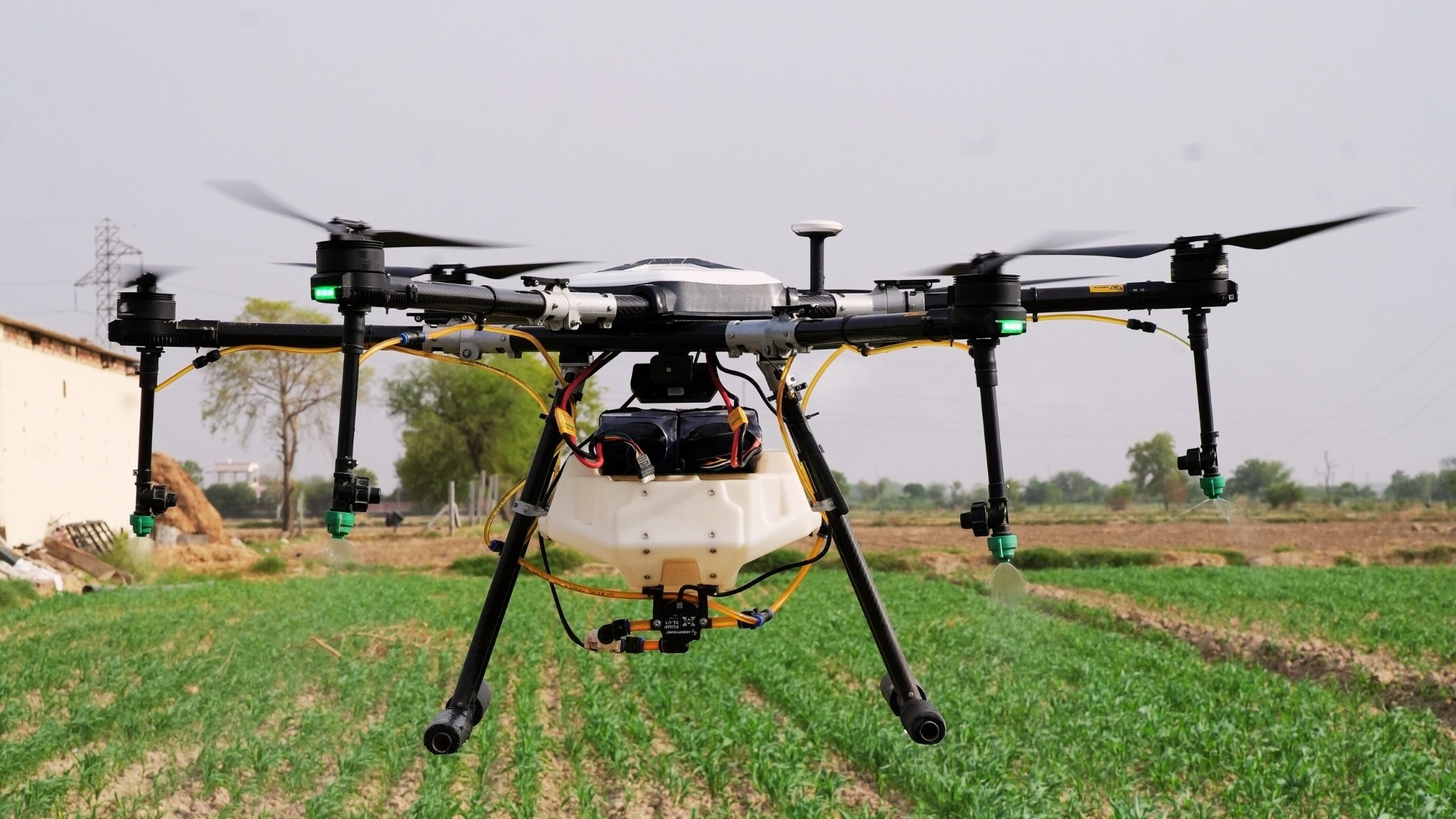
The components listed below enable the drone to think, navigate, and execute complex farm tasks automatically, making the process highly efficient:
Flight Controller and Onboard Computer
This acts as the drone's brain, processing data from all sensors to maintain stable flight, execute the pre-set route, and perform tasks like precision spraying. It is responsible for translating the flight plan into real-time motor commands.
Global Positioning System (GPS) and Navigation Module
The GPS module determines the drone’s exact position in the field, guiding it along a precise path defined during the planning stage. This system allows the drone to automatically cover every part of the field without overlap or gaps.
LiDAR, Vision, and Obstacle Avoidance Sensors
These sensors use laser or camera technology to detect power lines, trees, and buildings in the flight path, ensuring the drone avoids collisions safely. This crucial feature enables the drone to fly safely and autonomously in complex field environments.
High-Capacity Battery and Power Management System
Agricultural drones require powerful batteries to lift heavy payloads like liquid pesticides and spray across large fields. The power management system monitors battery life and initiates a return-to-home command when power is low.
Payload System (Sprayer/Sensor)
This component includes the chemical tank, pump, and nozzles, which are precision-calibrated for application control. In spraying drones, this system ensures the agrochemical is applied uniformly and only to the targeted area.
Also read: Pros and Cons of Drones in Agriculture
Understanding these parts is crucial, but the real question is how these powerful tools directly benefit your farm's productivity and bottom line.
Why Use Autonomous Drones for Your Business?
Adopting autonomous drones is no longer a luxury but a crucial step toward running a modern, profitable agricultural business. For tech-savvy farmers, drone entrepreneurs, and agribusinesses, these benefits lead directly to better financial outcomes.
Autonomous drone technology directly addresses the key challenges in Indian agriculture, promising a future of higher yields and lower operating costs:
Significantly Reduce Labor and Time Costs
One drone can cover large areas in minutes that would take multiple workers an entire day to spray manually, solving the problem of labor shortages. This shift allows your existing farm workers to focus on other critical, high-value tasks.
Achieve Unmatched Precision and Higher Yields
Drones use GPS and advanced sensors to spray chemicals directly where needed, minimising waste and ensuring every crop gets the right amount. This targeted approach can increase your crop yield because of healthier, uniformly treated plants.
Lower Water and Pesticide Consumption
Drone spraying uses Ultra-Low Volume, or ULV, technology, which can save a significant amount of water typically used in traditional spraying methods. By only applying pesticides to necessary spots, you also cut down on chemical costs and reduce environmental impact significantly.
Why keep dealing with labor shortages and high costs? Let Leher's drones deliver these benefits to your field. Contact us to get a custom drone spraying solution.
Improve Operator Safety and Health
Keeping workers away from direct contact with harmful pesticides and agrochemicals during the spraying process is very important. Autonomous drones handle this hazardous task from a safe distance, improving the safety of your farm workers.
Collect Real-Time, Actionable Field Data
Drones are not just for spraying; they are data collection tools equipped with high-resolution cameras to monitor crop health, pest attacks, and irrigation issues. This real-time data helps you make quick, informed decisions for your farm.
Also read: Drone Services Market Size and Growth Trends
With these significant benefits in mind, it is important to understand the structured, step-by-step process that allows a drone to execute its task flawlessly in the field.
How Does an Autonomous Drone Work?
The seamless operation of an autonomous drone is based on a structured, multi-step process that guarantees accurate and repeatable results every time. This four-step workflow moves from planning the mission to executing the precise task in the field.
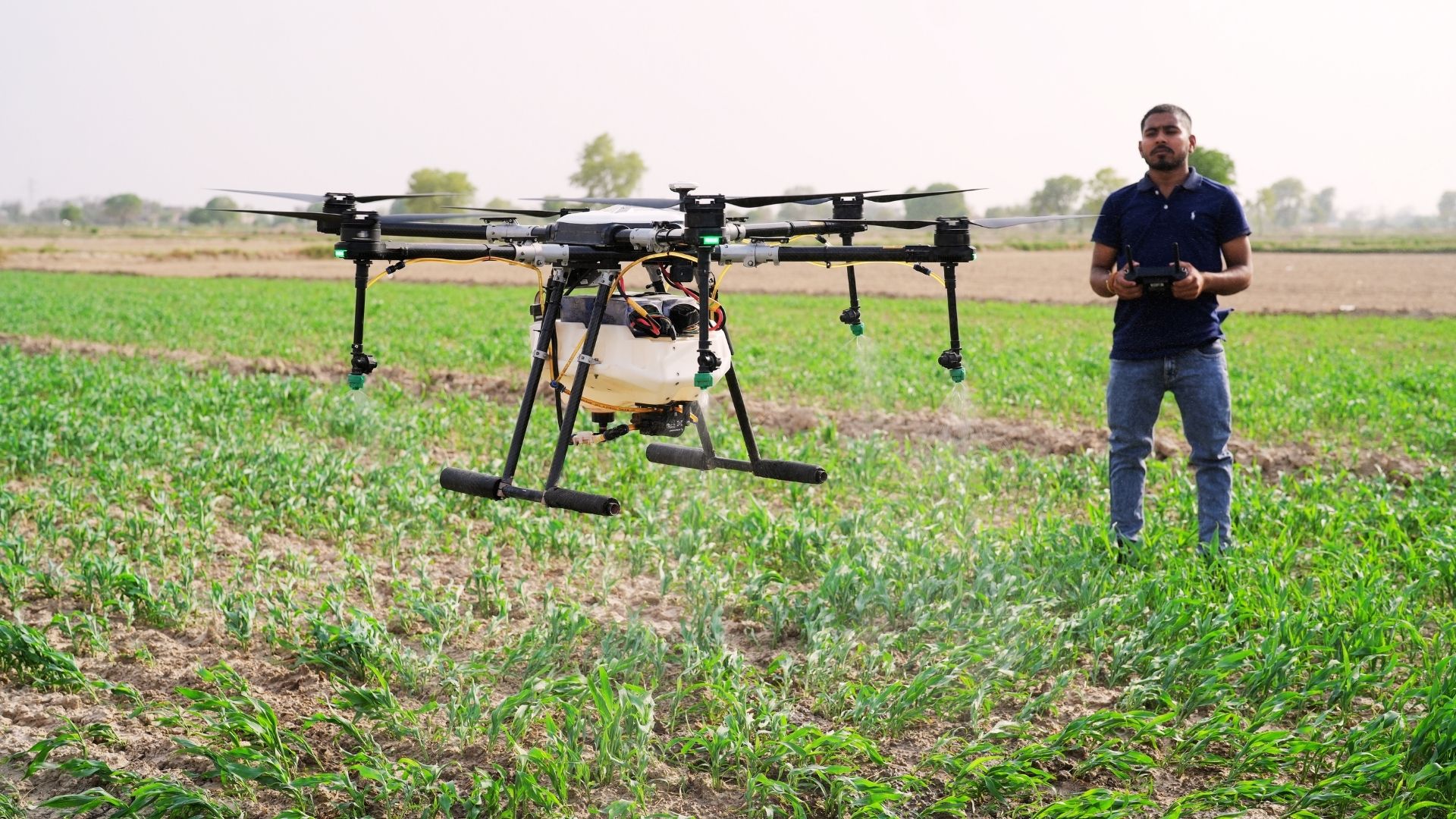
The process of autonomous operation is systematic, guiding the drone from initial planning to completing the field task with complete accuracy:
Mission Planning and Field Mapping
The operator first uses a connected application to define the boundaries of the field and specify any no-fly zones, like houses or power lines. The system automatically generates the most efficient, GPS-guided flight path the drone will follow.
Autonomous Flight and Navigation
Once the mission is uploaded, the drone takes off and flies the pre-set path without constant human joystick control. It uses its GPS and on-board sensors to maintain a constant altitude above the crops and stay within the defined field boundary.
Real-Time Obstacle Detection and Avoidance
During the flight, the drone's advanced vision and distance sensors constantly scan for unexpected obstacles such as sudden poles or birds. If an obstacle is detected, the drone automatically slows down or adjusts its path to avoid a collision safely.
Task Execution with Variable Rate Application
For spraying tasks, the drone adjusts the flow rate of the pesticide based on the pre-loaded prescription map of the field. This ensures that areas needing more attention, like a patch with a pest problem, receive the correct, precise treatment.
Also read: How to Effectively Monitor Crop Health
Knowing how the drone works is only half the story; for a successful adoption, you must also be aware of the practical challenges and considerations involved.
Challenges and Considerations While Using Autonomous Drones
While the benefits of autonomous drone technology are significant, farmers and businesses must consider certain practical factors before full adoption. Addressing these challenges correctly ensures a smooth and effective integration into your farm operations.
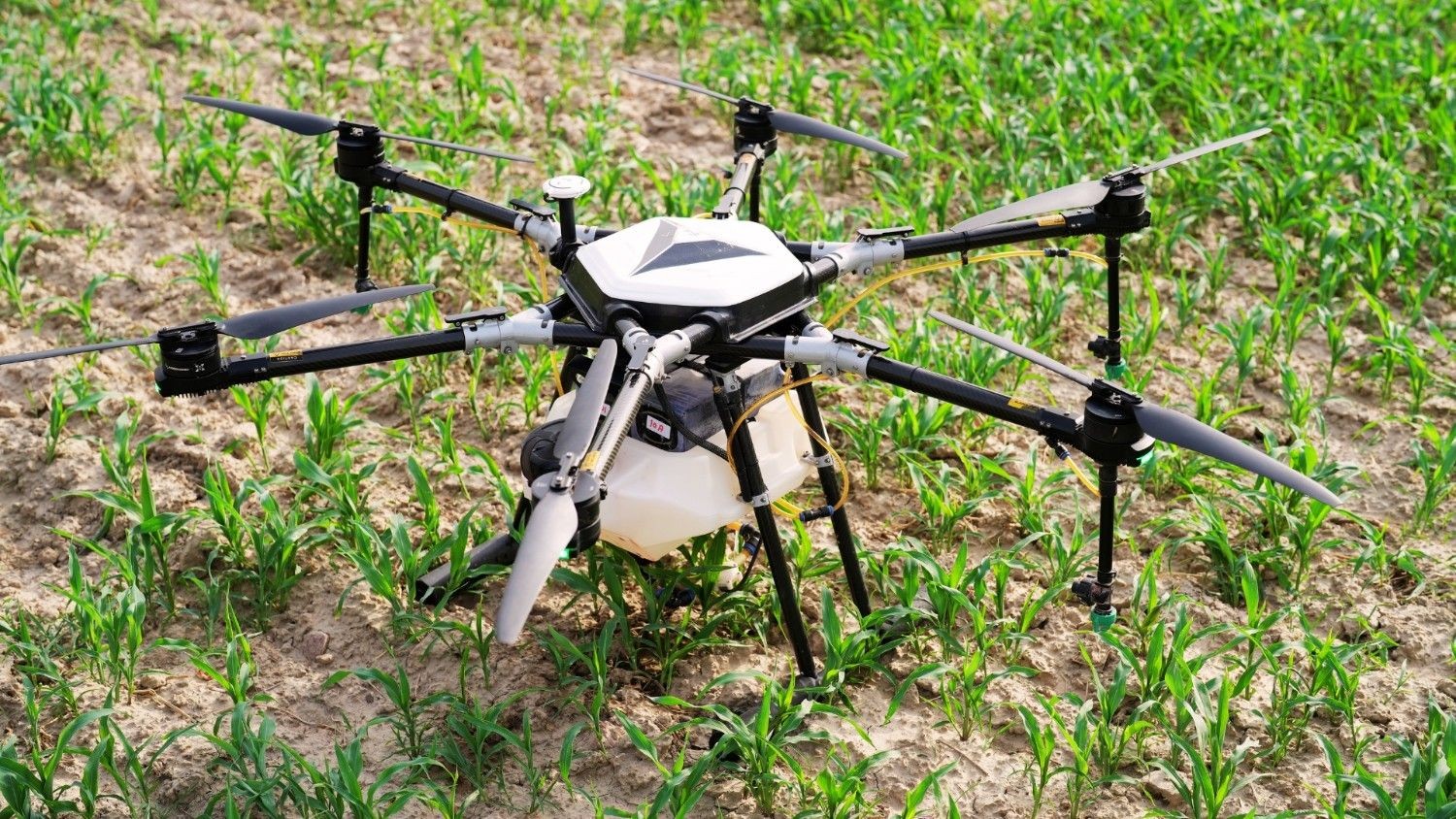
Successfully integrating autonomous drone technology requires planning and an understanding of the investment and training required:
Initial Investment and Cost Barrier
The upfront cost of purchasing an autonomous drone, especially one with high-end sensors and payload capacity, can be very high for individual farmers. Many farmers find that opting for a drone service provider is a more budget-friendly approach to accessing the technology.
Need for Operator Training and Certification
Operating agricultural drones requires a trained and certified pilot who understands drone policies and safe flying practices in India. Proper training is essential not just for operation but also for data analysis and maintenance of the complex equipment.
The challenges of high investment and complex training should not stop you from achieving better yields. With Leher, you don't need to buy a drone or get a license. Download the Leher app and book a professional drone service in just a few taps.
Regulatory Compliance and Airspace Rules
The Indian government has specific regulations for flying drones, particularly for commercial and agricultural purposes, including licensing and geofencing rules. Operators must strictly follow all Directorate General of Civil Aviation (or DGCA), guidelines to ensure legal and safe operations.
Battery Life and Logistics Management
Drone battery life remains a practical limitation, often requiring multiple battery swaps to cover very large fields, especially for spraying heavy liquids. Efficient field logistics, including charging stations and transport, is crucial to maintain high operational output.
Despite these practical hurdles, the adoption of autonomous drones in India is accelerating rapidly, driven by strong government support and technological advancements.
Also read: Drone Spraying Techniques for Effective Pesticide Application
Autonomous Drones: Key Growth Trends In India
Several powerful trends are fueling the adoption and development of autonomous drones in India:
Government Initiatives as a Major Driver
Programs like the 'Drone Didi' scheme and the Production-Linked Incentive (PLI) scheme are significantly boosting the market. The 'Drone Didi' initiative empowers rural women through drones, bringing technology to agriculture and creating new entrepreneurship opportunities.
Rise of AI and Full Autonomy
The integration of Artificial Intelligence (AI) and Machine Learning (ML) is a key trend, enabling features like autonomous navigation, real-time obstacle avoidance, and advanced data analysis. This is making fully autonomous operations beyond visual line of sight more viable.
"Drone-as-a-Service" Model
This model is lowering the barrier to entry, allowing businesses and farmers to access cutting-edge drone technology without large upfront investments.
Dominant Application Sectors
Key sectors driving adoption include:
Agriculture: For crop monitoring, precision spraying, and yield estimation.
Defense & Security: For surveillance, reconnaissance, and border patrol.
Infrastructure & Logistics: For inspection of assets and last-mile delivery.
These national trends are making drone technology more accessible than ever. Leher puts this powerful technology directly into your hands, without the complexity.
Make Your Farming Smarter with Leher
Managing a farm is hard enough without the stress of inefficient spraying and labour worries. Adopting new technology on your own can feel complex and expensive, creating another barrier to progress.
Leher removes these barriers by providing direct access to advanced autonomous drone services. You do not need to buy a drone or get a license. We handle the technology and the flying, delivering the benefits of precision agriculture directly to your field.
Our services provide straightforward, measurable value for every farmer:
Time-Saving Service: Leher drones can spray a one-acre field in just minutes, saving you hours of manual labor.
Reduced Resource Use: Our precision spraying cuts down pesticide consumption and water usage by up to 90%.
Certified Expert Pilots: All spraying is done by DGCA-certified drone pilots who ensure safe, legal, and professional operations every time.
Guaranteed Precision: Autonomous flight paths and Variable Rate Technology ensure uniform, target-specific application for healthier crops.
Increased Crop Yield: Farmers using our services report an increase in crop yield by up to 30% due to better chemical distribution.
Leher’s approach makes advanced farming solutions simple and accessible to every farmer, allowing you to focus on growing your crops instead of managing complex technology.
Also read: Drone Sensors in Modern Agriculture Techniques
Conclusion
Autonomous drones offer a practical path to more efficient, profitable, and sustainable farming. They solve critical problems like labour shortages and high input costs by automating key tasks with precision. Understanding how they work and their benefits allows you to make an informed decision for your farm.
Leher is your trusted partner in this transition. We provide reliable, professional drone spraying services that put this advanced technology to work for you. Our team handles everything, making it easy to get started.
Ready to experience the difference of precision spraying? Download the Leher app (Google Play, Apple Store) or join our Drone Partner Program to discover how Leher’s precision spraying services can take your farm to the next level!
FAQs
1. How much water do drones save compared to manual spraying?
Drones use Ultra-Low Volume, or ULV, spraying technology, which requires significantly less water than traditional backpack spraying methods. This method can save up to 90% of the water typically consumed for applying agrochemicals, making farming more water-wise.
2. Are autonomous agricultural drones legal to use in India?
Yes, autonomous agricultural drones are legal in India, but their operation is governed by strict regulations set by the DGCA. Commercial use requires the drone to be registered and the pilot to possess a valid DGCA Remote Pilot Certificate.
3. Can autonomous drones work on small or irregularly shaped fields?
Yes, one of the biggest benefits of autonomous drones is their ability to accurately map and spray small, irregular-shaped, or hilly fields that are difficult for traditional machinery. The GPS-guided path ensures complete coverage regardless of the field's size or shape.
4. How does drone precision spraying increase crop yield?
Precision spraying increases yield by applying chemicals only to the parts of the field that require them, ensuring every plant receives the right dosage without waste. This targeted, uniform treatment reduces crop stress, prevents pest spread, and can boost overall harvest size.
5. What is the difference between autonomous and automated drones?
Autonomous drones can make decisions in real-time, like avoiding an unexpected obstacle. Automated drones simply follow a pre-set path without adapting. Most modern agricultural drones offer autonomous features for safer operation.
Let’s Grow Together!
Interested in drone spraying solutions? Connect with us today.