How to Start Your Agriculture Drone Business?: A Step-by-Step Guide
How to Start Your Agriculture Drone Business?: A Step-by-Step Guide
Drones have become valuable tools for farmers, offering new ways to monitor crops, manage fields, and increase productivity. This shift has opened doors for entrepreneurs ready to provide drone services specifically for the agricultural sector.
Initiatives like the Namo Drone Didi Scheme aim to empower women by providing drones and training, aiding their entry into the drone service sector. If you're curious about how to start an agriculture drone business, you’re in the right place.
This blog breaks down the process into clear steps, from understanding what agricultural drones do to marketing your services and growing your venture.
What is an Agricultural Drone?
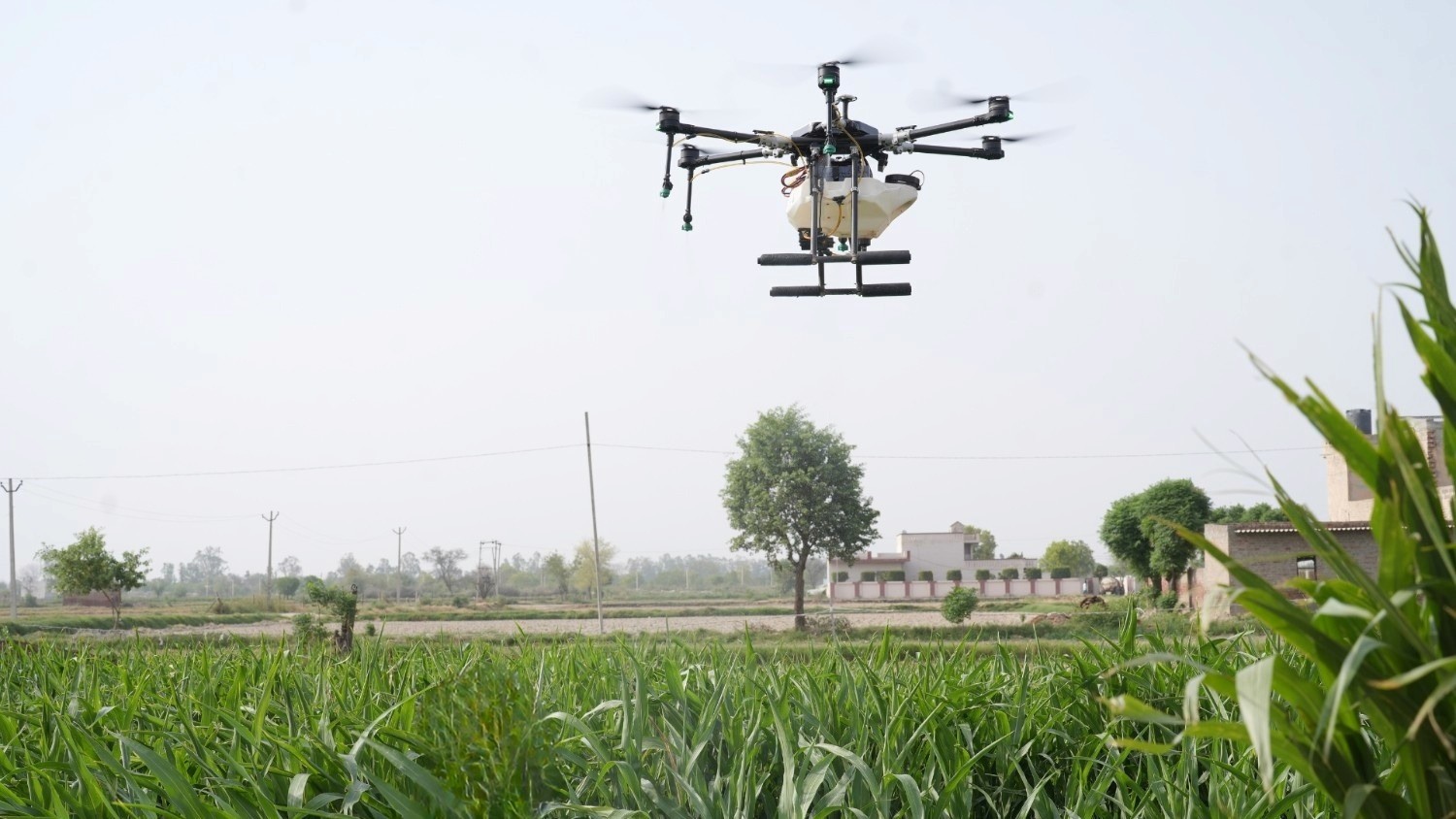
An agricultural drone is a specialised unmanned aerial vehicle designed to assist farmers with tasks like crop monitoring, spraying fertilisers or pesticides, and collecting data to support farming decisions.
Unlike standard consumer drones, these devices often carry sensors, cameras, and spray tanks suited to farming applications.
You can use agricultural drones for:
Capturing multispectral images to assess crop health.
Creating detailed field maps for soil or moisture analysis.
Applying chemicals with precision to reduce waste.
Inspecting hard-to-reach areas quickly.
Providing data that helps farmers make informed choices.
Knowing the functions and capabilities of these drones will help you decide which services to offer.
How to Start an Agriculture Drone Business?
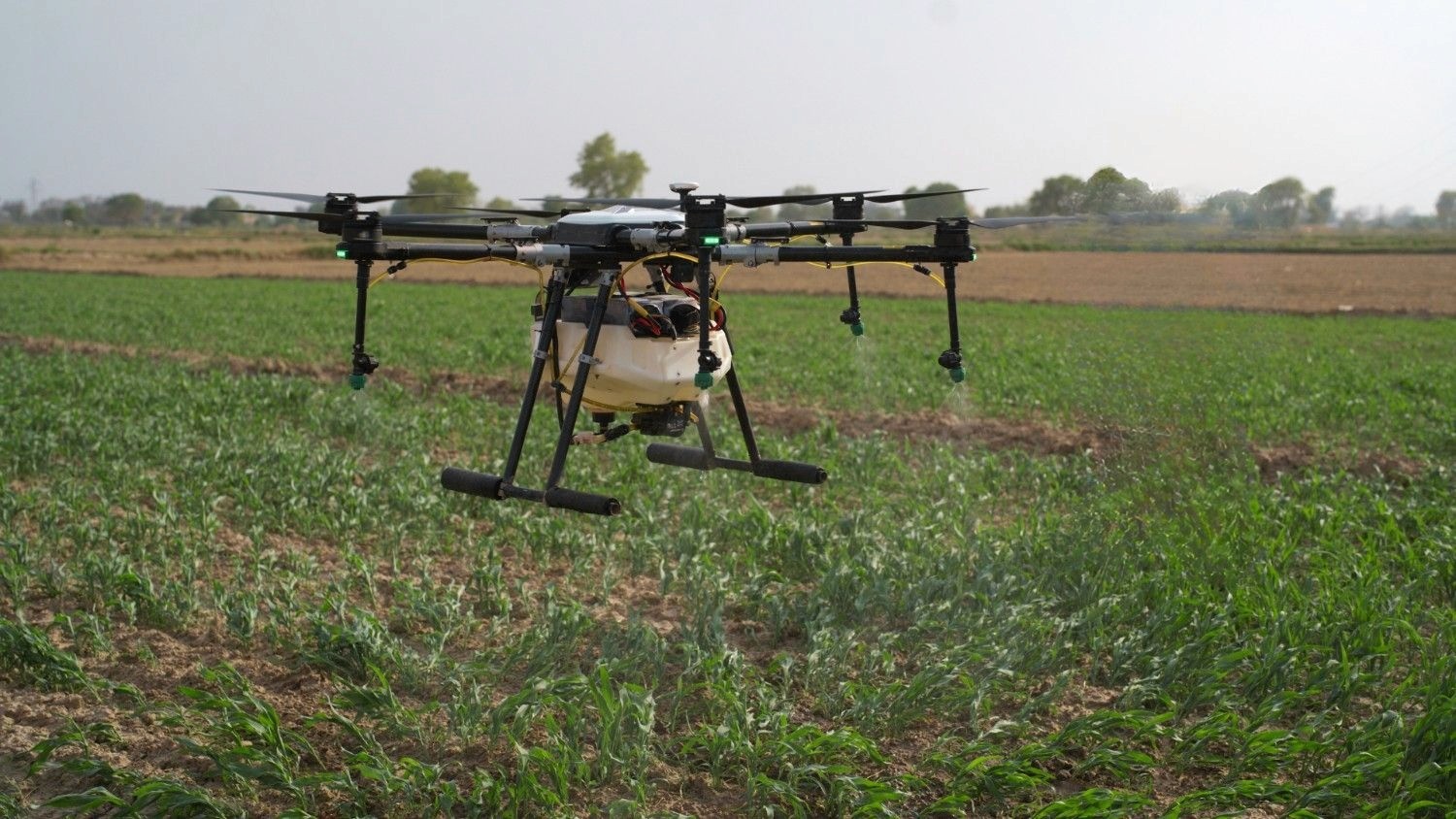
Starting a drone business can be a smart move if you're looking for work in agriculture, mapping, construction, or inspection services.
Drones are in growing demand, and with the right tools and training, you can start earning income with minimal upfront investment compared to other industries.
Research Local Regulations and Obtain Certifications
India regulates drone operations under the Directorate General of Civil Aviation (DGCA). Before flying commercially, you must:
Register your drone on the Digital Sky Platform.
Acquire an Unmanned Aircraft Operator Permit (UAOP) for commercial use.
Obtain a Remote Pilot License (RPL) by completing DGCA-approved training.
Follow restrictions like no-fly zones, maximum flight altitude, and operational hours.
Staying compliant helps avoid fines and builds trust with clients.
Develop a Business Plan
Create a roadmap detailing:
Services Offered: Spraying.
Target Market: Smallholder farmers, large agribusinesses, cooperatives.
Revenue Model: Hourly rates, subscription packages, or per-acre pricing.
Marketing Strategy: Networking, digital presence, partnerships.
Operational Plan: Equipment maintenance, staffing, scheduling.
Financial Projections: Startup costs, break-even point, expected profits.
A thorough plan guides your decisions and attracts potential investors or partners.
Select and Maintain the Right Equipment and Tech
Choose drones that suit your service goals and client needs. Consider:
Flight duration and range.
Payload capacity for spraying or sensors.
Ease of use and repairability.
Support from manufacturers and availability of parts.
Regular maintenance preserves drone performance and safety. Update firmware, check batteries frequently, and store equipment properly.
Network and Build Industry Connections
Relationships matter in farming communities. Engage by:
Attending agricultural fairs, workshops, and local farmer meetings.
Collaborating with agrochemical suppliers, cooperatives, and extension services.
Joining drone or agri-tech associations.
Offering demonstrations and free trials to showcase your services.
Trust and referrals from local farmers often lead to steady contracts.
Market and Grow Your Business
Getting the word out involves:
Creating a website highlighting your services and case studies.
Using social media to share success stories and educational content.
Running targeted ads for local farmers and agri-businesses.
Offering promotional discounts for first-time clients.
Collecting testimonials to build credibility.
Scaling can include hiring additional pilots, investing in advanced drones, or expanding to new regions.
What are the Drone Business Startup Costs?
Starting a drone business in agriculture involves more than just buying a flying machine. There are multiple costs, some obvious, others easy to overlook.
Planning ahead can help you avoid delays, run more smoothly, and make informed choices about scaling.
Here’s a breakdown of typical startup costs:
Drone Equipment
Agricultural drones come in a range of models. You'll need drones that can handle liquids with stable flight underweight for spraying services.
For instance, the DJI Agras T40, a high-end spraying drone, is priced at approximately ₹16,50,000, offering advanced features suitable for large-scale agricultural operations.
Leher's drones are efficient in flying up to 50 acres a day, offering a payload of 10kg. They feature a flight time of 20-30 minutes, with low-battery and low-tank alarms, ensuring efficient and precise spraying operations.
Licenses and Certifications
In India, registration through DGCA (Directorate General of Civil Aviation) is required for commercial drone use. Certification as a drone pilot from an approved training organisation is mandatory.
Combined, these may cost between ₹25,000 and ₹75,000, depending on the course and registration fees.
Training
Even if you're tech-savvy, piloting a drone for agricultural work requires precision.
Certified programs teach drone controls, safety procedures, data capture, and spraying techniques. Some also include simulation practice and on-field flying hours.
Insurance
Insurance is a smart investment to protect against damage, theft, or accidents. Plans vary by drone value and service type, but liability coverage and damage insurance could cost thousands annually.
Marketing and Branding
To attract farmers and build trust, you'll need visibility. Costs include designing a logo, building a website, printing flyers or banners for agri-events, and running online ads.
A modest budget can cover the costs of creating a professional logo, developing a website, and producing promotional materials such as flyers and banners, depending on the scale.
Miscellaneous Costs
Spare batteries, rotors, repair kits, GPS trackers, and transport cases are necessary for day-to-day work. Also, keep funds aside for maintenance or replacing worn-out parts.
With a small budget and careful planning, you can start with one drone and offer basic services like spraying or field scouting.
As you gain experience and build a client base, you can upgrade equipment and expand into data processing, mapping, or training services. Starting lean and scaling gradually is practical for most first-time drone entrepreneurs..
Leher helps you select the right equipment by providing access to the latest drone technology designed for precision spraying, delivering up to 90% water savings and a 40% reduction in pesticide use.
With fast coverage of over 50 acres a day and trained pilots handling operations, you avoid common headaches related to maintenance and repairs with Leher.
Download Leher from Google Play Store and Apple Store.
Flexible drone rentals and comprehensive training reduce your startup risks, while business support connects you with clients to grow your venture with Leher.
What are the Key Factors Influencing Drone Pilot Income?
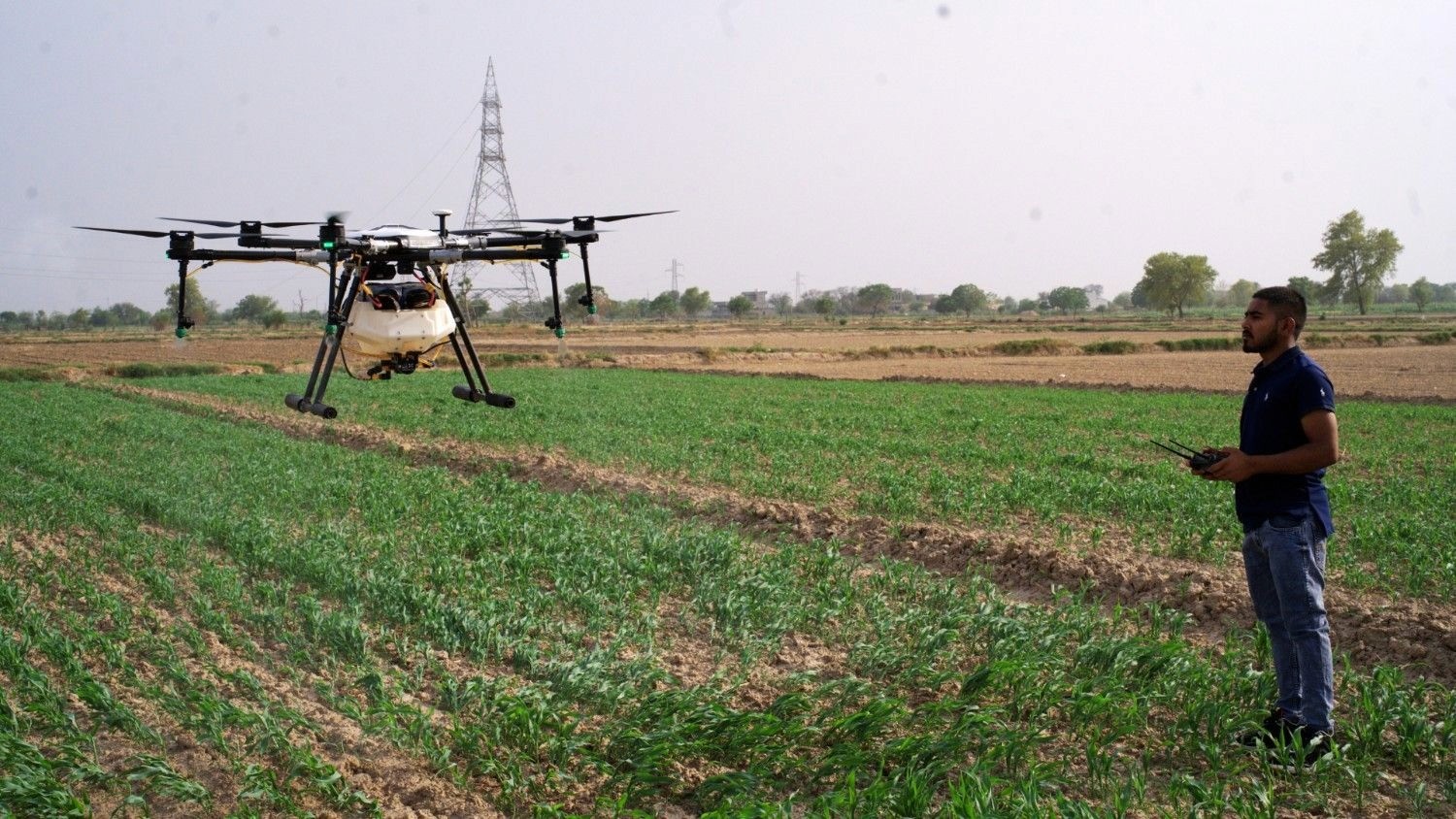
When starting a drone business in agriculture, income varies widely depending on several factors:
Factor | How It Affects Income | Example |
Service Range | More services = more income streams | Only spraying: ₹300–₹500/acre |
Location | High-demand regions offer more jobs | States like Punjab and Haryana have a high demand for drone services, potentially offering over 20 jobs per month during peak season, compared to much fewer jobs in low-demand areas. |
Client Base | Regular clients ensure consistent work | Securing contracts with two large cooperatives can provide a steady monthly income, with sources indicating that some women in government schemes earn ₹25,000 to ₹35,000 per month through such work. |
Equipment Quality | Better drones are more reliable and efficient, covering more acres per day and justifying a higher daily rate for the business. | A premium agricultural drone can cover 50 acres per day, while a basic one may be limited to 10-15 acres, leading to a significant difference in daily revenue. |
Operational Efficiency | Faster, error-free work means more acres covered per day, directly increasing revenue. | A pilot who can efficiently spray 20 acres in a day can earn a daily revenue of approximately ₹10,000 (at an average rate of ₹500/acre), whereas a pilot who covers only 10 acres would earn ₹5,000. |
Market Demand | Income is highly seasonal, peaking during crop cycles when spraying is most needed. | A pilot can expect 25+ jobs per month during the peak Kharif season but may only get 5–10 jobs per month during the lean season. |
This variation means that drone pilot income can range from ₹20,000 per month for beginners to over ₹1,00,000 per month for skilled professionals in high-demand areas using premium drones.
Leher’s Drone Program empowers over 100+ drone entrepreneurs with high daily coverage (up to 50 acres/day) and instant job access via the app. By offering bundled services like spraying and crop monitoring, drone pilots using Leher's platform can boost both efficiency and income potential, tapping into a growing network of 2,100+ satisfied farmer clients across India.
Also Read: Uses and Benefits of Drones in Agriculture - Leher
What are Some Other Profitable Drone Services Ideas to Consider?
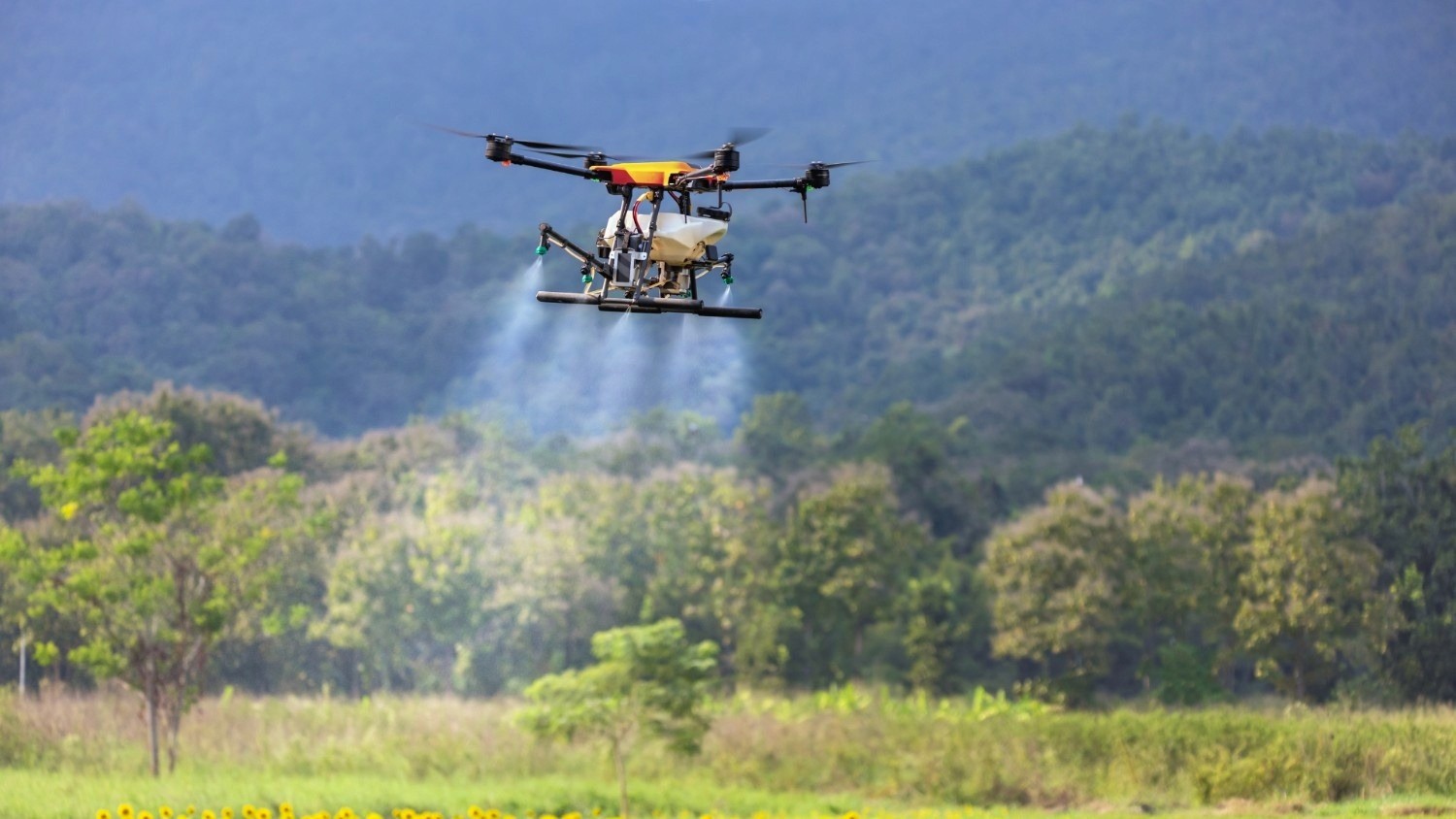
Agricultural drone services continue to open up steady income opportunities. If you're thinking about starting a drone business, focusing on farming can be a smart and practical option.
The work is in demand, repeatable, and scalable. Below are some profitable ideas to consider, each one filling a real need on farms of all sizes.
Crop Health Monitoring
Drones equipped with multispectral or thermal cameras can be used to scan fields. You can detect early signs of pest infestations, nutrient shortages, or water stress.
This helps farmers act sooner and avoid larger losses. Regular surveys also make it easier to track progress over the growing season.
Also Read: Crop Monitoring with Hyperspectral Imaging for Precision Agriculture
Soil and Field Mapping
Aerial imagery and GPS can be used to create detailed maps showing field elevation, drainage patterns, and moisture levels.
These maps guide decisions on where and how to plant. For new farms or large fields, this service can reduce weeks of manual planning to a few hours.
Livestock Monitoring
Provide aerial tracking services for herds spread across large areas. Drones can help monitor movement, count animals, and spot any that appear injured or separated.
Some drones can also carry thermal cameras to help locate animals at night or in rugged terrain.
Consulting and Training
Many farmers are interested in drone technology but don’t know where to start. If you've mastered the basics, you can offer hands-on training sessions or digital consultations.
You can also help others understand flight control, maintenance, and how to read aerial data.
Data Analysis Services
Drone flights create large volumes of images and data. Offer services that process this raw information into reports showing patterns in crop growth, water stress zones, or yield estimates.
Farmers and agronomists can use these reports to plan more effectively and reduce guesswork.
Offering multiple services also helps you manage seasonal changes. For example, crop spraying may slow down during harvest, but data mapping and livestock monitoring could stay in demand year-round.
By diversifying your drone services, you can build a steady income while supporting a growing need in agriculture.
How Leher Makes Your Drone Business Easier?
Getting into the drone business shouldn’t feel like a mountain to climb. Leher gives you the tools, support, and access you need to get started and grow fast, without the usual roadblocks.
If you’re looking to launch your drone business, expand your services, or work with a partner to scale your reach, Leher is here to support your journey.
Start with the Right Training: Leher’s Drone Partner Program offers hands-on sessions led by experts, covering real farm conditions, safety steps, flight handling, and app-based operations. You learn by doing, not just reading manuals.
Financial Help to Get You Flying: Need a drone but short on funds? Leher offers flexible support options to help new operators get started. No need to buy upfront if you can lease or earn while you pay.
Bookings Right from the App: Once you’re ready, customers can book services directly through the Leher app or WhatsApp. No door-to-door marketing, just steady work in your area.
Work That Grows With You: Start with a few farms and expand over time. Some drone partners are covering 50+ acres per day and earn more , depending on region and season.
Help When You Need It: Leher’s support team is available to help with technical issues, drone performance, or booking management, so you can focus on flying and earning.
Join a Trusted Network: Be part of a growing group of drone pilots across India. Get access to community tips, seasonal insights, and shared learning so you’re not figuring things out alone.
With the right tools and steady demand, starting a drone business is more doable than ever. Leher gives you a clear path to get off the ground and start earning. Leher helps you enter the agriculture tech world without the steep learning curve or financial risk.
You can schedule a free call with our experts, and download the Leher app from the Play Store and Apple Store.
Let’s Grow Together!
Interested in drone spraying solutions? Connect with us today.