Agriculture Spray Drone Prices and Suppliers in India: Complete 2026 Guide
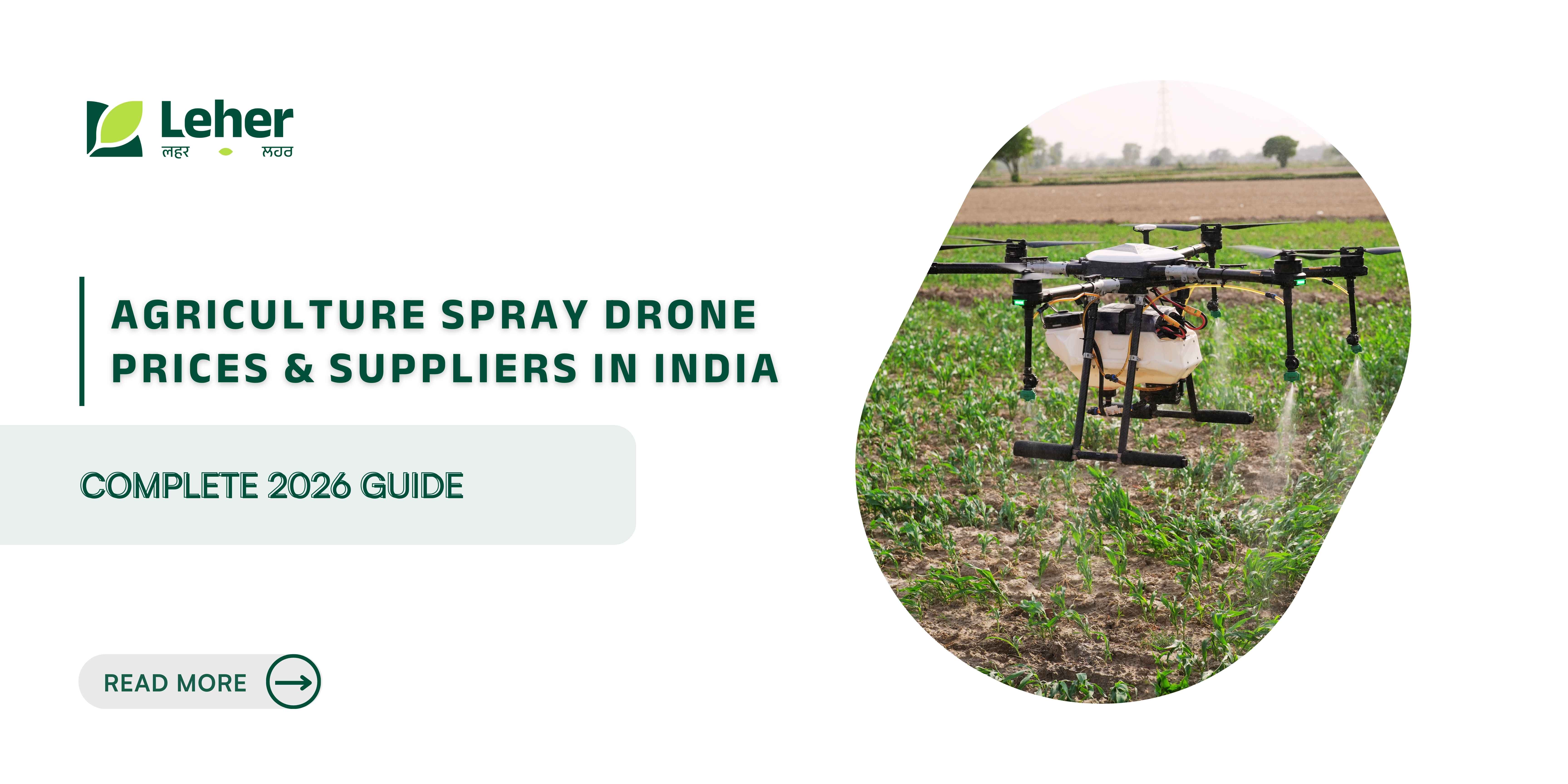
Imagine your 10-acre cotton field needs urgent spraying, but labour is scarce and expensive. Manual spraying would take three workers an entire day, costing you thousands of rupees with uneven coverage and wasted pesticides. Now imagine getting the same field sprayed in under 2 hours with 90% less water use and 40% savings on chemicals, all from your mobile phone. That's the promise of agriculture spray drones, and the good news? They're more affordable and accessible than ever before in India.
If you've been wondering about spray drone prices, whether to buy or rent, and which suppliers you can trust, this complete guide will walk you through everything you need to know to make the right decision for your farm.
Key Takeaways
Spray drone prices in India range from ₹1.5 lakh to ₹25 lakh, depending on payload capacity, features, and brand, but most farmers don't need to buy one.
Hiring drone spraying services costs ₹300–₹700 per acre, which is more cost-effective than purchasing for farms under 200 acres.
Service-based models like Leher eliminate upfront investment, offer DGCA-certified pilots, and deliver 90% water savings with 40% reduction in input costs.
Government subsidies cover up to 80% of drone costs for eligible farmers, FPOs, and women's SHGs under schemes like SMAM and Drone Didi.
One spray drone can cover 50 acres per day, making it 8 times more productive than manual or tractor-based spraying methods.
Understanding Agriculture Spray Drones: What You're Actually Paying For
Before we talk about rupees and paise, let's know what an agriculture spray drone actually is and why it commands the prices it does.
What Is an Agriculture Spray Drone?
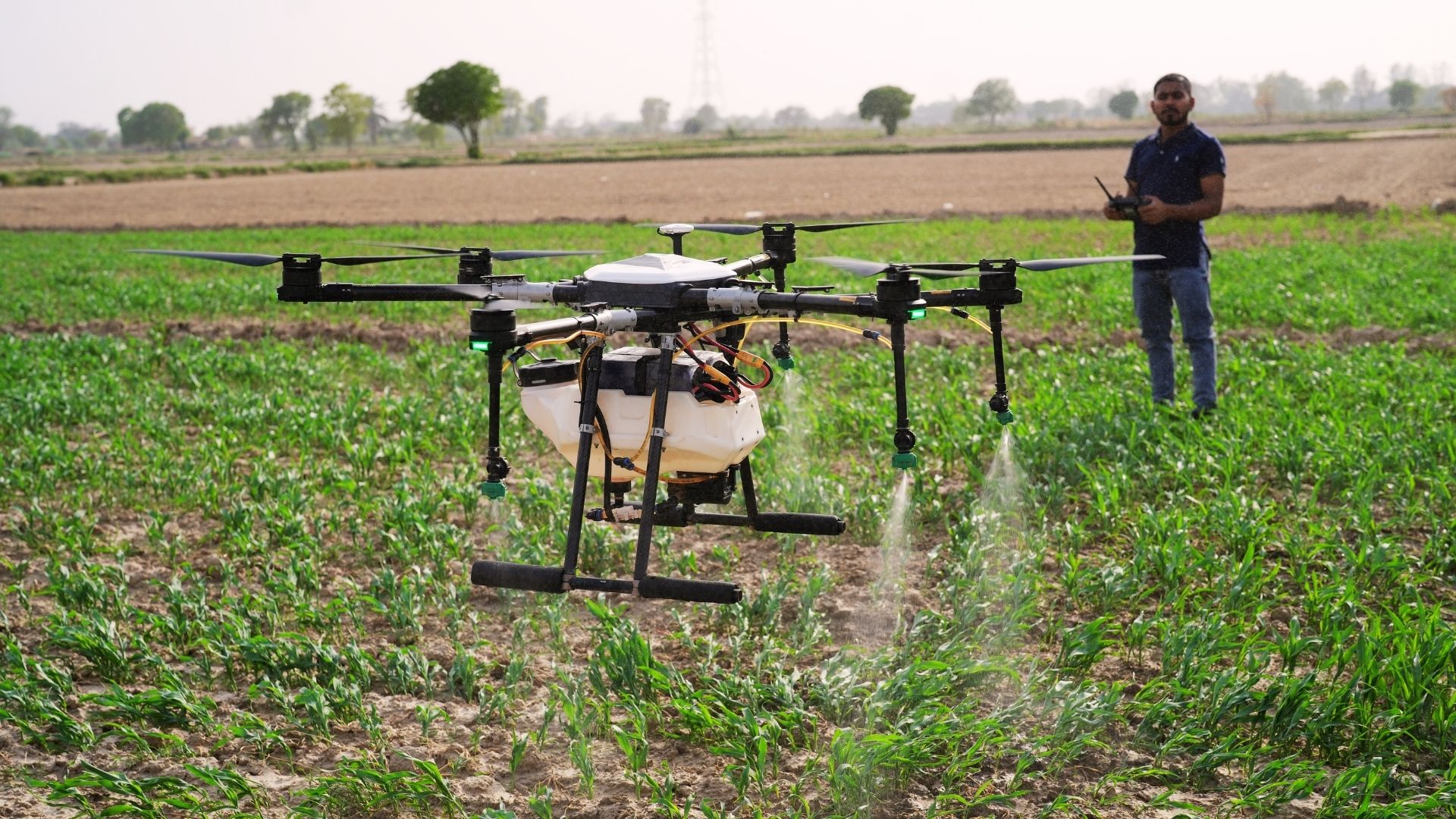
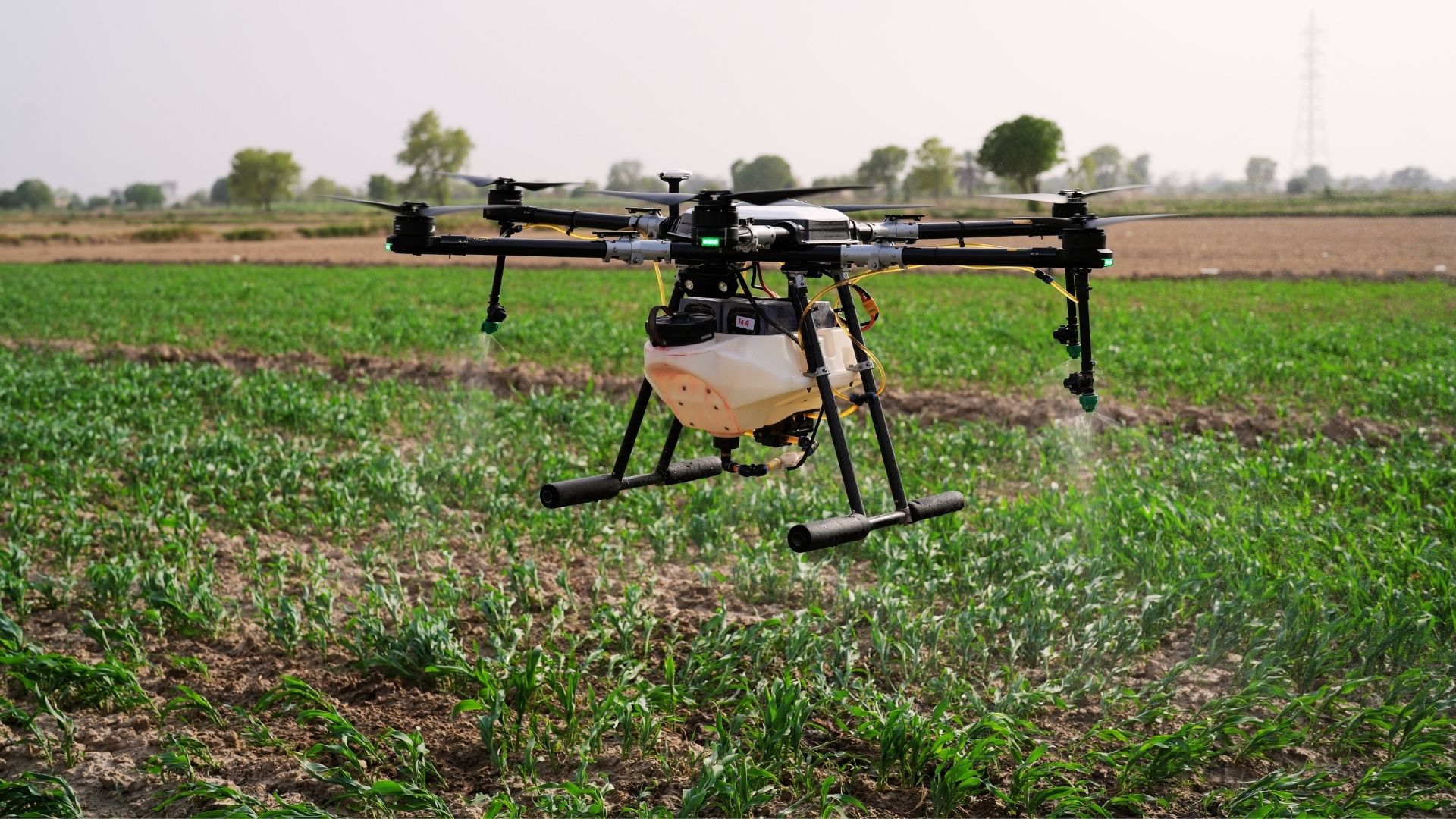
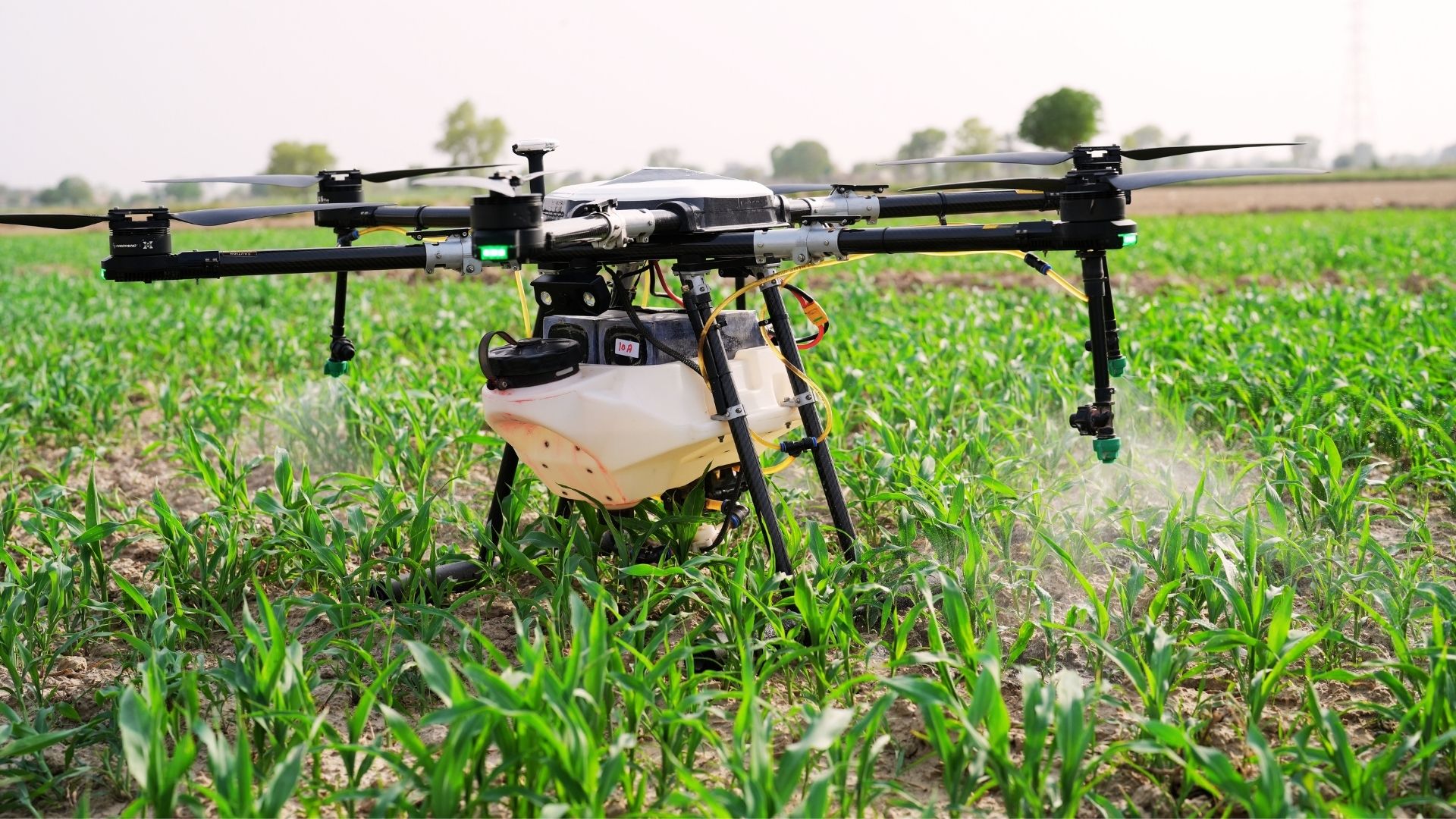
An agricultural spray drone (also called a pesticide-spraying drone or UAV sprayer) is an uncrewed aerial vehicle specifically designed to spray fertilisers, pesticides, fungicides, and even water across your farmland. Think of it as a flying sprayer that works with GPS precision.
These drones don't just fly randomly. They're equipped with:
GPS systems that map your entire field and follow pre-planned routes
Sensors that detect obstacles, maintain altitude, and ensure uniform coverage
Spray tanks (payload capacity) ranging from 5 litres to 25 litres or more
Atomising nozzles that break liquid into ultra-fine droplets for better crop penetration
Flight control systems automatically adjust spray patterns by sensing wind and terrain changes, ensuring precise application and minimising chemical waste.
Unlike carrying a backpack sprayer or riding a tractor, drones hover 2–3 metres above crops and create a downward air current (called rotor wash) that helps push the spray deep into the plant canopy. This ensures better coverage of both upper leaves and stems.
Also read: Top Drone Services You Need to Know
Why Do Spray Drone Prices Vary So Much?
You'll find agriculture spraying drones priced anywhere from ₹50,000 to ₹25 lakh. That's a massive range. Here's what drives the difference:
Payload Capacity: Small drones carrying 5–8 litres cost less (₹50 thousand–₹3 lakh). Larger ones with a 15–25 litre capacity cost ₹8–15 lakh because they require stronger motors, larger frames, and more powerful batteries.
GPS & Sensor Technology: Basic drones use standard GPS. Professional models use RTK-GPS (Real-Time Kinematic positioning), which offers centimetre-level accuracy. Advanced drones also feature multispectral sensors for crop health monitoring and terrain mapping. These upgrades add ₹3–₹8 lakh to the price.
Flight Time & Battery Life: Entry-level drones fly for 10–12 minutes per charge. Commercial-grade models offer double the runtime, allowing you to cover more acres per battery charge. Better batteries mean higher costs.
Brand & Origin: Imported drones from brands like DJI Agras (China) cost more due to shipping, brand reputation, and after-sales support networks. Indian-made drones from manufacturers like Garuda Aerospace, BharatRohan, or IoTechWorld Avigation are typically cheaper due to local manufacturing and government support.
Automation Level: Fully autonomous drones that plan routes, avoid obstacles, and return to base automatically cost more than semi-manual models that need constant pilot control.
Spray Drone Price Ranges in India: Breaking Down the Options
Let's get specific. Here's what you can expect to pay in 2026 based on your needs and farm size.
Entry-Level Spray Drones (₹1.5 Lakh – ₹3 Lakh)
Best for: Small farms (5–10 acres), testing drone technology, or supplementing existing spraying methods.
What you get:
5–10 litre payload capacity
Basic GPS or no GPS (manual flying)
8–12 minute flight time per battery
Can spray 2–3 acres per battery charge
Made in India or DIY assembly kits
Examples: Basic Kisan drones, local manufacturer models, agricultural drone kits
Reality check: These drones work, but they require frequent battery changes and more hands-on piloting. If you're covering 20+ acres regularly, you'll spend more time swapping batteries than actually spraying.
Mid-Range Commercial Drones (₹3 Lakh – ₹8 Lakh)
Best for: Medium farms (10–50 acres), agri-service providers starting, or cooperatives pooling resources.
What you get:
10–16 litre payload capacity
Standard GPS with basic route planning
15–20 minute flight time
Can spray 5–8 acres per battery
Better build quality, some weather resistance
Basic warranty and service support
Examples: Garuda Kisan Drones, Marut Dronetech AG series, IoTech Krishak models
Ideal range: This range strikes the ideal balance of price and performance for most Indian farmers, offering dependable hardware without unnecessary extras.
Advanced Professional Drones (₹8 Lakh – ₹25 Lakh)
Best for: Large farms (100+ acres), FPOs, corporate agribusinesses, or professional drone service providers.
What you get:
16–25 litre payload capacity
RTK-GPS with centimetre accuracy
20–25 minute flight time
AI-powered route optimisation
Multispectral sensors for crop health analysis
Can spray 30–50 acres per day
Terrain following, obstacle avoidance
Comprehensive warranty and training
Examples: DJI Agras T30/T40, Garuda Aerospace AG365S, advanced IoTech models
Investment reality: These are serious machines. Unless you're spraying hundreds of acres regularly or running a commercial service, the additional features may not justify the extra cost of ₹10–₹15 lakh.
Should You Buy or Hire? The Cost Comparison Every Farmer Must See
Here's where things get interesting. The spray drone price isn't just about purchase cost, it's about the total cost of ownership versus hiring services.
Actual Cost of Owning a Spray Drone
Let's say you buy a mid-range drone for ₹5 lakh. Here's what your actual investment looks like:
Upfront costs:
Drone: ₹5,00,000
Remote controller (if not included): ₹30,000
Additional batteries (minimum 3): ₹90,000 (₹30,000 each)
Charging station: ₹15,000
Spare parts kit: ₹25,000
Total initial investment: ₹6,60,000
Annual operating costs:
Battery replacement (yearly): ₹60,000
Maintenance and repairs: ₹40,000
Insurance: ₹25,000
Pilot training/DGCA certification: ₹50,000
Digital Sky registration & compliance: ₹10,000
Annual recurring: ₹1,85,000
Break-even calculation: If you charge ₹500 per acre for spraying, you'd need to spray 1,690 acres in the first year to recover costs. For most farmers with 10–50 acres, that's not realistic unless you're running it as a full-time business.
Cost of Hiring Drone Spraying Services (The Leher Model)
Now compare this to the pay-per-use model:
Per-acre charges:
Small jobs (1–5 acres): ₹600–₹700 per acre
Medium jobs (5–20 acres): ₹500–₹600 per acre
Large jobs (20+ acres): ₹400–₹500 per acre
Bulk/contract farming: ₹300–₹400 per acre
Example for a 10-acre cotton farm:
Seasonal spraying needs: 4–5 times per season
Cost per spray: ₹5,000 (10 acres × ₹500)
Total annual cost: ₹25,000
Versus owning a drone with ₹6,60,000 initial investment plus ₹1,85,000 annual costs.
The verdict: Unless you're spraying 150+ acres per season or planning to offer services commercially, hiring makes far more financial sense.
Why Smart Farmers Choose Service Over Purchase: The Leher Advantage
Below is a quick comparison of why access beats ownership for most farmers:
Service Model vs Buying Your Own Drone
Factor | Leher Drone Spraying Service | Buying Your Own Drone |
Upfront Cost | ₹0 | ₹5–₹10 lakh investment |
Skill Required | Certified pilot handles everything | Need DGCA RPC, Digital Sky permissions, compliance knowledge |
Maintenance | No maintenance cost | All repairs (motors, propellers, batteries) are owner’s responsibility |
Technology | Always get latest upgraded drones | Purchased drone may become outdated in 1–2 years |
Speed & Scale | 50 acres/day per drone | Slow manual spraying or limited personal drone use |
Zero Upfront Investment
No need to spend ₹5–₹10 lakh on a drone. With Leher, you book through the app, get the field sprayed, and pay only after the job is done. Your capital stays free for seeds and other essentials.
DGCA-Certified Pilots Included
Leher’s trained pilots handle everything, DGCA RPC, Digital Sky permissions, no-fly-zone rules, insurance, and compliance. You avoid all paperwork and training hassles.
No Maintenance Expenses
Owning a drone means paying for repairs, burnt motors, cracked propellers, and weak batteries. With the service model, all maintenance costs are covered by Leher.
Always Up-to-Date Technology
Drone tech changes fast. Instead of buying new models every few years, you get automatic access to the latest drones with better performance and AI features.
Proven On-Field Results
Leher’s spraying delivers:
Up to 90% less water use
Around 40% lower chemical use
Nearly 20% overall savings
50 acres/day coverage
5–10 minutes per acre
Over 35,000 acres have already been sprayed across cotton, paddy, sugarcane, wheat, and vegetables with consistent results.
Also read: Comprehensive Guide to Drone as a Service Model (DaaS)
Ready to bring faster, safer, and more affordable spraying to your farm without any upfront investment? Learn more about Leher’s drone spraying solutions and visit Leher.
Government Subsidies That Make Spray Drones Affordable
If you're still considering a purchase, government support can significantly reduce the price of your spray drone.
Sub-Mission on Agricultural Mechanisation (SMAM)
Under SMAM, eligible farmers, FPOs, and cooperatives receive:
40–50% subsidy on drone purchases
Additional benefits for SC/ST farmers
Priority for farmers in North-Eastern states
Example: A ₹6 lakh drone effectively costs ₹3–₹3.6 lakh after subsidy.
Eligibility: You need to be part of an FPO, cooperative, or registered farming entity. Individual small farmers typically don't qualify directly.
Drone Didi Scheme
This transformative programme targets women-led Self-Help Groups (SHGs):
Up to 80% financial assistance (maximum ₹8 lakh)
Covers drone purchase, pilot training, and initial operational support
Each SHG can manage 2,000–2,500 acres annually
15,000 women-led SHGs targeted by 2026
Impact: A ₹10 lakh drone costs the SHG only ₹2 lakh. The trained women then offer spraying services in their villages, earning ₹80,000–₹1.2 lakh per month.
National Agriculture Infrastructure Financing Facility (AIF)
Entrepreneurs and service providers can access:
Loans up to ₹ two crore for agri-infrastructure
3% interest subsidy on approved loans
Support for setting up drone service centres and training facilities
Who benefits: Rural youth, agri-tech startups, and existing agri-service providers looking to add drone spraying to their offerings.
Leading Spray Drone Suppliers in India: Who to Trust
If you've decided to purchase, here are reliable suppliers operating in India as of 2026.
Indian Manufacturers
Garuda Aerospace
Models: AG365S (₹8–₹12 lakh)
Payload: 16–20 litres
Coverage: 30–40 acres/day
Strongest after-sales network in India
Government-backed training programmes
IoTechWorld Avigation
Models: Krishak series (₹4–₹8 lakh)
Payload: 10–16 litres
Good for medium farms
Competitive pricing with decent support
Marut Dronetech
Models: AG series (₹5–₹10 lakh)
Focus on user-friendly designs
Growing service network across North India
BharatRohan
Models: Agricultural UAVs (₹3–₹7 lakh)
Emphasis on data analytics and crop monitoring
Slightly smaller payload, but good for precision farming
International Options
DJI Agras (China)
Models: T30, T40 (₹15–₹25 lakh)
Industry-leading technology
Excellent flight control and automation
Higher initial cost but premium performance
Strong global support network
Reality check on imports: While foreign drones offer cutting-edge features, import duties, shipping delays, and limited local service centres can be challenges. For most Indian farmers, locally manufactured drones provide better value and support.
How to Choose the Right Option for Your Farm
Decision time. Here's a simple framework to guide your choice.
For Farms Under 20 Acres
Recommendation: Hire drone-spraying services via platforms like Leher.
Why: Your annual spraying needs (4–6 times per season) would cost ₹25,000–₹40,000. Owning a drone with an investment of ₹6+ lakh makes no financial sense. The service model gives you all the benefits with zero risk.
For Farms 20–100 Acres
Recommendation: Still hire services, but consider buying if you plan to offer services to neighbours.
Why: If you spray only your own land, hiring remains cheaper. But if you can commit to spraying 150+ acres per season (including nearby farms), the then purchasing with the the SMAM subsidy becomes viable. Partner with 4–5 neighbouring farmers before committing to buy.
For Farms 100+ Acres or Commercial Operators
Recommendation: Purchase with government subsidy or join/form an FPO/cooperative.
Why: At this scale, ownership economics work in your favour. Focus on mid-range models (₹5–₹8 lakh) with SMAM benefits, bringing costs to ₹3–₹4.5 lakh. Invest in training and build relationships with multiple farmers to maximise utilisation.
For Rural Entrepreneurs and Youth
Recommendation: Join Leher's drone entrepreneur network or apply for the Drone Didi scheme.
Why: Starting as a Leher partner eliminates purchase risk. You get trained, connected with farmers, and earn ₹80,000–₹1.2 lakh monthly without upfront investment. Once proven profitable, you can buy your own fleet with AIF loans.
See how drone-powered spraying can cut your input costs and improve crop health from the very first use. To get started and explore all available services, visit the Leher website.
How to Book Drone Spraying Through Leher (The Simple 3-Step Process)
No need to buy, maintain, or learn complex technology. Here's how Leher makes drone spraying accessible to every farmer:
Step 1: Download the Leher App
Available on Google Play and Apple App Store
Free to download
Available in Hindi, English, and regional languages
Step 2: Book Your Spraying Service
Easy booking process:
Open the app and select "Book Spraying Service."
Enter your farm location (GPS auto-detects)
Mark your field boundaries on the map
Choose the spray chemical type (pesticide, fertiliser, fungicide)
Select your preferred date and time
Confirm booking
Transparent pricing: You see the exact cost before confirming. No hidden charges. No last-minute surprises.
Step 3: Drone Pilot Arrives and Sprays
On your scheduled date:
A DGCA-certified pilot arrives with the drone
Inspects your field and confirms spray requirements
Completes spraying (typically 5–10 minutes per acre)
You verify that the work is completed to your satisfaction
Make secure payment through the app only after you're happy.
Regulatory and Safety Considerations: What You Must Know
Whether buying or hiring, understanding regulations protects you from legal issues.
DGCA Rules for Agricultural Drones
Registration requirement: All drones weighing more than 250 grams must be registered on the Digital Sky platform. Agricultural drones typically weigh 15–40 kg, so they are required to be registered.
Pilot licensing: Commercial drone operations require a Remote Pilot Certificate issued by a DGCA-approved training organisation.
Flight restrictions:
Maximum altitude: 120 metres (400 feet) for agricultural operations
No-fly zones: Airports, military areas, international borders (check Digital Sky map)
Daytime operations only (sunset to sunrise flights prohibited)
Visual line of sight must be maintained
Good news: When you hire through Leher, all compliance is handled by the service provider. You don't need to worry about permissions or paperwork.
Approved Chemicals and Application Rates
Not all pesticides are cleared for drone application. Use only:
Pesticides approved by the Central Insecticides Board (CIB)
Proper mixing ratios specified by manufacturers
Compatible chemicals that don't clog drone nozzles
Safety protocols:
Keep humans and animals at least 100 metres away during spraying
No consumption of sprayed crops for the recommended waiting period
Proper protective gear when handling chemicals
Follow wind speed guidelines (ideal: 3–8 km/h, avoid above 15 km/h)
Also read: Drone Spraying Requirements and Regulations Guide
Conclusion: Making the Smart Choice for Your Farm's Future
The agriculture spray drone revolution in India isn't coming; it's already here. With over 7,000 drones operating across farmlands, government support expanding, and technology becoming more accessible every month, the only question is how you'll participate.
If you're a farmer with 7–50 acres, the wise choice is clear: start with service providers like Leher. Book drone spraying through the app, experience the 90% water savings and 40% input cost reduction firsthand, and pay only after seeing results. No ₹6 lakh investment risk. No pilot training. No maintenance headaches. Just better yields and lower costs.
If you're a rural entrepreneur or youth, explore Leher's drone entrepreneur programme. Get trained, gain access to farmers needing spraying services, and start earning ₹80,000–₹1.2 lakh monthly without buying equipment upfront. Once you've proven the model and built a clientele, invest in your own drone with government subsidies.
If you're a large farmer or FPO with 100+ acres, consider purchasing with SMAM subsidies to reduce costs by 40–50%. Focus on mid-range models (₹5–₹8 lakh pre-subsidy) that balance features with affordability. Join forces with neighbouring farmers to maximise drone utilisation and recover investment faster.
The numbers don't lie: precision spraying saves water, reduces chemical waste, cuts labour costs, and improves yields. The spray drone price, whether purchase or per-acre service fee, pays for itself through better farm economics and healthier crops.
Ready to experience the difference? Download the Leher app from Google Play or Apple App Store today. Book your first drone spraying service and see for yourself why 2,200+ farmers across India have made the switch. Your farm deserves smarter, faster, more sustainable spraying.
Frequently Asked Questions (FAQs)
Q1: What is the cheapest spray drone price in India for a working model?
Entry-level agricultural spray drones that actually work for farm spraying start around ₹1.5–₹2 lakh. These basic models carry 5–8 litres and can spray 2–3 acres per battery. However, for consistent commercial use, mid-range models at ₹3–₹5 lakh are more reliable. If the purchase isn't viable for you, hiring drone-spraying services through Leher costs just ₹300–₹700 per acre, with zero upfront investment.
Q2: Is it better to buy an agriculture spraying drone or hire spraying services?
For most farmers with less than 100 acres, hiring is significantly more cost-effective. Buying a drone involves an investment of ₹6–₹8 lakh (drone, batteries, training, insurance), plus ₹1.5–₹2 lakh in annual maintenance. You'd need to spray 150+ acres per season to break even. Hiring through Leher eliminates this burden; you pay only when you need service, get DGCA-certified pilots, and avoid all maintenance headaches. Consider buying only if you plan to offer commercial services to multiple farmers.
Q3: What government subsidies are available for purchasing agricultural spray drones?
Several programmes make drones affordable: (1) SMAM provides 40–50% subsidy to FPOs, cooperatives, and SC/ST farmers on drone purchases; (2) Drone Didi Scheme offers up to 80% financial assistance (₹8 lakh max) to women-led SHGs, including training; (3) National Agriculture Infrastructure Fund provides loans up to ₹ two crore with 3% interest subsidy for agri-infrastructure. These can reduce your effective cost from ₹8 lakh to ₹3–₹4 lakh.
Q4: How much can I earn as a drone service provider in rural areas?
Rural drone entrepreneurs typically earn ₹80,000–₹1.2 lakh per month during peak season by spraying 10–15 acres daily at ₹400–₹600 per acre. Working 20 days per month, covering 200–300 acres, generates revenue of ₹1–₹1.8 lakh. After fuel, battery replacement, and maintenance (₹20,000–₹30,000 monthly), net earnings reach ₹60,000–₹1.5 lakh. Joining Leher's drone entrepreneur network eliminates the risk of an initial investment while you build your business and client base.
Q5: What is the best payload capacity for spray drones in Indian conditions?
For most Indian farms and crops, a 10–16 litre payload capacity offers the best balance. Drones with 10L tanks can spray 5–8 acres per battery and cost ₹3–₹6 lakh, which suits medium farms perfectly. Smaller 5–8L drones require too many refills for efficiency. Larger 20–25L drones cost ₹10–₹15 lakh and are overkill unless you're covering 50+ acres daily. The sweet spot is 12–16 litres for Indian farm sizes and crop types.
Q6: Can spray drones be used for all crops, or are there limitations?
Drones work well for most open-field crops, including cotton, paddy, wheat, sugarcane, soybean, chickpea, mustard, and vegetables such as tomato and chilli. They're ideal for crops planted in rows or broad fields. However, drones have limitations with: (1) Very tall crops (over 4–5 metres) like mature sugarcane tops; (2) Dense tree crops like mango or coconut where the canopy is too thick; (3) Crops under shade nets or greenhouses. For 80–85% of Indian agricultural land and crop types, drones deliver excellent results.
Let’s Grow Together!
Interested in drone spraying solutions? Connect with us today.