10 Must-Know Current Trends in Drone Technology for 2026
India’s drone industry is entering a high-growth phase. The market, valued at approximately ₹3,900 crore in 2025, is projected to grow to nearly ₹11,500 crore by 2030. This rapid expansion reflects growing adoption across agriculture, infrastructure, logistics, and public services, positioning drones as a core pillar of India’s next wave of technological transformation.
This growth is being fuelled by advances in drone hardware, intelligent software, and clearer regulations that are accelerating real-world adoption. In agriculture, drones are rapidly shifting from trials to daily use, helping farmers spray faster, reduce input waste, and manage crops with greater precision.
This blog breaks down 10 current trends in drone technology for 2026 and explains how they are reshaping agriculture and commercial drone use in India.
Key Takeaways
India’s drone market is set to grow from ₹3,900 crore in 2025 to ₹11,500 crore by 2030, driven by agriculture and commercial adoption.
Precision spraying drones reduce chemical waste, improve absorption, and cut farm labour time from hours to minutes per acre.
AI, automation, and IoT integration make drones a data-driven tool, enabling early pest detection, yield forecasting, and smarter farm decisions.
Drone-as-a-Service and accessible hardware let small and medium farmers adopt cutting-edge technology without high upfront costs.
Leher bridges technology and practicality, offering certified drone services that boost yields, conserve resources, and simplify modern farming.
Relevance of Drone Technology in Indian Agriculture
Indian agriculture faces structural challenges: labour shortages, rising input costs, uneven chemical application, and low productivity per hectare. Drones address these gaps with speed, precision, and consistency, especially for spraying and crop monitoring.
For farmers, tasks that once took hours can now be completed in minutes, with uniform coverage. This improves chemical absorption, reduces wastage, and lowers health risks associated with manual spraying.
At a system level, drones help close India’s productivity gap compared to countries like the US and China. By enabling precision-based practices at scale, drone technology supports higher yields without increasing input usage, making growth sustainable.
Why drones matter for Indian farming today:
Severe labour shortages: Seasonal and skilled labour availability continues to decline, especially during peak spraying cycles.
Time efficiency: Drone spraying can reduce operational time from hours to minutes per acre cycle.
Input optimisation: More uniform application leads to lower fertiliser and pesticide consumption.
Improved crop health: Better coverage improves absorption, resulting in stronger and more consistent yields.
Safety benefits: Farmers avoid direct exposure to harmful chemicals.
Scalability for large farms: Drones make it easier to manage medium to large landholdings and plantations.
Cost-effectiveness: In many crops, drones deliver similar or lower costs with higher output.
As adoption grows, drones are no longer viewed as optional technology but as a foundational tool for modernising Indian agriculture.
Their relevance extends beyond productivity, supporting environmental sustainability, operational resilience, and the long-term viability of farming in India.
Also Read: How to Obtain a Drone Flying License in India?
With the relevance of drone technology clear, let us look at the current drone technology trends emerging in the Indian agricultural space.
10 Current Drone Technology Trends for 2026 in India
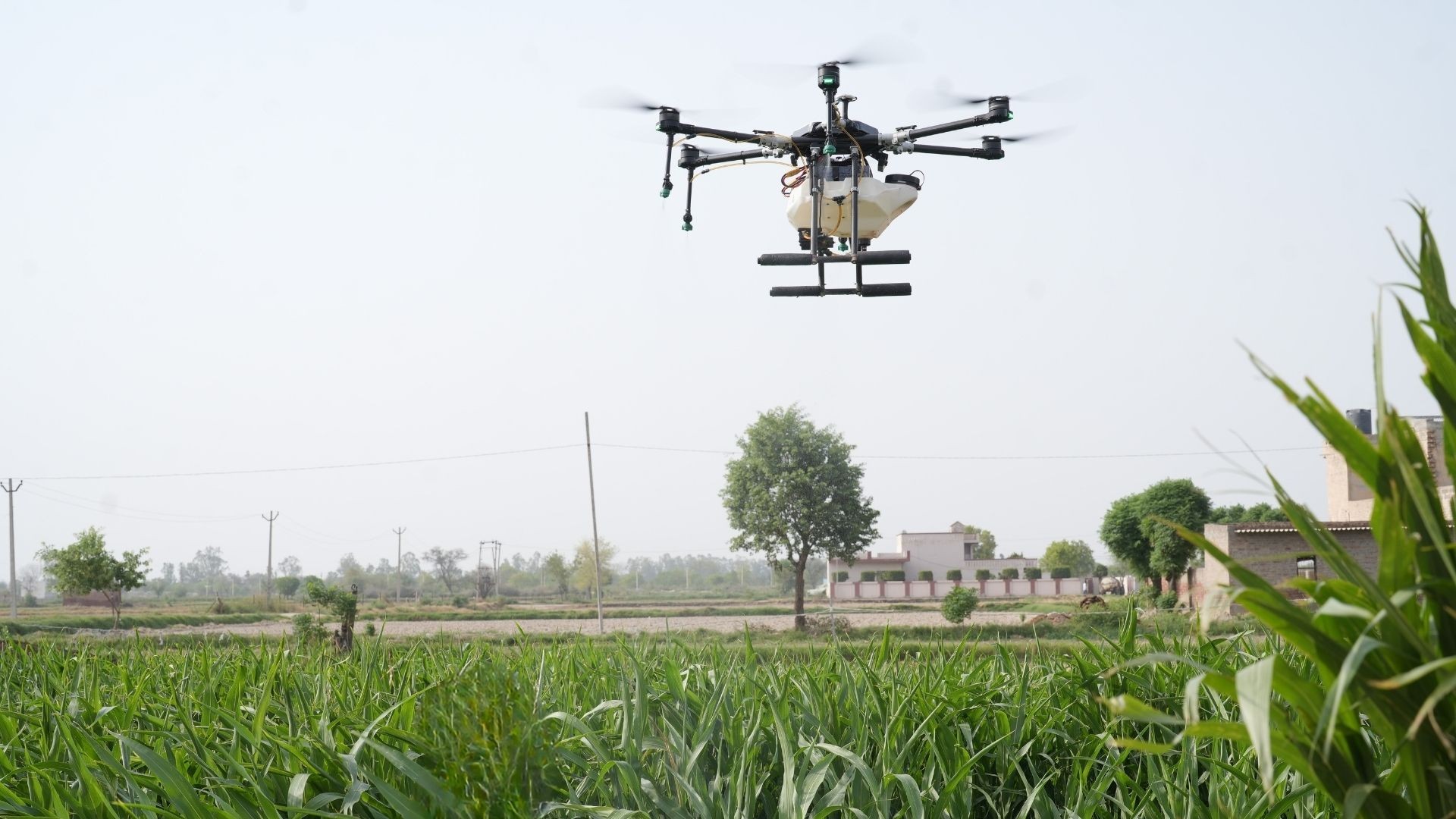
As drone technology matures globally, several key trends are shaping how unmanned aerial vehicles (UAVs) are used, especially in agriculture. These trends reflect advances in hardware, software, autonomy, and business models that together are transforming farming practices and commercial drone services in India and beyond.
Before diving into the trends, here are key concepts:
Precision Spraying: Uses GPS-guided drones to target only affected crop areas, avoiding unnecessary chemical use on healthy plants.
Variable Rate Application: Applies water, fertilisers, or pesticides at varying amounts across field areas based on specific crop needs, reducing waste and cost.
Ultra-Low Volume (ULV) Technology: Sprays very small amounts of liquid pesticide or fertilizer in a concentrated form to maximize coverage and minimize waste.
Drone-as-a-Service (DaaS): On-demand drone service model bundling aircraft, pilots, and analytics, reducing upfront costs for farmers.
Now, let's look at the current trends you need to be aware of:
1. Precision Application and Intelligent Spraying
Advanced agricultural drones now combine AI-driven route planning with real-time sensor data to adjust spray patterns, droplet size, and chemical volumes mid-flight. This results in highly precise input application that reduces waste and enhances crop health.
Variable rate application adapts to crop needs
Section control avoids over-treatment or skips
Onboard environmental sensors inform decisions
How this changes agriculture: This shift reduces chemical overuse, improves absorption, and leads to healthier crops. Farmers can spray at the right growth stage without waiting for labor, directly improving yield quality while lowering input costs and environmental damage.
2. AI and Onboard Automation
Drone autonomy continues to evolve. AI engines now handle tasks like obstacle avoidance, flight path optimization, object recognition, and automated data interpretation, reducing pilot fatigue and improving operational safety.
AI autopilots reduce human intervention
Automated mission planning for repeatable tasks
Smart analytics onboard for instant decisions
How this changes agriculture: Automation allows one operator to manage larger areas with fewer errors. It also makes drone services more scalable and reliable during peak agricultural seasons when timing is critical.
3. Integration with Data Ecosystems (IoT + Analytics)
Drones are no longer standalone devices. In 2026, UAVs will integrate with farm IoT sensors, cloud analytics, and AI advisory systems to inform decision-making and create a unified digital view of the farm.
Drone data feeds into farm management systems
Real-time streamlining with soil, weather, and irrigation sensors
Insights for pest management, irrigation scheduling, and yield forecasting
How this changes agriculture: Farmers gain better visibility into crop conditions and can time spraying or interventions more accurately. Decision-making becomes data-led rather than experience-driven, reducing risk and improving outcomes.
4. Drone-as-a-Service (DaaS) Expansion
Rather than owning drones, many Indian farmers and agribusinesses opt for on-demand drone services that bundle aircraft, pilots, and analytics into a pay-per-use model. This lowers entry barriers and democratizes access to advanced UAV capabilities.
Subscription and service-based delivery models
Beneficial for small and marginal farmers
Supports rapid scaling of drone use cases
How this changes agriculture: This makes drone technology accessible to a much wider farmer base, including small and medium landholders. Adoption accelerates without the burden of capital investment, enabling faster modernization at scale.
5. Enhanced Payloads and Flight Endurance
Newer drone platforms are achieving higher payload capacities, longer flight times, and more robust build quality, enabling them to cover large areas faster and carry more inputs per mission.
Larger tanks for spraying or spreading
Longer battery life for extended operations
Enhanced safety through better obstacle sensing
How this changes agriculture: Larger coverage per flight improves daily productivity and reduces operational downtime. This is especially important for large farms and plantations where speed and consistency directly affect crop outcomes.
6. Multispectral and Advanced Imaging
Drones equipped with multispectral, hyperspectral, and thermal sensors offer deeper insights into crop health that go beyond what the eye can see. These imaging systems help detect nutrient deficiencies, disease onset, and water stress early, enabling proactive interventions.
Detect issues before symptoms appear
Support precise crop health monitoring
Improve input efficiency and yield outcomes
How this changes agriculture: Early detection enables targeted treatment rather than blanket spraying. Farmers can address issues sooner, reduce crop losses, and avoid unnecessary chemical application.
7. Sustainability and Environmental Focus
Sustainable farming practices are becoming central to drone adoption. UAVs help reduce chemical drift, soil compaction, and fuel usage, improving environmental outcomes and advancing low-impact farming.
Targeted chemical application reduces total use
Drones eliminate heavy machinery soil impact
Lower emissions than tractors or manned sprayers
How this changes agriculture: Farming practices become more resource-efficient and environmentally responsible. Over time, this supports better soil health, reduced contamination, and long-term farm viability.
8. Local Manufacturing and Ecosystem Development
India is pushing for domestic drone manufacturing hubs, skill development, and R&D to reduce import dependence and build local capabilities, aligning with broader Make in India and Atmanirbhar Bharat goals.
State-level initiatives to create drone hubs
Training and certification programs expand
Better support for rural drone entrepreneurs
How this changes agriculture: Local manufacturing reduces costs and improves service availability. A stronger ecosystem also creates rural jobs and ensures drones are designed specifically for Indian crops and conditions.
9. Cost-Effective and Accessible Hardware
With economies of scale and technology improvements, agri-drone prices are expected to decline by 2026, making even advanced features like AI, multispectral imaging, and autonomous flight more accessible to service providers and farmers alike.
Entry models for small farms
Mid-range for mixed cropping systems
Commercial models for large acreage
How this changes agriculture: Lower costs enable wider adoption across regions and crop types. More service providers can enter the market, increasing competition and improving service quality for farmers.
10. Holistic Farm Intelligence
By 2026, drones are part of a larger farm intelligence ecosystem in which aerial data feeds predictive models, early-warning systems, and remote advisory platforms. This enables proactive responses to pest, disease, or weather risks, turning data into action.
Early disease and pest detection
Yield prediction modeling
Weather-adaptive spraying recommendations
How this changes agriculture: Farming shifts from reactive problem-solving to proactive management. Farmers can anticipate risks, optimize inputs, and plan operations more efficiently across the crop lifecycle.
These trends are transforming drones into practical, scalable, and sustainable tools for Indian agriculture. The convergence of automation, data, services, and accessibility is making 2026 a defining year for drone adoption across farm segments.
Also Read: Precision Agriculture Definition: Benefits, Techniques
Now that we’ve covered the key trends shaping agriculture in 2026, let’s look at how users can benefit from these trends.
Harnessing Drone Tech Trends for Greater Value in 2026
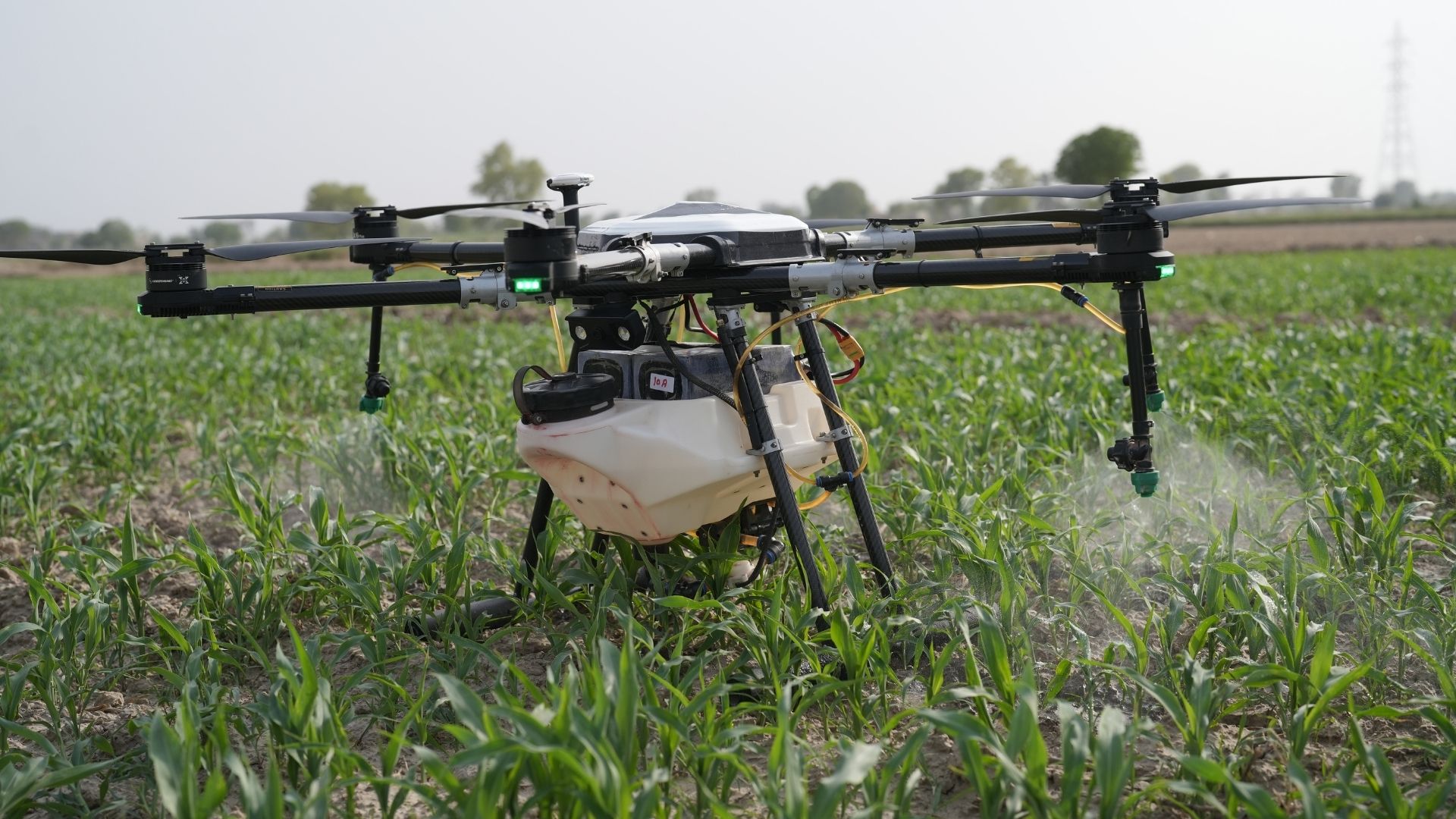
As drone technology becomes more accessible, farmers don’t need to understand the technology in depth to benefit from it. The real value lies in using drones at the right stages of the crop cycle to reduce manual effort, improve input efficiency, and protect yields. By aligning everyday farming decisions with these emerging trends, farmers can achieve better outcomes with less physical and operational strain.
The first step is shifting from manual or blanket spraying to precision-based application. Intelligent spraying drones ensure uniform coverage, which improves chemical absorption and reduces overuse. Farmers benefit not only from healthier crops but also from fewer repeat spray cycles, saving both time and money.
Automation and service-based models further reduce workload. With autonomous flight paths and Drone-as-a-Service options, farmers no longer need to manage labour, equipment maintenance, or technical complexity. Spraying can be scheduled quickly during critical crop stages, even when labour is unavailable.
Practical ways farmers can benefit:
Use drone spraying at key crop stages: Applying fertilisers and pesticides at the right growth stage improves effectiveness and reduces the need for reapplication.
Opt for service-based drone access: Using drone services instead of owning equipment avoids upfront costs and operational hassles.
Reduce input wastage through precision application: Uniform spraying lowers fertiliser and pesticide consumption while maintaining or improving yields.
Detect crop issues early: Drone-based monitoring helps identify pest or nutrient stress before visible damage occurs.
Save time during peak seasons: Tasks that take hours manually can be completed in minutes, freeing time for other farm operations.
Lower health and safety risks: Drone spraying minimizes direct exposure to harmful chemicals.
Improve yield consistency: Even application and timely intervention result in more uniform crop performance across fields.
Scale operations without extra labour: Medium and large farms can manage more acreage without increasing workforce size.
By adopting drones as a practical farming tool rather than a complex technology, farmers can focus on outcomes, like higher yields, lower costs, and reduced effort.
These trends are not about replacing farmers but about enabling them to farm smarter, protect their harvest, and build more resilient operations with less day-to-day strain.
Tired of high chemical costs? Find out how Leher can save you up to 30% on pesticides by contacting us today.
How Leher Helps Agriculturists Get More Value From Their Harvest?
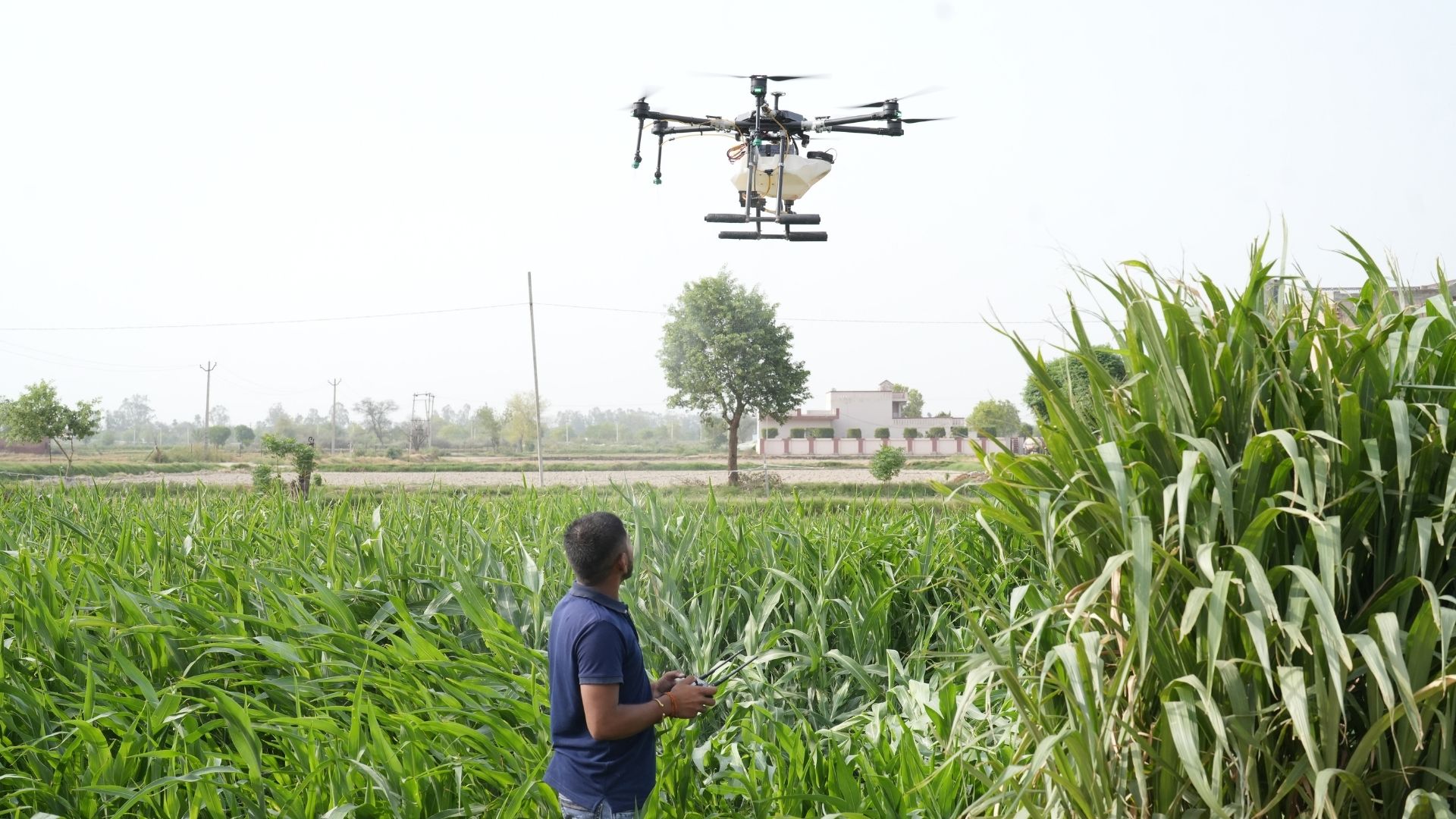
Keeping up with the latest drone technology trends can feel daunting. High costs, technical complexity, and uncertainty about results often prevent farmers from adopting advanced solutions. That’s where Leher steps in—making it simple, affordable, and immediately beneficial.
Leher offers drone-powered precision spraying and crop monitoring services that leverage the latest trends in UAV technology, AI automation, and farm data analytics. You get all the benefits of cutting-edge drones without owning equipment or needing certification.
Key benefits for farmers:
Resource-efficient farming: Leher’s precision spraying reduces pesticide and fertiliser usage, conserves water, and applies inputs only where needed. This aligns with the latest trends in sustainability and targeted application.
Uniform coverage and improved yields: Autonomous flight paths and intelligent spraying ensure every part of your crop receives optimal treatment, boosting absorption and crop health. Farmers often see measurable yield improvements.
Data-driven crop insights: Drones equipped with AI and multispectral sensors provide early detection of pests, nutrient deficiencies, and water stress—helping you act before small issues become large problems.
Access without ownership: With Drone-as-a-Service, you don’t need to buy expensive equipment. You can schedule services when needed, benefiting from the latest trends in autonomous and on-demand drone operations.
Certified and safe operations: All flights are conducted by trained, DGCA-certified pilots. You get professional, legal, and reliable service that meets regulatory standards.
Leher bridges the gap between emerging drone technology trends and practical farm benefits. By making these innovations instantly usable, farmers can work smarter, conserve resources, and maximize crop value, all without increasing effort or upfront investment.
Conclusion
Drone technology is no longer a distant innovation. It is a practical tool that Indian farmers can use today to increase efficiency, reduce input costs, and improve crop yields. By adopting the latest trends in precision spraying, autonomous operations, and data-driven monitoring, you can work smarter and overcome challenges like labour shortages and uneven resource application.
Leher makes this transition simple and accessible. Our drone-powered services deliver precision agriculture directly to your fields, managed by certified experts, so you can focus on growing your crops while enjoying measurable results.
Download the Leher app today (Google Play, Apple Store) or join our Drone Partner Program to experience farming that is faster, more sustainable, and clearly more profitable.
FAQs
Q. How are drones helping farmers predict and prevent crop diseases?
Modern agricultural drones use multispectral and thermal sensors to detect early signs of disease or pest infestation. By analyzing plant stress patterns, farmers can take preventive measures before visible damage occurs, reducing losses and input waste.
Q. Can drones be used for multiple farming tasks beyond spraying?
Yes, drones are evolving into multi-purpose platforms. Besides spraying, they can conduct aerial surveys, crop mapping, field inspections, and yield estimation, helping farmers make better operational decisions.
Q. How do drones contribute to sustainable farming practices?
By enabling targeted application of inputs, reducing unnecessary chemical use, and minimizing fuel and soil compaction compared to traditional machinery, drones help farmers adopt environmentally responsible practices.
Q. What role do rural drone entrepreneurs play in modern agriculture?
Rural drone operators provide on-demand drone services to farmers, creating a decentralized ecosystem. They help small and medium farmers access high-tech solutions, while also generating new local employment opportunities.
Q. How are drones integrated with farm data for smarter decisions?
Drone imagery and sensor data can be fed into farm management software to analyze soil health, crop stress, and irrigation needs. This integration enables farmers to plan interventions precisely and optimize resource usage.
Let’s Grow Together!
Interested in drone spraying solutions? Connect with us today.