Drones in Crop Fertilisation: Benefits and Applications for Indian Farmers
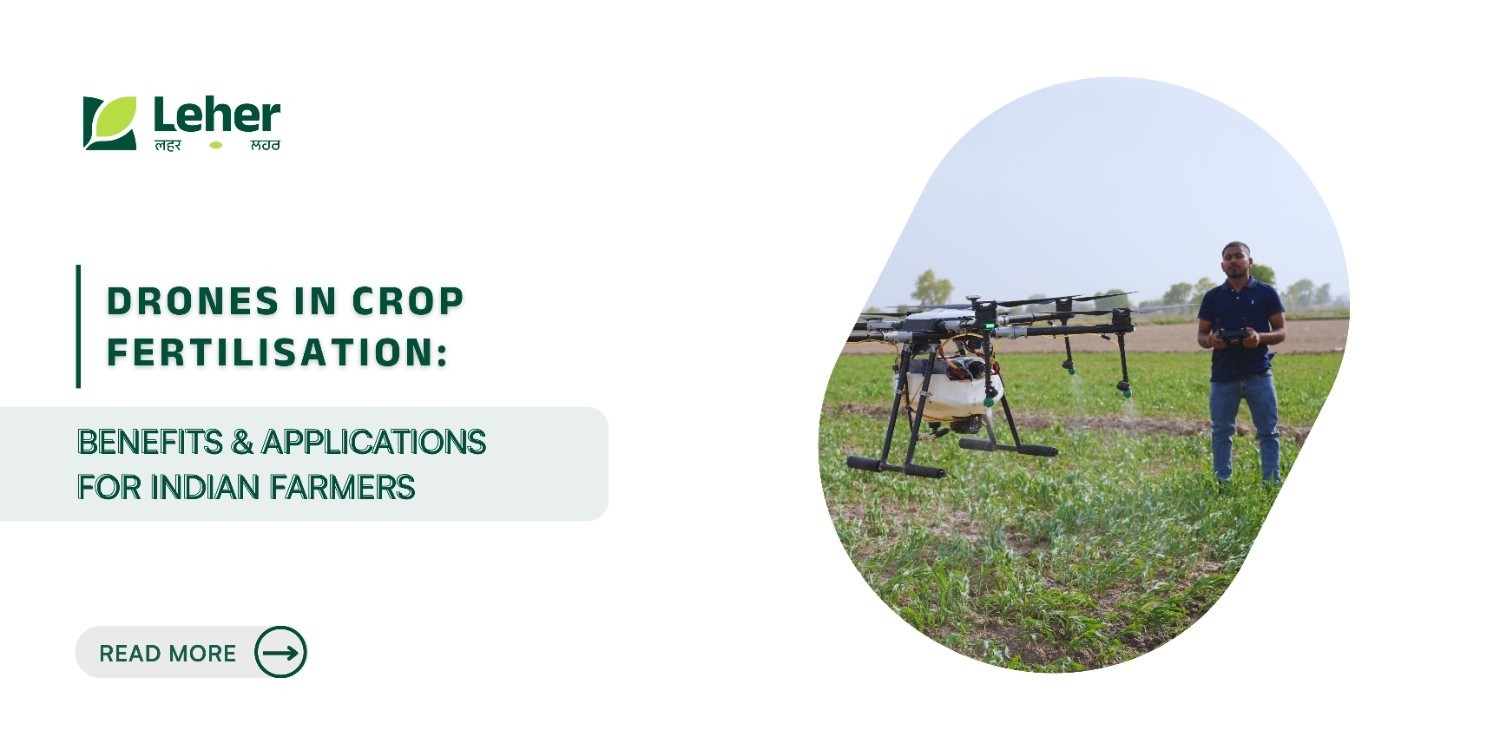
If you're staring at your 15-acre wheat field, knowing it needs fertilizer in the next 48 hours before the rains arrive. The local labour shortage means you can't find enough workers. Even if you could, manual fertilizer spraying would take days, cost a fortune, and waste precious nutrients through uneven application. Sound familiar? Across India, thousands of farmers face this exact challenge every season. But here's the good news: drone spraying technology is changing the game. With fertilising drones that can cover up to 50 acres per day, save 90% water, and cut input costs by 40%, aerial spraying drones are transforming how Indian farms manage fertilizer application.
Key Insights on Drone Fertilization
Efficiency boost: One fertilizer spraying drone covers 50 acres daily, 8x faster than traditional methods.
Massive savings: Up to 90% water savings and 40% reduction in fertilizer costs through precision application
Affordable access: Pay-per-acre model (₹300–₹700) via Leher app removes ownership barriers
Better yields: Precise, uniform fertilizer distribution leads to healthier crops and 15–20% productivity gains
Rural opportunities: Drone fertilizer application creates income opportunities for rural youth as certified drone operators
The fertilizer Crisis Indian Farmers Face Today
Let's talk straight about what's happening on the ground.
Traditional fertilizer spraying methods are breaking down. Labour costs keep rising, yet finding workers during peak season gets harder each year. You end up spending ₹1,200–₹1,500 per acre on manual spraying, only to see uneven coverage that wastes fertilizer and damages your crops.
Here's what the numbers reveal:
Manual fertilizer application wastes 30–40% of inputs due to poor distribution
Over-fertilisation in some spots burns plants, whilst under-fertilisation elsewhere stunts growth
Workers face health risks from chemical exposure during traditional spraying
Time delays during critical growth windows reduce potential yields by 10–25%
What Is Drone Fertilization? Understanding Aerial Spraying Drones
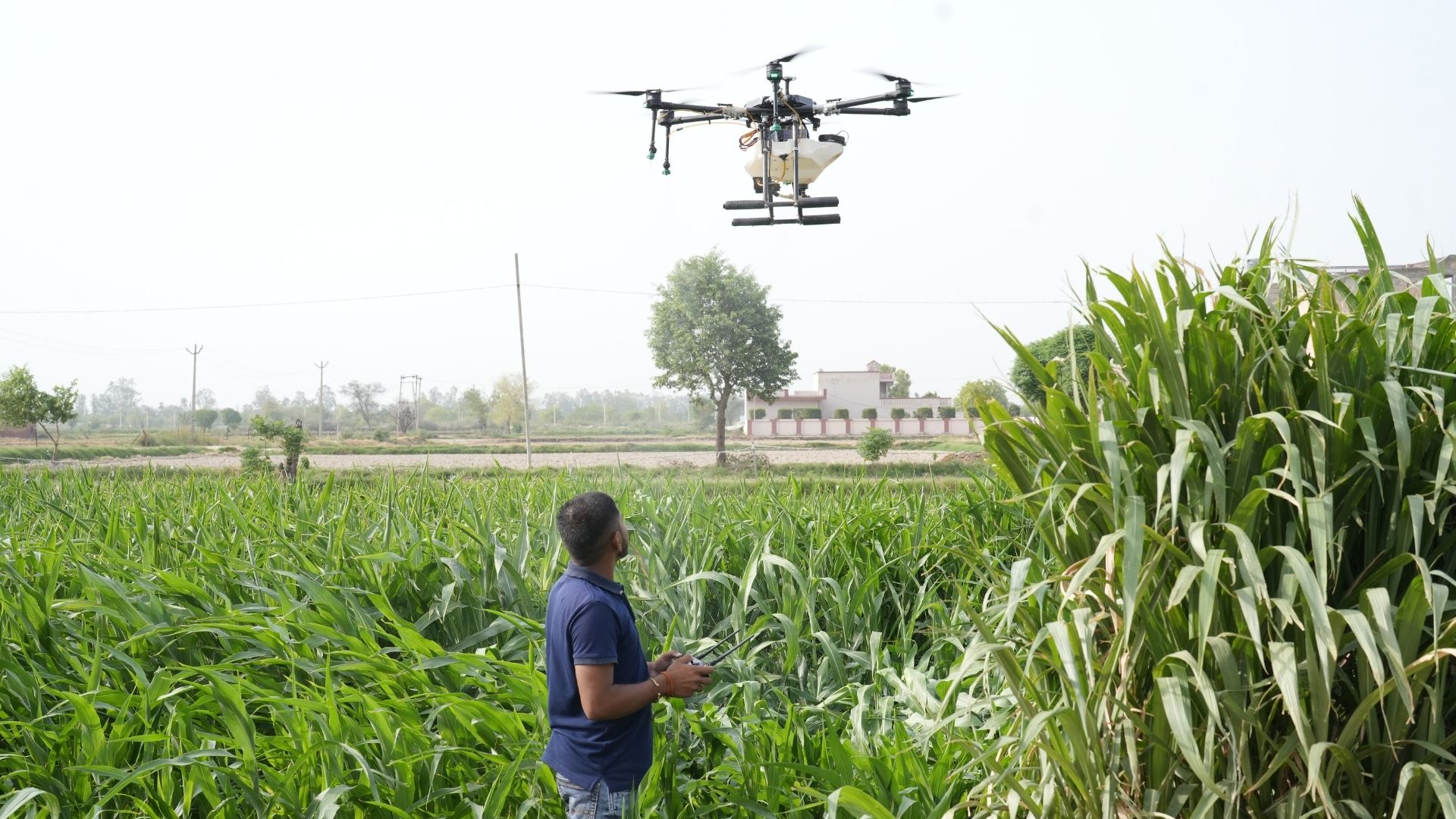
Drone Fertilization means using uncrewed aerial vehicles (UAVs) equipped with spray tanks to apply liquid fertilizers to crops from above. These aren't sci-fi gadgets, they're practical farming tools that spray nutrients precisely where your crops need them.
How Fertilising Drones Actually Work
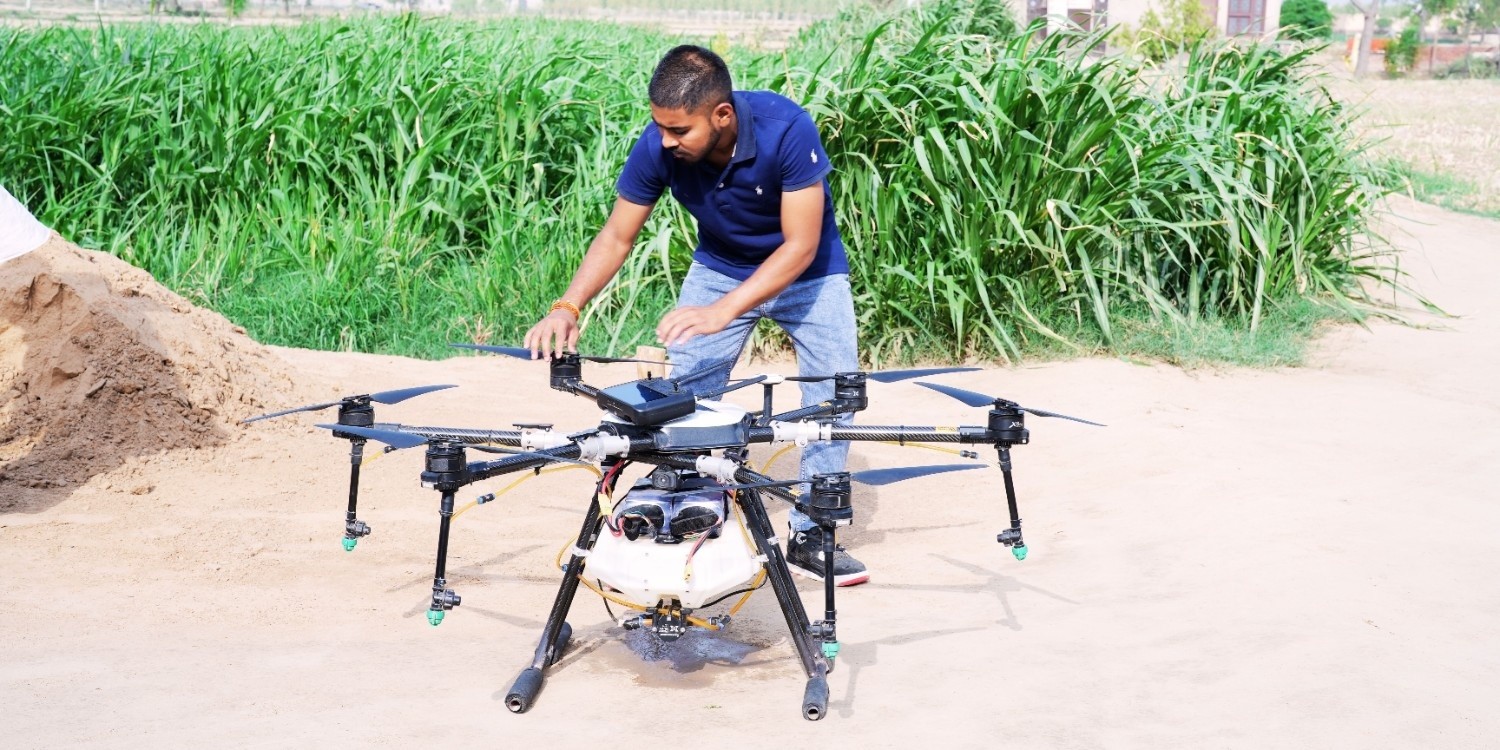
A fertilizer spraying drone typically carries 10–25 litres of liquid fertilizer. Here's the process:
Ground preparation: The drone operator (a DGCA-certified pilot) surveys your field and plans the flight path using GPS technology.
Intelligent spraying: As the fertilizing drone flies 3–5 metres above crops, it releases fine droplets through nozzles. Advanced sensors maintain consistent height and speed for uniform coverage.
Precision control: GPS and automated flight systems ensure every inch gets the right amount, no overlaps, no gaps, no waste.
Real-time adjustments: The drone adjusts spray volume based on crop density, wind conditions, and terrain.
Think of it as having an expert pilot who never gets tired, never misses a spot, and works with surgical precision.
Key Components That Make Drone Fertilizer Application Work
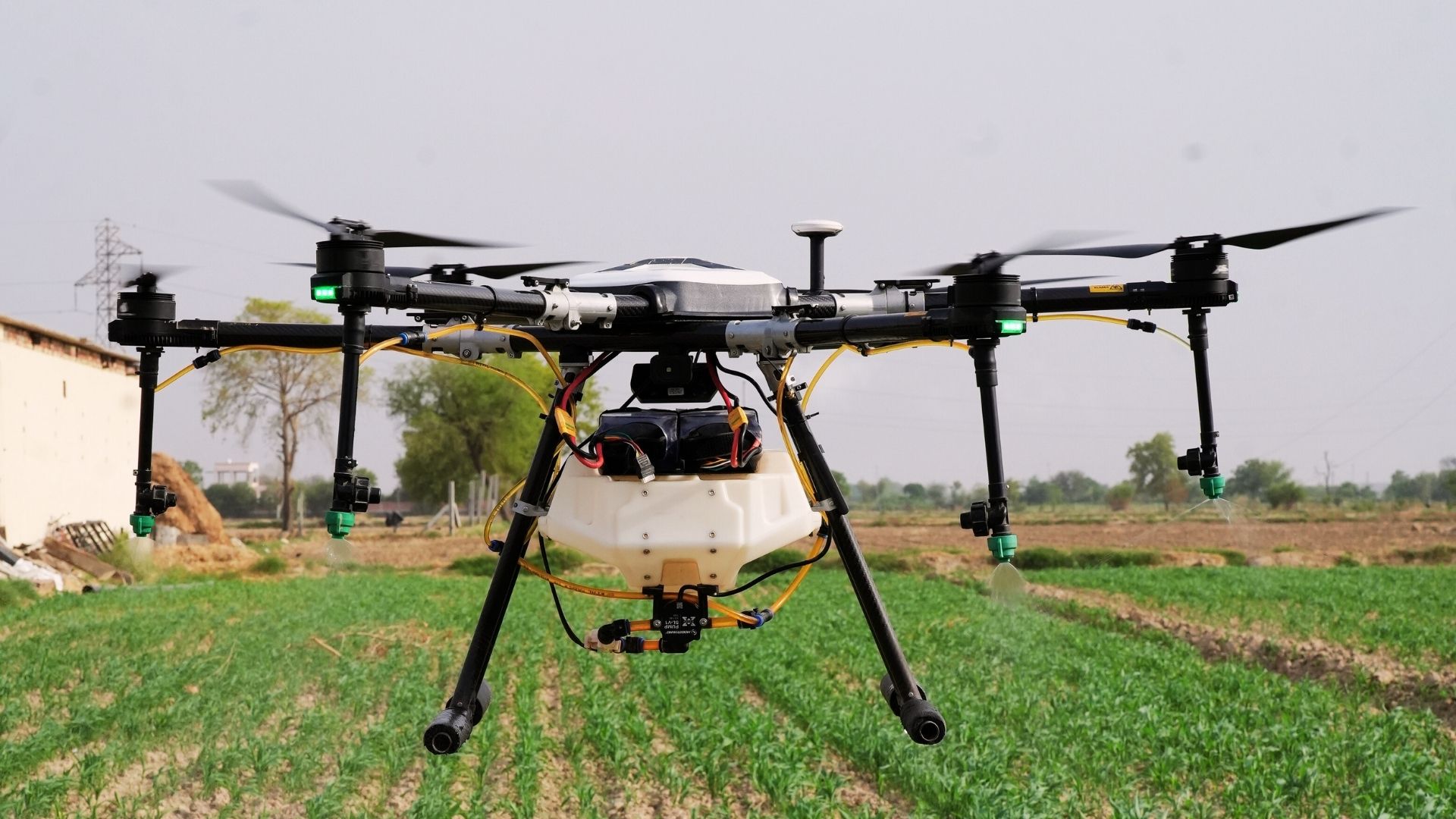
Modern aerial spraying drones for agriculture come equipped with:
GPS and RTK positioning: Real-Time Kinematic GPS gives centimetre-level accuracy, ensuring fertilizer lands exactly where intended
Flow rate sensors: These measure and control how much fertilizer is released per square metre
Terrain-following systems: Drones automatically adjust height over uneven ground
Atomising nozzles: Special nozzles create tiny droplets that distribute evenly and penetrate crop canopies better
The technology might sound complex, but using it is simple. That's the beauty of drone spraying rural services like Leher.
Also read: Drone Action Plan for Agriculture Spray Solutions
How Leher Makes Drone Fertilization Easy for You
Here's where theory meets practice.
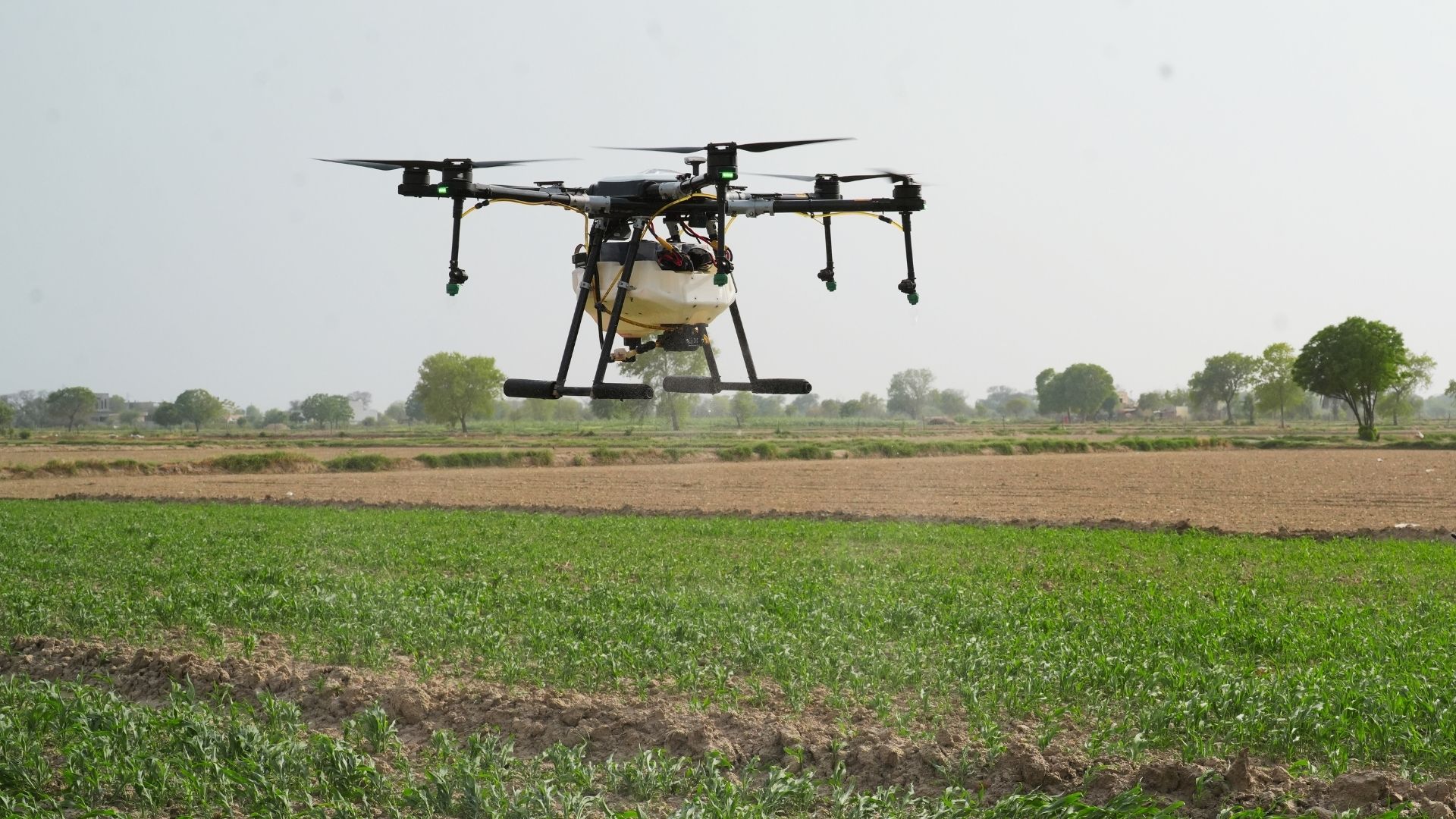
You don't need to buy a drone, learn to fly it, or manage maintenance. Leher's platform connects you with trained drone operators in your area through a simple three-step process:
Step 1: Book via the Leher App
Download the Leher app (available on Android and iOS). Enter your farm location, crop type, and field size. Select fertilizer application service. Choose your preferred date and time.
The app shows you transparent pricing upfront, typically ₹300–₹700 per acre, depending on your location and crop type.
Step 2: Certified Drone Pilot Arrives and Sprays
A DGCA-certified drone operator from your region arrives with professional equipment. They assess field conditions and determine the optimal fertilizer concentration based on crop type and growth stage before mixing the solution for spraying. The entire operation for a 10-acre field takes just 30–40 minutes, rather than 2–3 days.
Step 3: Pay After Spraying Is Completed
You only pay after the job is done to your satisfaction. No upfront costs. No hidden charges. No equipment ownership headaches.
This drone Fertilization model removes all barriers. Whether you farm 7 acres or 70, you get access to cutting-edge technology without the investment risk.
Ready to upgrade your fertilization process with fast, precise, and affordable drone spraying? Take the next step toward smarter farming, visit the Leher website.
Benefits of Fertilizer Spraying Drones: Why They're Changing Indian Agriculture
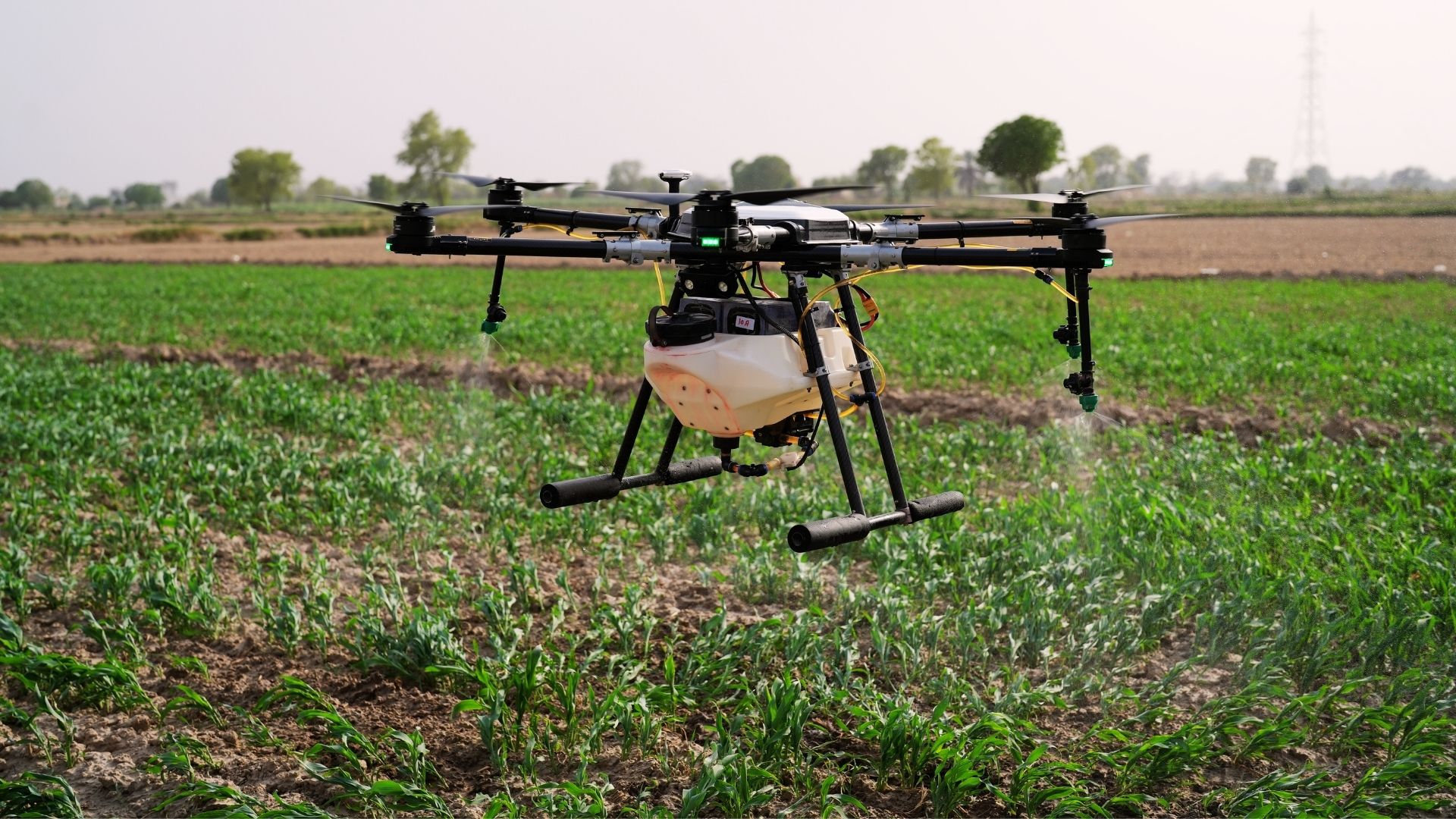
Let's get into the real advantages you'll experience on your farm.
For Farmers: Direct Impact on Your Bottom Line
Time savings that matter: What takes 3 days manually takes 30 minutes with drones. You can fertilise multiple fields in a single day, allowing you to respond quickly to crop needs and weather windows.
Massive input cost reduction: Precision application means you use 20-40% less fertilizer while achieving better results. On a 20-acre farm spending ₹50,000 annually on fertilizers, that's ₹20,000 saved each season.
Water conservation: Traditional spraying uses 400–500 litres of water per acre. Fertilizing drones need just 50 litres, which is 90% water savings. In water-scarce regions, this is transformational.
Improved crop health and yields: Uniform fertilizer distribution means every plant gets optimal nutrition. Farmers using drone services report 15–20% yield improvements because crops develop more evenly.
No labour dependency: During peak seasons when workers are scarce, you're not left helpless. Book a drone and get the job done regardless of labour availability.
Safety for your family: Manual fertilizer spraying exposes workers to chemicals. Drones eliminate human contact with inputs, protecting health.
For Rural Youth and Aspiring Drone Entrepreneurs
Drones for fertilizer spraying aren't just tools for farmers; they're creating new careers in rural India.
Income opportunity: Trained drone operators earn ₹25,000–₹50,000 monthly during peak seasons. Leher's network includes over 100 drone entrepreneurs already earning from agricultural services.
Low entry barrier: You don't need a farming background. Leher provides drone pilot training and certification support and connects you with farmer-clients through its platform.
Growing demand: With millions of acres needing fertilisation each season and labour becoming scarcer, demand for aerial spraying drone services is exploding.
Technology skills: Operating drones provides rural youth with valuable technical skills applicable across multiple industries.
If you're interested in becoming a drone operator, check out Leher's Drone Partner Program for training and business support.
For Corporate Farms and Agribusinesses
Scalability: Large operations with 100+ acres need solutions that scale. Drones can cover vast areas quickly, ensuring timely fertilisation across entire estates.
Precise input management: For organisations tracking sustainability metrics or seeking organic certification, drone-spraying records provide exact data on input usage.
Labour cost control: Reduce dependency on large seasonal labour teams, cutting management complexity and costs.
Compliance and traceability: Geo-tagged spray reports show exactly when, where, and how much fertilizer was applied, which is critical for export certifications and quality audits.
For Agri-Service Providers and FPOs
Value-added services: Offering drone Fertilization to member farmers strengthens your service portfolio and increases farmer loyalty.
Competitive advantage: Stand out by providing modern solutions that tangibly improve member incomes.
Data-driven advising: Spray data combined with crop monitoring helps you provide better agronomic advice to farmers.
Key Applications: When and Where Drone Fertilization Works Best
Let's get specific about use cases.
Crops That Benefit Most from Drone Fertilizer Application
Fertilising drones work exceptionally well for:
Cereals: Rice, wheat, maize, and millets benefit from uniform nutrient distribution during tillering and grain-filling stages.
Cash crops: Cotton, sugarcane, and tobacco require multiple fertilizer applications across long growing seasons. Drones make this efficient.
Vegetables: Tomato, chilli, and onion respond well to precise liquid fertilizer applications that prevent waste and disease.
Plantation crops: Orchards, vineyards, and banana plantations with uneven terrain are ideal for aerial spraying where ground equipment struggles.
Critical Growth Stages for Fertilizer Spraying Drones
Timing is everything in fertilizer application. Drones help you act precisely when crops need nutrients most:
Vegetative stage: Nitrogen-rich fertilizers boost leaf and stem development. Drone application ensures even distribution, promoting uniform canopy growth.
Flowering and fruiting: Potassium and phosphorus applications during reproductive stages directly impact yield. Drones deliver nutrients without disturbing flowers or damaging developing fruits.
Stress recovery: After drought, pest attacks, or weather damage, quick nutrient supplementation helps crops recover. Drones enable rapid intervention.
Farm Types Where Aerial Spraying Drones Excel
Large farms (20+ acres): The time and cost savings become dramatically apparent on larger holdings. One drone replaces dozens of workers.
Water-scarce regions: Areas facing groundwater depletion benefit immensely from 90% water savings.
Labour-short regions: States experiencing rural-to-urban migration find that drones address labour shortages.
Uneven terrain: Hilly plots, terraced fields, or waterlogged areas where tractors can't go are perfect for drone spraying rural services.
Organic farms: Precision application minimises organic fertilizer waste, reducing costs for expensive organic inputs.
Regulatory Compliance and Safety: How Leher Ensures Everything Runs Smoothly
Let's address a significant concern: Is drone Fertilization legal and safe?
DGCA Regulations and Certification
In India, agricultural drones are regulated by the Directorate General of Civil Aviation (DGCA). Here's what compliance means:
Drone certification: All drones used for commercial agriculture must be registered and certified for safe operation.
Pilot licensing: Operators need Remote Pilot Certificates from DGCA-approved training organisations. This ensures they understand flight safety, weather conditions, and emergency procedures.
Operational permissions: Depending on location and drone specifications, operators may need specific clearances, especially near airports or restricted zones.
Safety Protocols That Protect Everyone
Pre-flight checks: Drone operators conduct thorough equipment inspections before every operation, checking battery levels, spray systems, and communication links.
Safe operating distances: Drones maintain a safe altitude (3–5 metres) and distance from people, livestock, and structures.
Weather monitoring: Operations are scheduled during optimal conditions, light winds, no heavy rain, and good visibility.
Chemical handling: Trained operators follow safety protocols for mixing and loading fertilizers, using protective equipment and proper dilution ratios.
No human exposure: Unlike manual spraying, which exposes workers to chemicals, drone Fertilization keeps humans completely out of spray zones.
Want to see how drone fertilization can save you time, water, and input costs this season? Explore on-demand drone spraying services built for Indian farms, visit the Leher.ag now.
Approved Inputs and Environmental Responsibility
Leher's drone partners use only government-approved fertilizers and follow recommended application rates. This ensures:
Compliance with environmental regulations
No soil or water contamination from over-application
Safe produce that meets food safety standards
Reduced ecological footprint through precision application
Safety isn't just about following rules; it's about protecting your family, workers, crops, and the environment. That's why partnering with certified services like Leher matters.
From 30,000+ Acres Sprayed: The Numbers Speak.
Leher's network has already served over 2,100 farmers across 30,000+ acres. The aggregated data shows:
Average time savings: 85% compared to manual methods
Input cost reduction: 35–40% across crops
Farmer satisfaction rate: Over 90% book repeat services
These aren't just statistics; they represent real farmers seeing tangible improvements in their operations.
Also read: Drone Spraying Requirements and Regulations Guide
The Technology Behind Drone Spraying: Understanding How It Delivers Precision
You don't need to be an engineer, but understanding the technology helps you appreciate why fertilizing drones work so well.
GPS-Guided Precision
Modern aerial spraying drones use GPS systems accurate to within centimetres. This means:
The drone follows pre-programmed flight paths with mathematical precision
No overlapping spray zones that waste fertilizer
No missed spots that leave crops undernourished
Consistent coverage even across irregularly shaped fields
Variable Rate Application Technology
Advanced systems can adjust fertilizer flow rates in real-time based on:
Crop health variations detected by sensors
Soil nutrient maps from previous testing
Topography and drainage patterns
Crop density differences across the field
This variable rate technology means different parts of your field get exactly what they need no more, no less.
Terrain-Following and Obstacle Avoidance
Fertilizer spraying drones maintain consistent height above crops using sensors that:
Detect changes in ground elevation
Adjust altitude automatically over hills and valleys
Avoid trees, power lines, and structures
Ensure uniform droplet distribution regardless of terrain
Atomisation and Drop let Size Control
Spray nozzles on agricultural drones create fine droplets (typically 150–300 microns) that:
Penetrate crop canopies effectively
Stick to leaves better, reducing drift
Cover more surface area with less liquid
Minimise runoff and environmental loss
This level of precision simply isn't possible with manual or tractor-based spraying methods.
Also read: AI in Drone Technology: Benefits and Challenges
Cost Analysis: Understanding the Economics of Drone Fertilization
Let's break down the numbers because every rupee counts.
Traditional Fertilizer Spraying Costs
For a 10-acre farm using manual methods:
Labour (6–8 workers × 2 days × ₹500/day): ₹6,000–₹8,000
fertilizer (includes 30% wastage): ₹15,000
Water charges: ₹2,000
Supervision and management time: ₹1,500
Total: ₹24,500–₹26,500
Drone Fertilization Costs via Leher
For the same 10-acre farm using drone services:
Drone spraying (10 acres × ₹500/acre avg): ₹5,000
fertilizer (40% less due to precision): ₹9,000
Water charges (90% less): ₹200
Management time (minimal): ₹500
Total: ₹14,700
Total savings per application: ₹10,000–₹12,000
For farms that fertilise 3–4 times per season, annual savings reach ₹30,000–₹48,000. Over five years, that's ₹1.5–₹2.4 lakh saved whilst getting better results.
How to Get Started with Drone Fertilization Today
Ready to experience these benefits on your farm? Here's exactly what to do.
For Farmers: Three Simple Steps
Download the Leher app: Get it free from Google Play or Apple App Store. Registration takes just 2 minutes.
Create your first booking:
Enter your farm location (the app uses GPS for accuracy)
Specify crop type and growth stage
Select fertilizer application service
Choose your preferred date and time
Get your field sprayed: A certified drone operator arrives as scheduled, completes the job, and you pay only after you're satisfied with the work.
It's genuinely that simple, no complicated contracts, no hidden fees, no long-term commitments.
For Aspiring Drone Entrepreneurs
If you're interested in drone fertilizer application as a business opportunity:
Step 1: Visit Leher's Drone Partner Program to understand requirements and benefits.
Step 2: Enrol in drone pilot training to get DGCA certification (typically 15–20 days).
Step 3: Partner with Leher to access their farmer network, technology platform, and ongoing support.
Many of Leher's 100+ drone partners started with zero prior experience. With proper training and platform support, they're now running profitable businesses serving their local farming communities.
Conclusion: Your Next Step Toward Smarter Fertilization
Indian agriculture stands at a turning point. Labour shortages, rising input costs, water scarcity, and climate uncertainty demand new solutions. fertilizer spraying drones aren't just fancy gadgets; they're practical tools solving real problems for real farmers today.
Through Leher, this technology is accessible whether you farm 7 acres or 700. No massive investments, no technical expertise required, no complicated contracts. Just simple, on-demand access to precision Fertilization that saves money, time, and resources whilst improving yields.
Over 2,100 farmers have already made the switch. They're covering 50 acres per day, saving 40% on inputs, and seeing healthier crops. Their fields receive the exact nutrients they need, when needed, with zero waste and maximum impact.
The question isn't whether drone Fertilization works; the data prove it does. The question is: how many more seasons will you wait before experiencing these benefits yourself?
Book Leher's drone spraying service now and transform how you fertilise this season. Download the Leher app today from Google Play or Apple App Store. Your first booking takes just 2 minutes, and your field could be sprayed within 48 hours.
Better Fertilization, better yields, better farming, it starts with one simple step.
Frequently Asked Questions About Drone Fertilization
1. Are fertilizer-spraying drones safe for all crop types?
Yes, drones work safely with most crops, including cereals, vegetables, cash crops, and orchards. The key is adjusting flight altitude and spray parameters based on crop height and canopy structure. Leher's trained operators customise settings for your specific crop. Delicate crops like strawberries or flowers require lower spray pressure, which modern drones can handle easily through adjustable nozzles and flight speed controls.
2. How much does drone fertilizer application actually cost?
Leher's pay-per-acre model typically ranges from ₹300 to ₹700 per acre, depending on your location, crop type, and field accessibility. This includes the operator's service, drone usage, and technical expertise. When you factor in 40% savings on fertilizer and the elimination of labour costs, the net expense is actually 20–30% lower than with traditional methods whilst delivering better results.
3. Do I need any special permissions to use drone Fertilization services on my farm?
No, as a farmer, you don't need any permissions. Leher handles all regulatory compliance. Their drone partners hold required DGCA certifications, drone registrations, and operational permits. You book the service, and everything is done in full compliance with Indian aviation and agricultural regulations. The responsibility stays with the certified operator, not you.
4. Can drones work in hilly or uneven terrain?
Absolutely, this is actually where drones excel compared to tractors or manual labour. Terrain-following sensors automatically adjust the drone's altitude to maintain a consistent height above crops regardless of slopes, terraces, or undulating ground. Farmers in Himachal Pradesh, Uttarakhand, and hilly regions of Karnataka are already using drone services successfully for fertilisation in areas where ground equipment cannot operate.
5. How do fertilizing drones compare to tractor-mounted sprayers?
Both have their place, but drones offer distinct advantages: (1) No soil compaction from heavy machinery; (2) Access to wet or delicate fields where tractors cannot enter; (3) Faster coverage, especially for smaller or fragmented plots; (4) Significant reduction in water and fertilizer usage; (5) No damage to crops from machinery movement. For fields larger than 50 acres, combining both methods based on crop stage and conditions might be optimal.
6. What happens if the drone malfunctions mid-spray?
Professional operators like those in Leher's network carry backup equipment and follow safety protocols. Modern agricultural drones have fail-safe features, including automatic return-to-home if the battery runs low or the signal is lost. In the rare event of a malfunction, the operator completes the remaining area manually or reschedules with backup equipment. Your field never stays half-done, and Leher's service guarantee ensures the job is completed.
Let’s Grow Together!
Interested in drone spraying solutions? Connect with us today.