A Complete Guide to the Namo Drone Didi Scheme: Financial Benefits, Training, and More
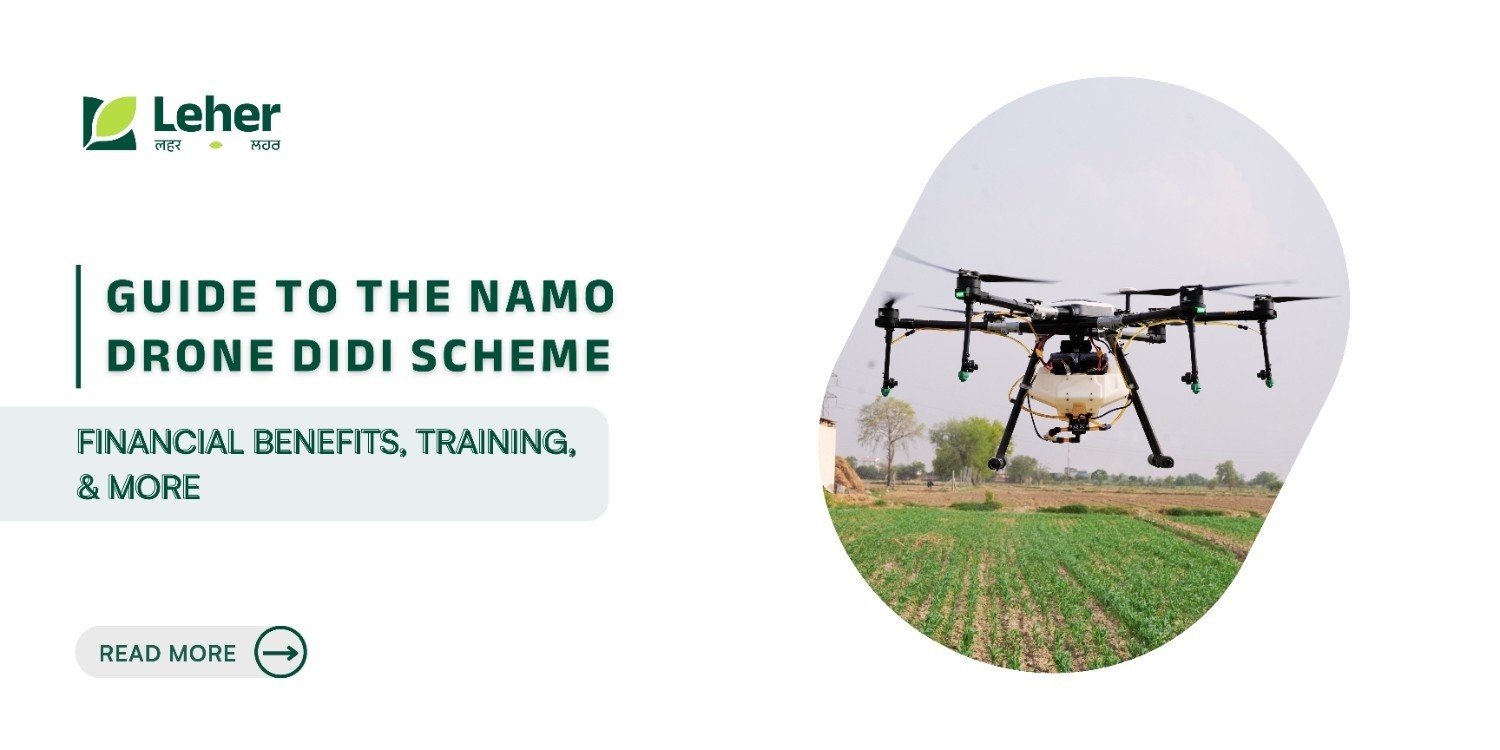
India’s agriculture‑drone market was valued at USD 243.6 million in 2024 and is projected to reach USD 2,110.6 million by 2033, indicating significant room for growth and adoption.
Despite this potential, drone usage in Indian farming remains limited. However, the Namo Drone Didi Scheme, which aims to provide 15,000 drones to women’s self-help groups, presents a unique opportunity to bridge this gap. By offering financial support, specialised training, and drone technology, the scheme empowers rural women to become leaders in precision agriculture.
In this guide, we’ll explore the financial benefits, training opportunities, and how you can take full advantage of this transformative initiative.
Key Takeaways
Women Empowerment in Agriculture: The Namo Drone Didi Scheme empowers rural women to become drone entrepreneurs, providing them with financial support, training, and the technology needed to offer drone spraying services in farming.
Financial & Training Support: The scheme offers up to 80% financial subsidy on drone packages (capped at ₹8 lakh) and includes a 15-day training program to certify drone pilots and assistants, enabling women to run their own drone service businesses.
Precision Spraying for Farmers: Drones improve farm spraying accuracy, reducing pesticide use and water consumption by up to 30% and 90%, respectively, while boosting crop yield and reducing costs for farmers.
Entrepreneurial Opportunity: Women SHGs are expected to generate ₹1 lakh additional income per year, transforming rural women into agri-tech entrepreneurs with sustainable business models.
Leher’s Role in Scaling Operations: Leher connects drone operators with a ready market of farmers, streamlining the booking process, ensuring steady demand, and enabling operators to scale their business faster, with over 35,000 acres sprayed and 2,200+ satisfied farmers.
A Brief Overview of Namo Drone Didi Scheme
The Namo Drone Didi Scheme is a government initiative launched on 30 November 2024. It empowers rural women by providing them with the tools, free training, and financial support to operate drones for agricultural purposes.
The scheme provides financial assistance for drones and even training that enables women self-help groups (SHGs) to offer drone-powered spraying services to local farmers.
This initiative aligns with the government’s vision to boost precision agriculture, increase farm productivity, and reduce the dependency on manual labour. Through this scheme, women in rural India will gain new skills and can become key players in the agritech ecosystem.
Features of Namo Drone Didi Scheme
The Namo Drone Didi Scheme not only empowers rural women but also opens up a variety of self-employment opportunities as Drone Entrepreneurs. By participating in the scheme, women can become key players in their local farming supply chains.
Financial Outlay: The scheme is allocated ₹1,261 crore for FY 2025‑26 to support drone adoption for women-led SHGs in rural India.
Subsidy Support: Provides up to 80% subsidy on drones and accessories, with a maximum of ₹8 lakh per SHG cluster.
Drone Deployment: Aims to distribute 15,000 drones to women SHGs to help them provide spraying services to farmers.
Drone Pilot Training Programs: Includes 15-day training for drone pilots and additional training for assistants to ensure full readiness.
Service Model: SHGs will offer drone rental services for farmers, mainly for spraying pesticides and fertilisers.
Entrepreneurial Opportunities: SHGs can earn an additional income of at least ₹1 lakh annually, empowering rural women to become entrepreneurs in the agri-tech sector.
Implementation & Monitoring: Managed by Lead Fertiliser Companies (LFCs) at the state level, with real-time monitoring through a "Drone Portal" that tracks usage and service delivery.
These features work together as a system, but understanding how they function in practice requires looking at the actual implementation process, from selecting eligible groups to deploying the first drones.
How the Namo Drone Didi Scheme Works
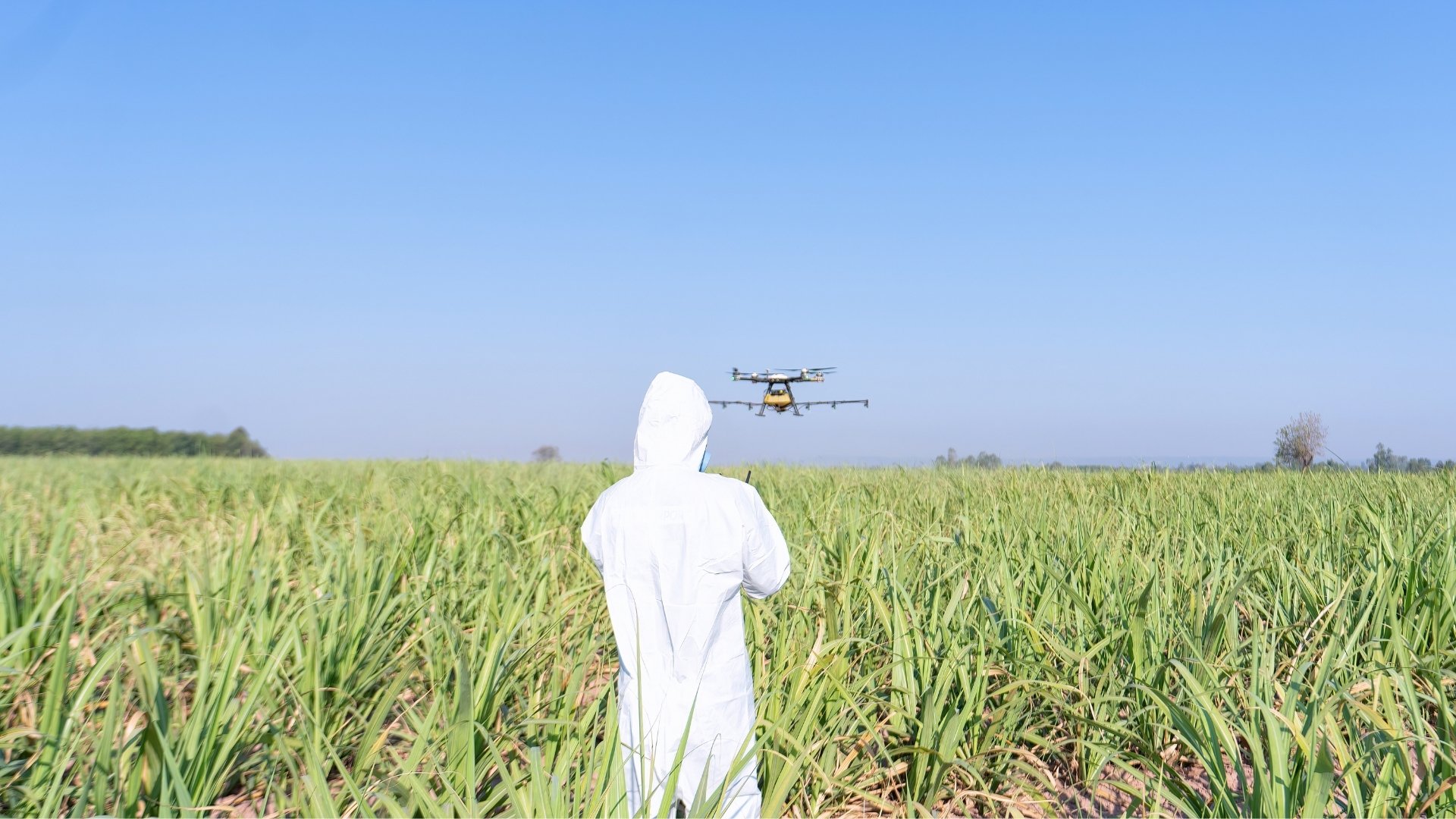
The Namo Drone Didi Scheme provides them with the necessary training, tools, and financial support to become drone operators in the agricultural sector. This initiative addresses both gender inclusion and precision agriculture by giving women-led self-help groups (SHGs) access to modern drone technology and business opportunities.
1. Cluster and SHG Selection
The scheme begins by identifying specific clusters (groups of villages or gram panchayats) where drone services are required. In each cluster, women-led SHGs are selected based on certain eligibility criteria such as group membership, agricultural activities, and operational base.
These SHGs will be provided with the drones and training, turning them into key players in their local farming supply chains. The selection process is designed to focus on rural areas where drone technology can bring the most immediate benefits to farming communities.
2. Financial Support and Procurement
The government allocates up to 80% subsidy on the cost of drones and accessories, with a cap of ₹8 lakh per SHG cluster. The remaining 20% can be borrowed through the Agriculture Infrastructure Fund (AIF), which provides a 3% interest subvention.
The drones and other equipment are procured through Lead Fertiliser Companies (LFCs) at the state level.
3. Training and Certification
Once selected, SHG members undergo comprehensive training to operate the drones safely. A 15-day training program is mandatory for drone pilots, followed by additional training for assistants who will help with maintenance and operational support.
After completing the training, SHG members are legally certified to operate drones as per the regulations set by the Directorate General of Civil Aviation (DGCA).
4. Service Delivery Model
After the training, SHGs begin offering drone rental services to local farmers, focusing primarily on tasks such as spraying pesticides and fertilisers. Each SHG is expected to cover an area of 2,000–2,500 acres per year in its designated clusters.
This model enables farmers to access drone-powered services without having to invest in the high upfront costs associated with purchasing drones themselves. The SHGs operate the drones on behalf of farmers, with the revenue generated from these services going to the SHGs.
5. Monitoring, Maintenance, and Governance
The scheme is monitored in real-time through an IT‑based "Drone Portal", which tracks drone usage, service delivery, fund disbursement, and other operational metrics. This provides transparency and accountability in the implementation of the scheme.
The Empowered Committee of Secretaries and local state‑level committees oversee the scheme’s implementation and operation. The drones come with warranty and maintenance contracts so that they remain in good working condition for the long term.
Additionally, SHGs and Cluster Level Federations (CLFs) sign Memorandums of Understanding (MoUs) with drone manufacturers for continued servicing and support.
Although the structure is built to last, but only does if SHGs can actually translate operations into steady income, which brings us to the direct benefits women and farmers experience.
Start your SHG’s journey with the Namo Drone Didi Scheme by working with Leher. You can grow faster when demand, scheduling, pricing, and farmer outreach are already taken care of. Contact us to begin your path as a drone entrepreneur today.
Benefits of Namo Drone Didi Scheme
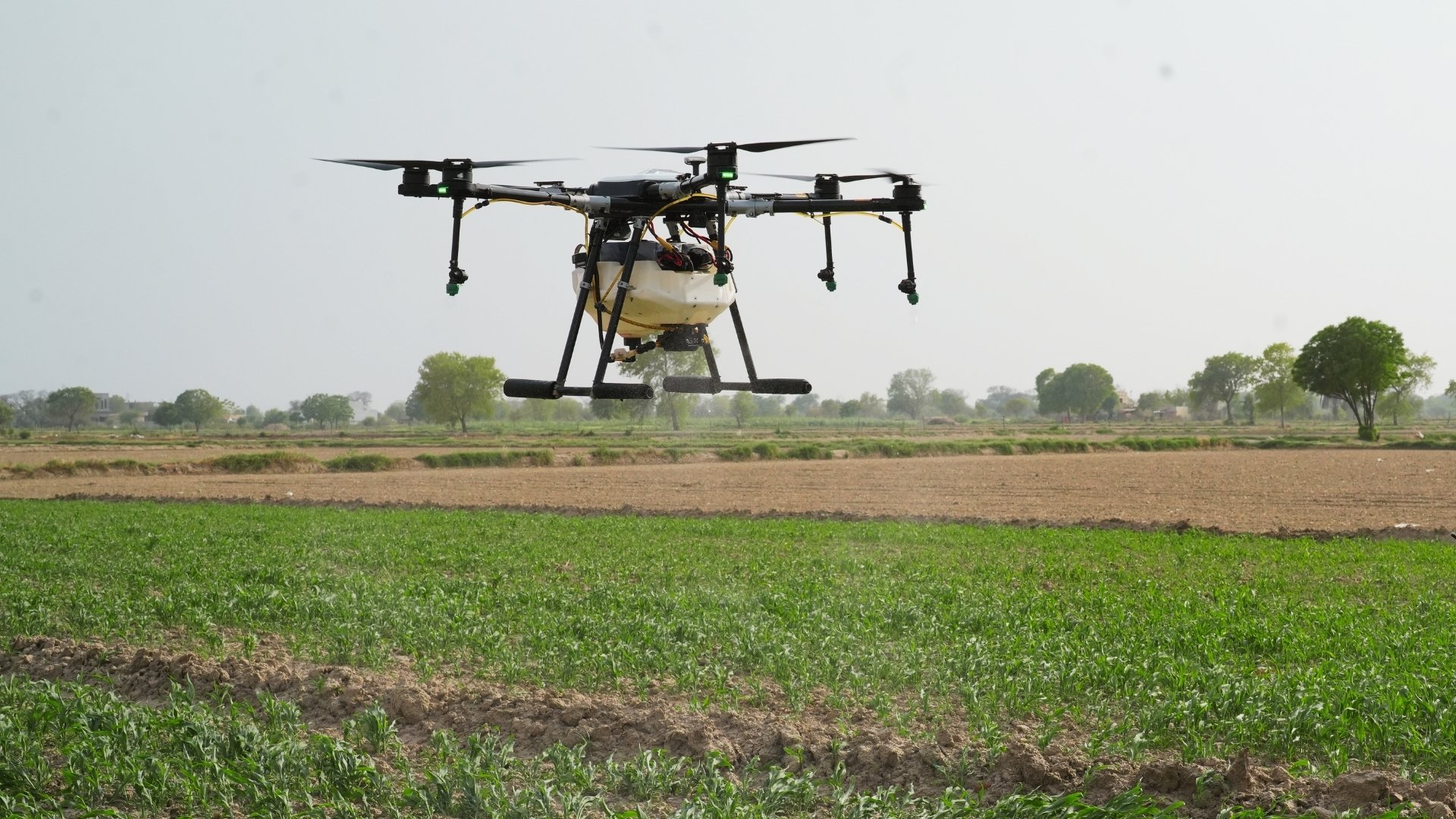
The Namo Drone Didi Scheme gives women-led SHGs the tools, training, and financial support to run drone spraying services in their local farming clusters. It helps women earn a steady income, improves farm spraying quality for farmers, and builds a strong tech-enabled service network in rural areas.
1. Women get a direct income source: Women SHGs receive drones to run spraying services for farmers. The scheme expects each SHG to earn at least ₹1 lakh per year, giving women a steady income path.
2. Farmers get better spraying results: Drones give uniform spraying of pesticides and fertilisers. This reduces chemical use, lowers costs, and improves crop coverage across the field.
3. Women gain technical skills in agriculture: The scheme trains women in drone operation, pesticide and fertilizer application, crop monitoring, and basic precision farming tasks. These skills help them take on more work beyond spraying.
4. The drone package supports full-day field work: SHGs do not receive a drone alone. They get a complete package that includes:
A spraying assembly
Four spare drone battery sets for continuous flying
Dual-channel fast charger and battery hub
Drone carrying box
Nozzle set and spare propellers
Downward camera, anemometer, and pH meter
One-year warranty, two-year maintenance, and insurance
This setup allows an operator to cover up to 20 acres in a day without downtime.
5. Clusters build a stronger local service network: Each cluster gets trained women, a reliable drone package, and support from state agencies. Over time, this builds a local ecosystem where drone spraying becomes a regular farming service.
6. Strong financial support reduces upfront cost: The government covers up to 80 percent of the drone package cost (capped at ₹8 lakh). The remaining amount can be financed through the Agriculture Infrastructure Fund with 3% interest support, helping SHGs start without high debt.
7. Better field analysis and irrigation decisions: Drones help SHGs perform soil checks, fertility assessments, and crop monitoring. Operators can spot irrigation leaks, identify dry or over-watered patches, and guide farmers on water management.
These benefits are substantial, but they only apply to SHGs that meet specific criteria. Understanding eligibility is the first step for any group considering participation.
Also Read: Drone Spraying Requirements and Regulations Guide - Leher
Eligibility of the Namo Drone Didi Scheme
The central eligibility focuses on women-led SHGs registered under DAY-NRLM, with members required to complete the mandatory drone training to operate the services. These are national-level criteria, and states may add their own conditions, such as age limits or education requirements.
The SHG must be women-led and registered under the Deendayal Antyodaya Yojana – National Rural Livelihoods Mission (DAY-NRLM).
The women SHG should be engaged in or linked to agricultural activities.
Member(s) of the SHG must complete the scheme’s training: one member undergoes a 15-day pilot training (consisting of 5 days of mandatory drone pilot training plus 10 days of agriculture-application training), and another member (or family member) can be trained as a drone assistant.
The selected cluster/area must demonstrate economic feasibility for drone services, based on demand for spraying and other applications. The state-level committee chooses the cluster and SHG accordingly.
The drone services from the SHG must be for agricultural applications (spraying pesticides, liquid fertilisers, etc.). Drone-rental or service model must align with the scheme’s focus.
Note: In states like Haryana, eligible Women applicants must be SHG members, residents of the state, aged between 18 and 40, and have passed Class 10 with a valid PPP ID.
Once an SHG confirms it meets these criteria, the next move is straightforward; the application process has been designed to minimise paperwork while ensuring accountability.
How to Apply for the Namo Drone Didi Scheme Online
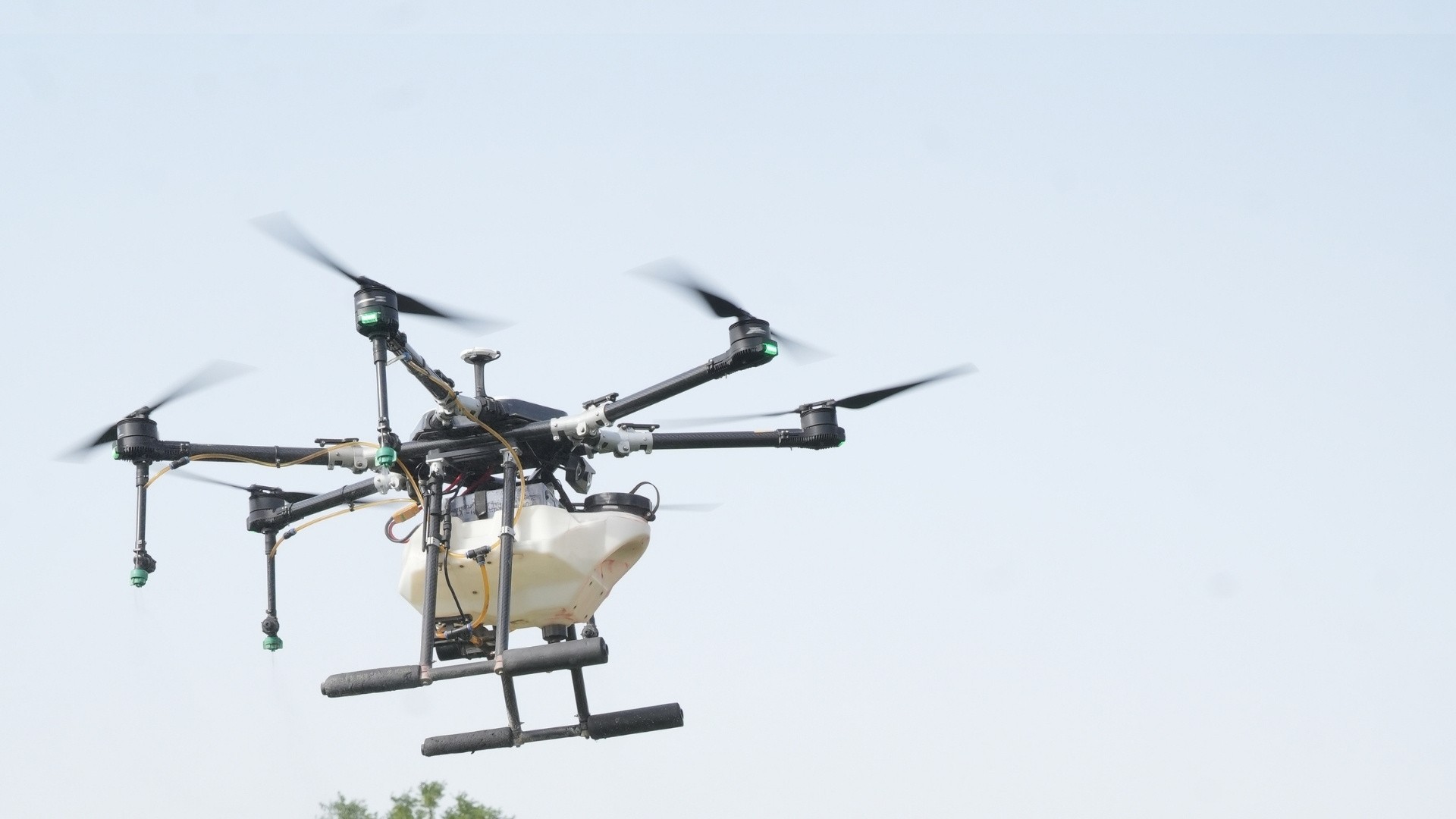
To apply for the Namo Drone Didi Scheme, women-led SHGs must register through the official portal, fill out the application form, and submit the required documents. Once approved, SHGs will receive training and a drone package to start offering services.
For further assistance, beneficiary women can even contact the nearest Pradhanmantri Kisan Samriddhi Kendra or Gram Panchayat Office.
Step 1: Visit the official scheme portal or the implementing agency’s page (for example, a state’s DAY‑NRLM website or the LFC‑coordinated portal) where the “Drone Didi” application form is made available.
Step 2: Register your Self‑Help Group (SHG) if not already listed under Deendayal Antyodaya Yojana – National Rural Livelihoods Mission (DAY‑NRLM), and log in using SHG credentials.
Step 3: Fill in the online application form: include SHG details, cluster/village information, training status of pilot member, banking and Aadhaar details, and declare your intent to run drone‑spraying services in your cluster.
Step 4: Upload the required documents, which include the following
SHG registration certificate
Aadhaar of members
Bank account passbook
Training enrolment proof (pilot/assistant)
Basic literacy documentation (varies by state)
Step 5: Submit the application and note the submission or acknowledgement number. The state‑level committee or implementing agency will review the submission, verify eligibility, and allot training and drone‑package scheduling.
Step 6: Upon approval, the SHG will attend training (pilot & assistant), complete onboarding, and then receive the drone package. After that, you’ll be able to begin service operations under the scheme.
The scheme provides the framework and funding, but successful execution depends on platforms that connect operators with demand; this is where experienced agritech partners make a difference.
Also Read: Drone Action Plan for Agriculture Spray Solutions - Leher
Revolutionising Rural Agriculture with Leher’s Drone Solutions
Leher is an agritech platform committed to transforming Indian farming by connecting rural entrepreneurs with farmers and revolutionising agricultural practices with drone precision spraying services. Their mission is to empower over 5 million farmers by 2030 with advanced drone solutions for sustainable agriculture.
Drone Precision Spraying Services: Leher’s technology delivers up to 30% reduction in pesticide use and up to 90% water savings, helping farmers manage inputs and boost crop health.
Farmer‑Operator Marketplace: Operates on a DaaS model, the platform links farm demand with certified drone operators in the local area, turning service access into a simple “book → spray → pay” workflow.
Entrepreneurship for Rural Youth and Women: Leher supports rural youth and women entrepreneurs to become drone service providers, offering training, business support, and access to the market.
Sustainability & Scalability Focus: Beyond individual services, Leher embeds a sustainable, eco-friendly tech model, reducing environmental impact while supporting rural livelihoods.
Conclusion
The Namo Drone Didi Scheme provides rural women with the tools, training, and financial support to become successful drone entrepreneurs, revolutionising agricultural practices in their communities. By offering financial assistance, drone technology, and training, the scheme enables women-led SHGs to provide essential services like pesticide and fertilizer spraying, improving farm productivity and sustainability.
This initiative is an important step towards bridging the technology gap in rural India and creating long-term income opportunities for women.
Leher plays a pivotal role in supporting this transformation by connecting farmers with drone operators through an easy-to-use platform. The company has achieved remarkable scale, with over 35,000 acres sprayed, 130+ drone partners, and 2,200+ satisfied farmers.
Contact us today to learn how we can help your SHG or business grow in the thriving world of precision agriculture.
FAQs
1. Which ministry is Namo Drone Didi under?
The Namo Drone Didi Scheme is overseen by the Ministry of Agriculture & Farmers’ Welfare (MoA&FW) in collaboration with the Deendayal Antyodaya Yojana – National Rural Livelihoods Mission (DAY-NRLM).
2. What is the focus of PM's Namo Drone Didi scheme?
The scheme focuses on empowering rural women by providing them with training, financial support, and drone technology to offer agricultural services like precision spraying, enhancing farm productivity, and reducing input costs.
3. What are the 4 types of drones?
The four main types of drones used in agriculture are:
Multirotor drones (for small to medium-scale applications like spraying)
Fixed-wing drones (for large-scale aerial surveys and mapping)
Hybrid drones (combining fixed-wing and multirotor features for flexibility)
Single-rotor helicopters (used for precision spraying and larger areas).
4. What type of AI is a drone?
Drones typically use AI-based technologies like computer vision, machine learning, and sensor fusion, which help them perform tasks like obstacle detection, crop monitoring, and real-time decision-making based on data collected in the field.
5. What is the drone sister scheme?
The Drone Sister Scheme refers to government initiatives, like the PM Kisan Drone Yojana, aimed at encouraging drone technology adoption for agricultural purposes, providing financial assistance for drone purchases, and offering technical support to farmers across India.
Let’s Grow Together!
Interested in drone spraying solutions? Connect with us today.